Calling Roadside Help
Llamar a la asistencia en carretera
Emma calls for roadside help and explains where they are. The helper tells them what to do while they wait.
Emma llama a la asistencia en carretera y explica dónde están. La persona que la atiende les dice qué hacer mientras esperan.
Diálogo8
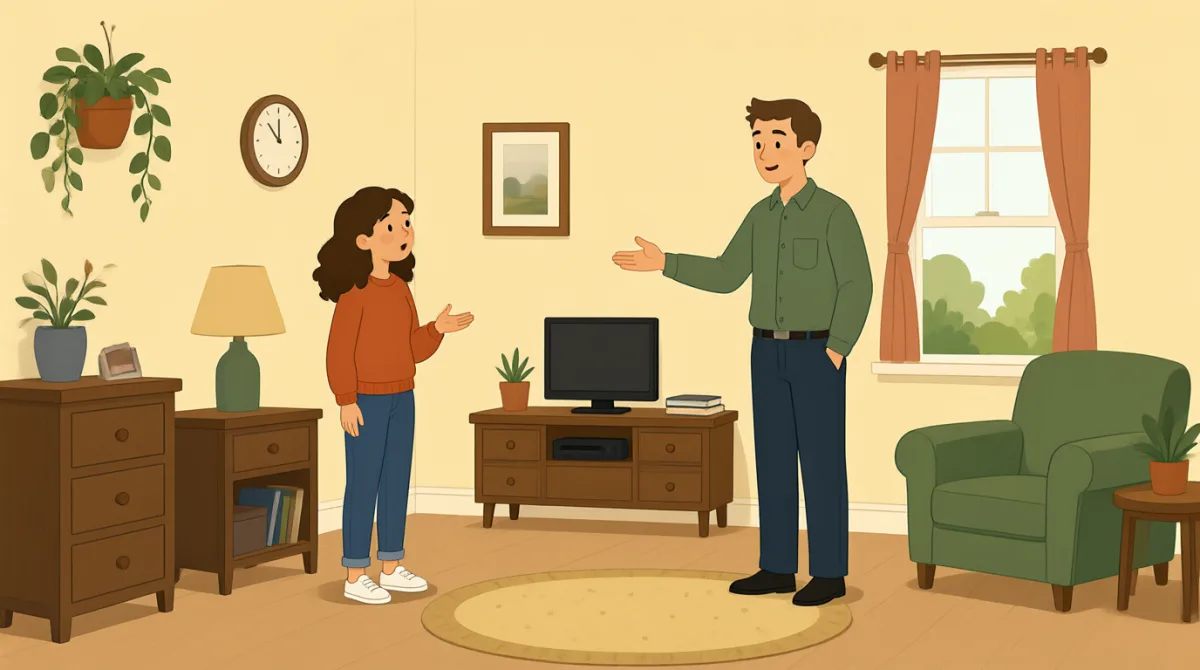

Hi, I need roadside help. We have a flat tire.
Hola, necesito asistencia en carretera. Tenemos una rueda pinchada.

I can help. Where are you right now?
Puedo ayudarles. ¿Dónde están ahora mismo?
We’re on Route 8, near the Maple Street exit.
Estamos en la Ruta 8, cerca de la salida de Maple Street.
Are you in a safe place, away from traffic?
¿Están en un lugar seguro, lejos del tráfico?
Yes, we pulled over and got out on the passenger side.
Sí, nos orillamos y salimos por el lado del pasajero.
Good. Please stay behind the guardrail and don’t change the tire.
Bien. Por favor, quédense detrás de la barrera de seguridad y no cambien la rueda.
Okay. How long will it take for help to arrive?
De acuerdo. ¿Cuánto tardará en llegar la ayuda?
A truck should be there in about thirty minutes. I’ll call you if that changes.
La grúa debería llegar en unos treinta minutos. Les llamaré si eso cambia.
Vocabulario8
- roadside helpasistencia en carretera
Help for a vehicle that has a problem on the road. You can ask for roadside help when your car has a flat tire.
Ayuda para un vehículo que tiene un problema en la carretera. Puedes pedir asistencia en carretera si se te pincha una rueda.
- flat tirerueda pinchada
A tire that has lost air and cannot work properly. You can say, “I have a flat tire,” to explain the problem.
Una rueda que ha perdido aire y no funciona bien. Puedes decir “I have a flat tire” (Tengo una rueda pinchada) para explicar el problema.
- right nowahora mismo
This means at this moment. Use it to ask where someone is or what they are doing now.
Significa en este momento. Úsalo para preguntar dónde está alguien o qué está haciendo ahora.
- pulled overorillarse
Stopped a vehicle at the side of the road. You can say, “We pulled over,” to explain that you stopped safely.
Detener un vehículo al lado de la carretera. Puedes decir “We pulled over” (Nos orillamos) para explicar que paraste en un lugar seguro.
- passenger sidelado del pasajero
The side of a vehicle where passengers sit, opposite the driver’s side. This phrase can help explain how you got out of a car.
El lado del vehículo donde se sientan los pasajeros, opuesto al lado del conductor. Esta expresión puede servir para explicar por dónde saliste del auto.
- guardrailbarrera de seguridad
A metal barrier beside a road that helps protect people and vehicles. Stay behind it to keep away from traffic.
Una barrera metálica junto a la carretera que ayuda a proteger a las personas y los vehículos. Quédate detrás de ella para mantenerte lejos del tráfico.
- change the tirecambiar la rueda
Remove a damaged tire and put on another one. You can use this phrase when talking about fixing a flat tire.
Quitar una rueda dañada y poner otra en su lugar. Puedes usar esta expresión al hablar de cómo reparar una rueda pinchada.
- in about thirty minutesen unos treinta minutos
This means something is expected to happen around thirty minutes from now. Use “in about” to give an approximate time.
Significa que se espera que algo ocurra aproximadamente dentro de treinta minutos. Usa “in about” para indicar una hora aproximada.
Frases clave8
- 1
Hi, I need roadside help.
Hola, necesito asistencia en carretera.
This is a simple way to ask for help with a vehicle problem. You can replace “roadside help” with the kind of help you need.
Esta es una forma sencilla de pedir ayuda por un problema con un vehículo. Puedes cambiar “roadside help” por el tipo de ayuda que necesitas.
- 2
We have a flat tire.
Tenemos una rueda pinchada.
Use this sentence to explain a common car problem. You can replace “a flat tire” with another problem, such as “engine trouble.”
Usa esta frase para explicar un problema común del auto. Puedes cambiar “a flat tire” por otro problema, como “engine trouble”.
- 3
Where are you right now?
¿Dónde están ahora mismo?
This is a useful question for asking someone’s current location. You can use it when arranging to meet or send help.
Esta pregunta sirve para preguntar dónde está alguien en ese momento. Puedes usarla para quedar con alguien o para enviar ayuda.
- 4
We’re on Route 8, near the Maple Street exit.
Estamos en la Ruta 8, cerca de la salida de Maple Street.
This gives a road and a nearby landmark to help someone find you. Replace the road and landmark with your own location.
Esta frase indica una carretera y un punto de referencia cercano para que alguien pueda encontrarte. Cambia la carretera y el punto de referencia por los de tu ubicación.
- 5
Yes, we pulled over and got out on the passenger side.
Sí, nos orillamos y salimos por el lado del pasajero.
This explains where you stopped and how you left the vehicle. You can use it to tell someone what you did after a car problem.
Esta frase explica dónde paraste y cómo saliste del vehículo. Puedes usarla para contarle a alguien qué hiciste después de tener un problema con el auto.
- 6
Please stay behind the guardrail and don’t change the tire.
Por favor, quédense detrás de la barrera de seguridad y no cambien la rueda.
This gives two clear safety instructions. Use “Please” for a polite instruction and “don’t” to say what someone should avoid.
Esta frase da dos instrucciones de seguridad claras. Usa “Please” para dar una instrucción con cortesía y “don’t” para decir qué debe evitar alguien.
- 7
How long will it take for help to arrive?
¿Cuánto tardará en llegar la ayuda?
Use this question to ask how much time you will need to wait. You can replace “help” with another person or service.
Usa esta pregunta para saber cuánto tiempo tendrás que esperar. Puedes cambiar “help” por otra persona o servicio.
- 8
A truck should be there in about thirty minutes.
La grúa debería llegar en unos treinta minutos.
This gives an expected arrival time. Use “should” when you think something is likely, but the time is not completely certain.
Esta frase indica una hora aproximada de llegada. Usa “should” cuando creas que algo probablemente ocurrirá, aunque no sea completamente seguro.