A Package Arrives
Llega un paquete
While Emma is away, a package arrives with the mail. Mia brings it inside and sends Emma a quick message.
Mientras Emma está fuera, llega un paquete con el correo. Mia lo mete en casa y le envía un mensaje rápido a Emma.
Diálogo8
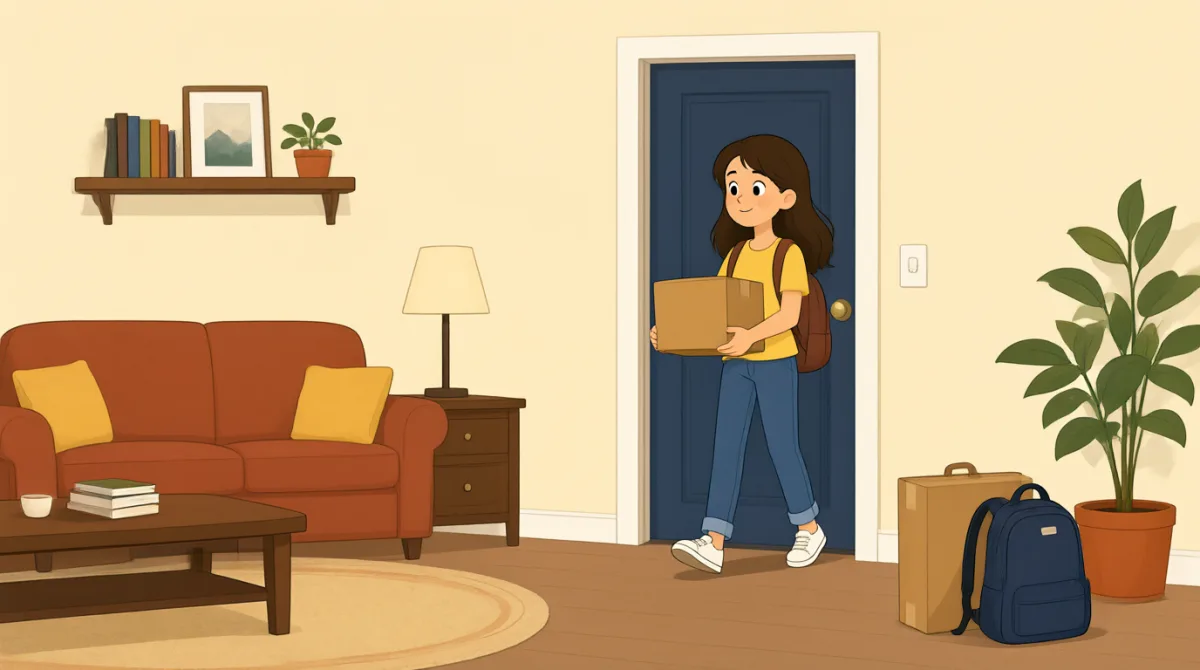

Hi, Emma. A package just arrived with your mail.
Hola, Emma. Acaba de llegar un paquete con tu correo.

Thanks for letting me know! Is it a small package?
¡Gracias por avisarme! ¿Es un paquete pequeño?
Yes, it’s not very big. I brought it inside with your mail.
Sí, no es muy grande. Lo metí en casa con tu correo.
That’s great. Could you leave it by the front door?
Qué bien. ¿Podrías dejarlo junto a la puerta principal?
Sure. I put it on the table inside your door.
Claro. Lo puse en la mesa, justo al entrar por tu puerta.
Perfect. I’ll pick it up when I get home tomorrow.
Perfecto. Lo recogeré cuando vuelva a casa mañana.
No problem. Your mail is there with it, too.
No hay problema. Tu correo también está ahí, junto con el paquete.
Thanks so much, Mia. I really appreciate your help.
Muchísimas gracias, Mia. Te agradezco mucho la ayuda.
Vocabulario6
- just arrivedacaba de llegar
This means something came a very short time ago. Use it to tell someone that a package or person has arrived recently.
Significa que algo llegó hace muy poco. Úsalo para decirle a alguien que un paquete o una persona acaba de llegar.
- leave it by the front doordejarlo junto a la puerta principal
This means to put something near the main entrance and keep it there. Use this phrase to tell someone where to put an item.
Significa poner algo cerca de la entrada principal y dejarlo allí. Usa esta expresión para decirle a alguien dónde poner algo.
- pick it uprecogerlo
Here, this means to go and get something. You can use it when you plan to collect an item later.
Aquí significa ir a buscar algo. Puedes usarlo cuando piensas recoger algo más tarde.
- when I get homecuando vuelva a casa
This means at the time I arrive at my home. Use it to say when you will do something.
Significa en el momento en que llegue a casa. Úsalo para decir cuándo harás algo.
- No problem.No hay problema.
This is a friendly way to say that helping is okay. You can also use it to reply to someone who thanks you.
Es una forma amable de decir que no te importa ayudar. También puedes usarla para responder cuando alguien te da las gracias.
- appreciate your helpagradecer mucho tu ayuda
This means to feel grateful for someone's help. Use it to thank someone warmly.
Significa sentirse agradecido por la ayuda de alguien. Úsalo para darle las gracias a alguien de manera afectuosa.
Frases clave7
- 1
A package just arrived with your mail.
Acaba de llegar un paquete con tu correo.
Use this sentence to tell someone that a package came with their letters or other mail. You can change “a package” to name another item that arrived.
Usa esta frase para decirle a alguien que ha llegado un paquete junto con sus cartas u otro correo. Puedes cambiar “a package” por el nombre de otro objeto que haya llegado.
- 2
Thanks for letting me know!
¡Gracias por avisarme!
This is a friendly way to thank someone for giving you information. You can use it after someone tells you about a delivery or a change of plans.
Es una forma amable de agradecerle a alguien que te haya dado información. Puedes usarla después de que alguien te cuente que ha llegado una entrega o que han cambiado los planes.
- 3
I brought it inside with your mail.
Lo metí en casa con tu correo.
Use this sentence to explain that you took an item indoors along with someone's mail. You can change “it” to name the item.
Usa esta frase para explicar que llevaste algo dentro de casa junto con el correo de alguien. Puedes cambiar “it” por el nombre del objeto.
- 4
Could you leave it by the front door?
¿Podrías dejarlo junto a la puerta principal?
This is a polite way to ask someone to put something in a particular place. You can replace “by the front door” with another location.
Es una forma amable de pedirle a alguien que ponga algo en un lugar concreto. Puedes sustituir “by the front door” por otro lugar.
- 5
I’ll pick it up when I get home tomorrow.
Lo recogeré cuando vuelva a casa mañana.
Use this sentence to say when you plan to collect something. “I’ll” is a common short form of “I will,” used for future plans or decisions.
Usa esta frase para decir cuándo piensas recoger algo. “I’ll” es una forma abreviada muy común de “I will”, que se usa para hablar de planes o decisiones futuras.
- 6
Your mail is there with it, too.
Tu correo también está ahí, junto con el paquete.
This sentence tells someone that their mail is in the same place as another item. You can use “there” to refer to a place already mentioned.
Esta frase le dice a alguien que su correo está en el mismo lugar que otro objeto. Puedes usar “there” para referirte a un lugar que ya se ha mencionado.
- 7
I really appreciate your help.
Te agradezco mucho la ayuda.
This is a warm way to thank someone for helping you. You can use it after a neighbor or friend does you a favor.
Es una forma cálida de darle las gracias a alguien por ayudarte. Puedes usarla después de que un vecino o un amigo te haga un favor.