Favorite Childhood Food
শৈশবের প্রিয় খাবার
Mia asks Emma and Leo what food they loved as children. They talk about family meals and treats they still remember.
মিয়া এমা ও লিওকে জিজ্ঞেস করে, ছোটবেলায় তারা কোন খাবার ভালোবাসত। তারা পারিবারিক খাবার আর এখনও মনে থাকা নানা মুখরোচক খাবার নিয়ে কথা বলে।
সংলাপ9
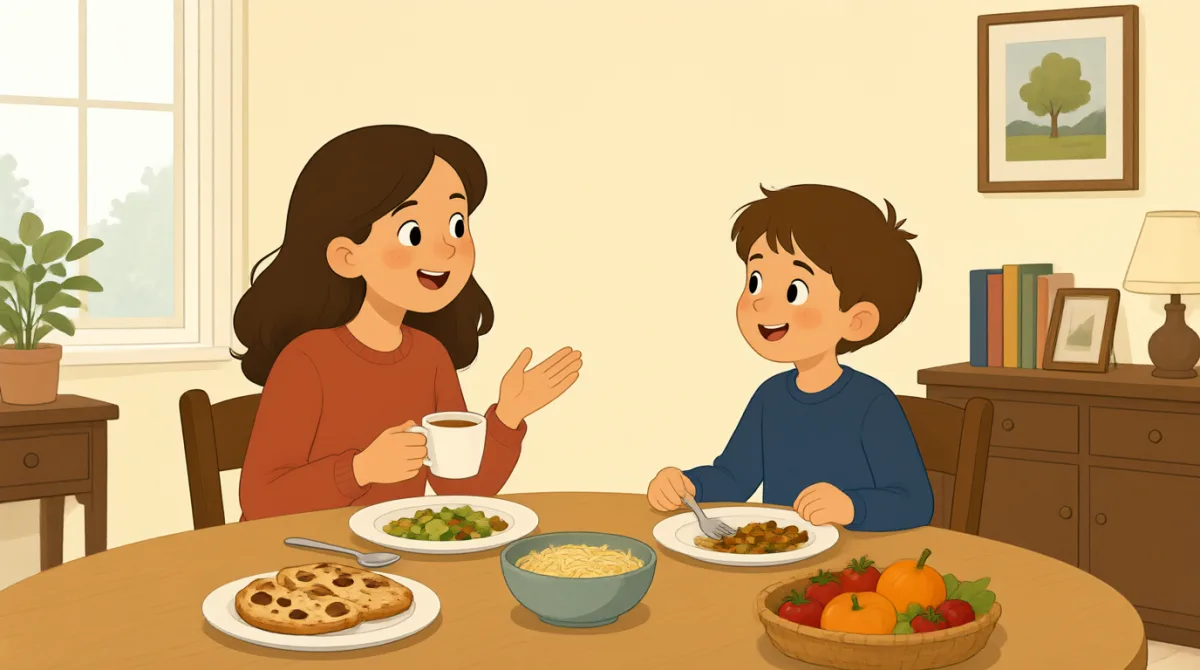

What food did you love as a child, Emma?
ছোটবেলায় কোন খাবারটা ভালোবাসতে, এমা?

I loved my mother's tomato soup and grilled cheese sandwiches.
আমি মায়ের টমেটো স্যুপ আর গ্রিল করা চিজ স্যান্ডউইচ খুব ভালোবাসতাম।

I always asked for my grandmother's noodles when I visited her.
আমি যখন দাদির সঙ্গে দেখা করতে যেতাম, তখন সব সময় দাদির নুডলস চাইতাম।
That sounds good! Did you eat them for lunch or dinner?
শুনতে দারুণ! তুমি এগুলো দুপুরে খেতে, নাকি রাতে?
Usually dinner. She made a big pot, and we all ate together.
সাধারণত রাতে। তিনি একটা বড় হাঁড়ি রান্না করতেন, আর আমরা সবাই একসঙ্গে খেতাম।
My family had soup on cold days. I still remember its smell.
ঠান্ডার দিনে আমাদের পরিবার স্যুপ খেত। এখনো এর গন্ধটা আমার মনে আছে।
Did you have a favorite treat, too?
তোমার কি কোনো পছন্দের ট্রিটও ছিল?
Yes! My dad bought me strawberry ice cream after school sometimes.
হ্যাঁ! বাবা মাঝে মাঝে স্কুলের পরে আমাকে স্ট্রবেরি আইসক্রিম কিনে দিতেন।
Those little treats made childhood special, didn't they?
ওই ছোট ছোট ট্রিটগুলোই তো শৈশবকে বিশেষ করে তুলেছিল, তাই না?
শব্দভান্ডার7
- as a childছোটবেলায়
This means when someone was young. Use it to talk about things you liked or did in the past.
এর অর্থ হলো, কেউ যখন ছোট ছিল তখন। অতীতে তোমার পছন্দের বা করা বিষয় নিয়ে কথা বলতে এটি ব্যবহার করো।
- grilled cheese sandwichesগ্রিল করা চিজ স্যান্ডউইচ
These are sandwiches with melted cheese, often cooked in a pan. Emma remembers eating them with tomato soup.
এগুলো হলো গলে যাওয়া চিজ দেওয়া স্যান্ডউইচ, যা প্রায়ই প্যানে রান্না করা হয়। এমা টমেটো স্যুপের সঙ্গে এগুলো খাওয়ার কথা মনে করে।
- asked forচেয়েছিল
This means requested or wanted something. You can say, “I asked for my favorite dessert.”
এর অর্থ হলো কোনো কিছু চাওয়া বা অনুরোধ করা। তুমি বলতে পারো, “I asked for my favorite dessert.”
- visited herতার সঙ্গে দেখা করতে গিয়েছিল
This means went to see her. Use “visited” to talk about going to someone’s home or another place.
এর অর্থ হলো তার সঙ্গে দেখা করতে গিয়েছিল। কারও বাড়ি বা অন্য কোনো জায়গায় যাওয়ার কথা বলতে “visited” ব্যবহার করো।
- a big potএকটা বড় হাঁড়ি
A pot is a deep cooking container, and “a big pot” means a large one. You can use this phrase when talking about cooking food for many people.
হাঁড়ি হলো রান্নার জন্য ব্যবহৃত গভীর পাত্র, আর “a big pot” মানে বড় হাঁড়ি। অনেক মানুষের জন্য খাবার রান্না করার কথা বলতে এই বাক্যাংশটি ব্যবহার করতে পারো।
- ate togetherএকসঙ্গে খেয়েছিল
This means shared a meal with other people. You can use it to describe a family meal.
এর অর্থ হলো অন্যদের সঙ্গে একসঙ্গে খাবার খাওয়া। পারিবারিক খাবারের বর্ণনা দিতে এটি ব্যবহার করতে পারো।
- after schoolস্কুলের পরে
This means when school has finished for the day. Use it to talk about activities or treats that happen then.
এর অর্থ হলো দিনের জন্য স্কুল শেষ হওয়ার পরের সময়। তখন ঘটে এমন কাজকর্ম বা পাওয়া ট্রিটের কথা বলতে এটি ব্যবহার করো।
গুরুত্বপূর্ণ বাক্য8
- 1
What food did you love as a child, Emma?
ছোটবেলায় কোন খাবারটা ভালোবাসতে, এমা?
This is a friendly way to ask about someone’s childhood favorites. You can replace “food” with another topic, such as “What game did you love as a child?”
কারও শৈশবের প্রিয় বিষয় সম্পর্কে জিজ্ঞেস করার এটি একটি বন্ধুত্বপূর্ণ উপায়। “food”-এর জায়গায় অন্য কোনো বিষয় বসাতে পারো, যেমন “What game did you love as a child?”
- 2
I loved my mother's tomato soup and grilled cheese sandwiches.
আমি মায়ের টমেটো স্যুপ আর গ্রিল করা চিজ স্যান্ডউইচ খুব ভালোবাসতাম।
This sentence describes favorite foods from the past. Use “I loved” to talk about something you enjoyed when you were younger.
এই বাক্যে অতীতে প্রিয় খাবারের কথা বলা হয়েছে। ছোটবেলায় যে বিষয় উপভোগ করতে, তা বলতে “I loved” ব্যবহার করো।
- 3
I always asked for my grandmother's noodles when I visited her.
আমি যখন দাদির সঙ্গে দেখা করতে যেতাম, তখন সব সময় দাদির নুডলস চাইতাম।
This sentence connects a repeated request with a past visit. You can use “I always asked for...” to describe something you often wanted.
এই বাক্যে অতীতে কাউকে দেখতে যাওয়ার সঙ্গে বারবার কিছু চাওয়ার বিষয়টি যুক্ত করা হয়েছে। তুমি প্রায়ই চাইতে এমন কিছুর বর্ণনা দিতে “I always asked for...” ব্যবহার করতে পারো।
- 4
Did you eat them for lunch or dinner?
তুমি এগুলো দুপুরে খেতে, নাকি রাতে?
This is a simple way to ask when someone ate a food. Use “Did you eat it for lunch or dinner?” when asking about one food.
কেউ কখন কোনো খাবার খেয়েছে তা জিজ্ঞেস করার এটি একটি সহজ উপায়। একটি খাবার সম্পর্কে জিজ্ঞেস করার সময় “Did you eat it for lunch or dinner?” ব্যবহার করো।
- 5
She made a big pot, and we all ate together.
তিনি একটা বড় হাঁড়ি রান্না করতেন, আর আমরা সবাই একসঙ্গে খেতাম।
This sentence describes preparing food and sharing a meal. You can use “we all ate together” when talking about a group meal.
এই বাক্যে খাবার তৈরি করা এবং একসঙ্গে খাওয়ার কথা বলা হয়েছে। দলবদ্ধভাবে খাবার খাওয়ার কথা বলতে “we all ate together” ব্যবহার করতে পারো।
- 6
My family had soup on cold days.
ঠান্ডার দিনে আমাদের পরিবার স্যুপ খেত।
This sentence explains when a family usually ate a certain food. Use “on [kind of] days” to talk about a regular routine, such as “on rainy days.”
এই বাক্যে পরিবার সাধারণত কখন একটি নির্দিষ্ট খাবার খেত, তা বলা হয়েছে। নিয়মিত কোনো অভ্যাসের কথা বলতে “on [kind of] days” ব্যবহার করো, যেমন “on rainy days.”
- 7
My dad bought me strawberry ice cream after school sometimes.
বাবা মাঝে মাঝে স্কুলের পরে আমাকে স্ট্রবেরি আইসক্রিম কিনে দিতেন।
This sentence tells what someone bought and when. You can reuse “bought me [something] after school” to talk about a treat or gift.
এই বাক্যে কে কী কিনে দিয়েছিল এবং কখন দিয়েছিল, তা বলা হয়েছে। কোনো ট্রিট বা উপহারের কথা বলতে “bought me [something] after school” আবার ব্যবহার করতে পারো।
- 8
Those little treats made childhood special, didn't they?
ওই ছোট ছোট ট্রিটগুলোই তো শৈশবকে বিশেষ করে তুলেছিল, তাই না?
This is a warm way to share a thought and invite someone to agree. You can use “..., didn't they?” after a positive statement.
নিজের একটি উষ্ণ অনুভূতি প্রকাশ করে অন্যজনকে সম্মতি জানাতে আমন্ত্রণ জানানোর এটি একটি সুন্দর উপায়। কোনো ইতিবাচক বক্তব্যের পরে “..., didn't they?” ব্যবহার করতে পারো।