Your First School
তোমার প্রথম স্কুল
Emma asks Mia about her first school, her teachers, and how she got to class. Mia shares a few memories from her school days.
এমা মিয়াকে তার প্রথম স্কুল, শিক্ষকদের এবং কীভাবে সে ক্লাসে যেত তা নিয়ে প্রশ্ন করে। মিয়া স্কুলজীবনের কিছু স্মৃতি ভাগ করে নেয়।
সংলাপ8
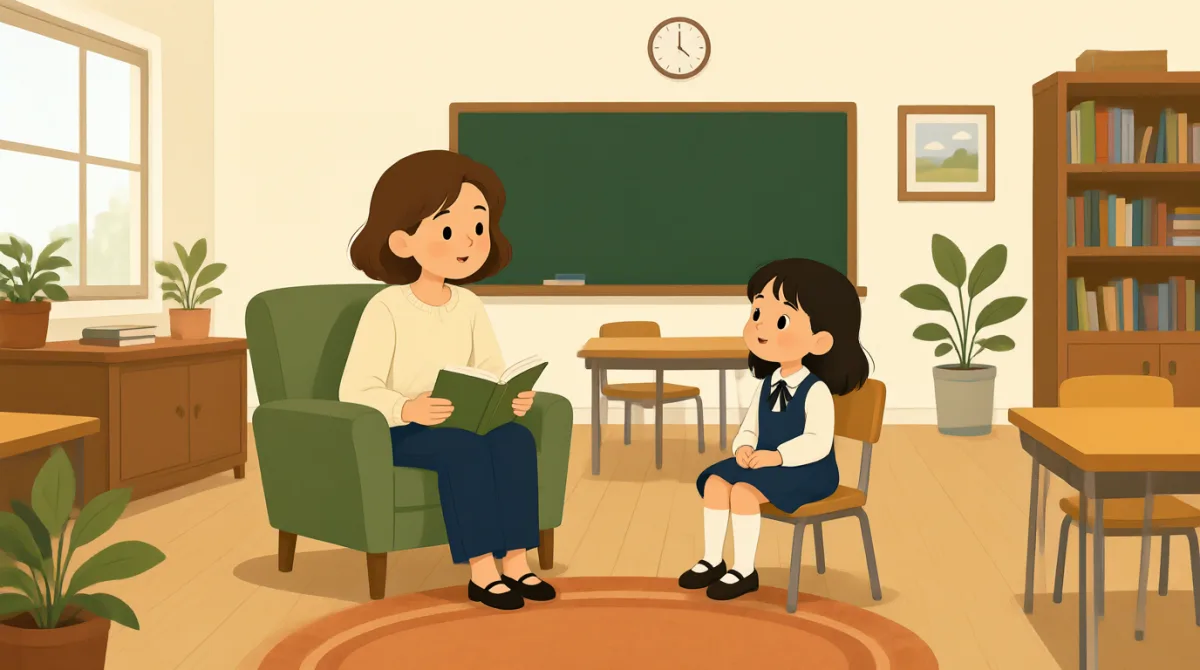

Mia, what was your first school like? Was it near your home?
মিয়া, তোমার প্রথম স্কুলটা কেমন ছিল? সেটা কি তোমাদের বাড়ির কাছে ছিল?

It was a small school in my town. I walked there with my mother.
আমাদের শহরের একটা ছোট স্কুল ছিল। আমি মায়ের সঙ্গে হেঁটে সেখানে যেতাম।
Did you like your teachers? What did they teach you?
তোমার শিক্ষকদের ভালো লাগত? তাঁরা তোমাদের কী পড়াতেন?
Yes, they were kind. My favorite teacher taught us reading and art.
হ্যাঁ, তাঁরা খুব ভালো ছিলেন। আমার সবচেয়ে প্রিয় শিক্ষক আমাদের পড়া আর ছবি আঁকা শেখাতেন।
What time did school start? Did you eat lunch there?
স্কুল কখন শুরু হতো? সেখানে দুপুরের খাবার খেতে?
It started at eight. I ate lunch with my friends in the classroom.
আটটায় শুরু হতো। আমি ক্লাসরুমে বন্ধুদের সঙ্গে দুপুরের খাবার খেতাম।
What did you do after class? Did you walk home together?
ক্লাসের পর কী করতে? একসঙ্গে হেঁটে বাড়ি ফিরতে?
We walked home together and talked about our day. I remember it fondly.
আমরা একসঙ্গে হেঁটে বাড়ি ফিরতাম আর সারাদিনের গল্প করতাম। সেই সময়টার কথা আমার খুব ভালোভাবে মনে আছে।
শব্দভান্ডার8
- first schoolপ্রথম স্কুল
This means the first school you attended as a child. Use it to ask about someone's early school experience.
এর মানে ছোটবেলায় তুমি যে স্কুলে প্রথম পড়তে গিয়েছিলে। কারও ছোটবেলার স্কুলের অভিজ্ঞতা জানতে এই কথাটি ব্যবহার করো।
- near your homeতোমার বাড়ির কাছে
This means close to the place where you live. Use it to ask how far away a school or other place was.
এর মানে তুমি যেখানে থাকো, সেই জায়গার কাছাকাছি। কোনো স্কুল বা অন্য জায়গা কত দূরে ছিল, তা জানতে এই কথাটি ব্যবহার করো।
- walked thereহেঁটে সেখানে গিয়েছিলাম
This means went to that place on foot. Use it to describe how you traveled somewhere in the past.
এর মানে পায়ে হেঁটে সেই জায়গায় গিয়েছিলে। অতীতে কীভাবে কোথাও গিয়েছিলে, তা বলতে এই কথাটি ব্যবহার করো।
- favorite teacherসবচেয়ে প্রিয় শিক্ষক
This means the teacher you liked best. Use it to talk about a teacher you remember fondly.
এর মানে যে শিক্ষককে তোমার সবচেয়ে ভালো লাগত। কোনো শিক্ষকের কথা স্নেহের সঙ্গে বলতে এই কথাটি ব্যবহার করো।
- started at eightআটটায় শুরু হয়েছিল
This means school began at eight o'clock. Use this pattern to say when an event or activity began.
এর মানে স্কুল আটটায় শুরু হয়েছিল। কোনো ঘটনা বা কাজ কখন শুরু হয়েছিল, তা বলতে এই গঠনটি ব্যবহার করো।
- ate lunchদুপুরের খাবার খেয়েছিলাম
This means had a midday meal. Use it to talk about what you ate and when.
এর মানে দুপুরের খাবার খেয়েছিলে। কী খেয়েছিলে এবং কখন খেয়েছিলে, তা বলতে এই কথাটি ব্যবহার করো।
- after classক্লাসের পর
This means after a lesson or the school day ended. Use it to ask or talk about what happened next.
এর মানে কোনো পাঠ বা স্কুলের দিন শেষ হওয়ার পরে। এরপর কী ঘটেছিল তা জানতে বা বলতে এই কথাটি ব্যবহার করো।
- walked home togetherএকসঙ্গে হেঁটে বাড়ি ফিরেছিলাম
This means went home on foot with other people. Use it to describe how you traveled home with someone.
এর মানে অন্যদের সঙ্গে পায়ে হেঁটে বাড়ি গিয়েছিলে। কারও সঙ্গে কীভাবে বাড়ি ফিরেছিলে, তা বলতে এই কথাটি ব্যবহার করো।
গুরুত্বপূর্ণ বাক্য8
- 1
What was your first school like?
তোমার প্রথম স্কুলটা কেমন ছিল?
This is a friendly way to ask someone about their early school experience. You can reuse “What was your first ___ like?” to ask about another place or experience.
কারও ছোটবেলার স্কুলের অভিজ্ঞতা জানতে এটি একটি বন্ধুত্বপূর্ণ প্রশ্ন। অন্য কোনো জায়গা বা অভিজ্ঞতার কথা জানতে “What was your first ___ like?” আবার ব্যবহার করতে পারো।
- 2
Was it near your home?
সেটা কি তোমাদের বাড়ির কাছে ছিল?
This asks whether a place was close to someone's home. You can replace “it” with a school, shop, or other place.
কোনো জায়গা কারও বাড়ির কাছে ছিল কি না, এই প্রশ্নে তা জানতে চাওয়া হয়। “it”-এর বদলে স্কুল, দোকান বা অন্য কোনো জায়গার নাম বসাতে পারো।
- 3
I walked there with my mother.
আমি মায়ের সঙ্গে হেঁটে সেখানে গিয়েছিলাম।
This tells how someone traveled to a place in the past and who went with them. Change “walked” or “my mother” to describe your own experience.
অতীতে কেউ কীভাবে কোনো জায়গায় গিয়েছিল এবং তার সঙ্গে কে ছিল, এই বাক্যে তা বলা হয়। নিজের অভিজ্ঞতা জানাতে “walked” বা “my mother” বদলে নিতে পারো।
- 4
My favorite teacher taught us reading and art.
আমার সবচেয়ে প্রিয় শিক্ষক আমাদের পড়া আর ছবি আঁকা শেখাতেন।
This describes a teacher someone liked best and the subjects the teacher taught. You can change the teacher or subjects to share a school memory.
কোনো ব্যক্তির সবচেয়ে প্রিয় শিক্ষক কে ছিলেন এবং তিনি কী কী বিষয় পড়াতেন, এই বাক্যে তা বলা হয়। স্কুলের স্মৃতি ভাগ করে নিতে শিক্ষক বা বিষয়ের নাম বদলে বলতে পারো।
- 5
It started at eight.
এটা আটটায় শুরু হয়েছিল।
This is a simple way to say when something began. Use it to talk about school, work, or an event in the past.
কোনো কিছু কখন শুরু হয়েছিল, তা বলার এটি একটি সহজ উপায়। অতীতে স্কুল, কাজ বা কোনো অনুষ্ঠানের কথা বলতে এটি ব্যবহার করো।
- 6
I ate lunch with my friends in the classroom.
আমি ক্লাসরুমে বন্ধুদের সঙ্গে দুপুরের খাবার খেয়েছিলাম।
This sentence says what someone did, who they were with, and where they ate. You can change the meal, people, or place to describe your routine.
কেউ কী করেছিল, কার সঙ্গে ছিল এবং কোথায় খেয়েছিল—এই বাক্যে সবই বলা হয়। নিজের রোজকার অভ্যাস জানাতে খাবার, সঙ্গী বা জায়গার কথা বদলে নিতে পারো।
- 7
We walked home together and talked about our day.
আমরা একসঙ্গে হেঁটে বাড়ি ফিরেছিলাম আর সারাদিনের গল্প করেছিলাম।
This describes two things people did after school. Use “We [past action] and [past action]” to tell someone about a shared experience.
স্কুলের পর মানুষ দুটি কী করেছিল, এই বাক্যে তা বলা হয়। একসঙ্গে করা কোনো অভিজ্ঞতার কথা বলতে “We [past action] and [past action]” ব্যবহার করো।
- 8
I remember it fondly.
সেই স্মৃতিটা আমার খুব ভালো লাগে।
This means you remember something with warm, happy feelings. Use it when talking about a positive memory from the past.
এর মানে কোনো কিছু তোমার মনে উষ্ণ ও আনন্দের অনুভূতি জাগায়। অতীতের কোনো সুন্দর স্মৃতির কথা বলার সময় এটি ব্যবহার করো।