Asking for Directions on the Way
途中問路
Emma stops to ask Mia, a local, how to get back to the riverside bike path. Mia gives her simple directions and warns her about a busy street.
Emma停下來向當地人Mia詢問如何回到河邊腳踏車道。Mia告訴她簡單的路線,並提醒她避開一條繁忙的街道。
對話8
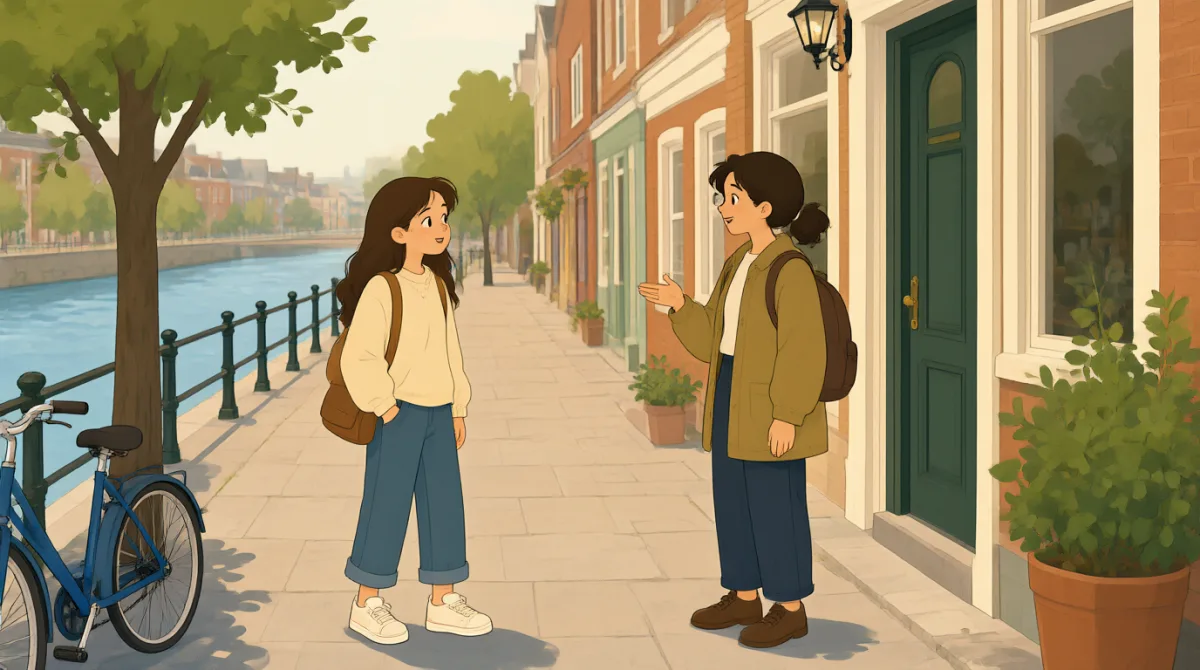

Excuse me, how do I get back to the riverside bike path?
打擾一下,請問怎麼回到河邊的腳踏車道?

Go straight to the traffic lights, then turn left.
一直走到紅綠燈,然後左轉。
Is the path close to the river from there?
從那兒到河邊的腳踏車道近嗎?
Yes. Keep going for two blocks, and you’ll see it on your right.
近。再走兩個街區,你會在右邊看到它。
Should I cross the big street near the lights?
我需要在紅綠燈附近穿過那條大街嗎?
No, that street gets busy. Use the crosswalk and wait for the light.
不用,那條街車很多。走人行橫道,等綠燈再過。
Thanks! I’ll use the crosswalk and stay on the bike path.
謝謝!我會走人行橫道,然後沿著腳踏車道走。
You’re welcome. Enjoy your ride!
不客氣。祝你騎得開心!
詞彙7
- Go straight直走
Continue forward without turning. Use it to give someone a simple direction.
不轉彎,繼續往前走。可以用它給別人指路。
- traffic lights紅綠燈
The lights that control traffic at a road crossing. They are a useful landmark when giving directions.
路口用來控制車輛通行的訊號燈。指路時,它可以作為一個明顯的參照物。
- turn left左轉
Change direction to the left. Use it to tell someone which way to go.
向左改變方向。可以用它告訴別人該往哪邊走。
- Keep going繼續走
Continue moving in the same direction. You can add a distance or landmark after this phrase.
沿著同一個方向繼續走。這個短語後面可以接距離或地標。
- on your right在你的右邊
On the right-hand side as you move forward. Use it to describe where someone will find a place.
朝前走時的右手邊。可以用它說明某個地方在哪裡。
- crosswalk人行橫道
A marked place where people can safely cross a street. Use it when giving directions or safety advice.
路上標出來、供行人安全過街的地方。指路或提醒安全事項時可以用這個詞。
- gets busy變得繁忙
Becomes crowded with traffic or people. Use it to warn someone that a place may be less safe or harder to use.
車輛或行人變多、變擁擠。可以用它提醒別人某個地方可能不太安全,或不太方便通行。
關鍵句7
- 1
Excuse me, how do I get back to the riverside bike path?
打擾一下,請問怎麼回到河邊的腳踏車道?
Use this polite question when you need directions to a place. Replace “the riverside bike path” with the place you want to reach.
需要問路時,可以用這個禮貌的問句。把“the riverside bike path”換成你要去的地方就可以了。
- 2
Go straight to the traffic lights, then turn left.
一直走到紅綠燈,然後左轉。
This gives two clear directions in order. Use “then” to show what to do next.
這個句子按順序給出了兩個清楚的指示。用“then”表示接下來要做什麼。
- 3
Is the path close to the river from there?
從那兒到河邊的腳踏車道近嗎?
Use this question to check whether a place is near a landmark. Replace “the river” with another place or feature.
可以用這個問句確認某個地方是否靠近一個地標。把“the river”換成其他地點或特徵即可。
- 4
Keep going for two blocks, and you’ll see it on your right.
再走兩個街區,你會在右邊看到它。
This explains how far to travel and where to look. You can change “two blocks” and “on your right” to match the directions.
這個句子說明要走多遠,以及該往哪邊找。你可以根據實際路線替換“two blocks”和“on your right”。
- 5
Should I cross the big street near the lights?
我需要在紅綠燈附近穿過那條大街嗎?
Use “Should I…?” to ask if an action is the right thing to do. Replace “cross the big street” with another action you are unsure about.
用“Should I…?”詢問某個做法是否合適。可以把“cross the big street”換成你不確定該不該做的其他事情。
- 6
Use the crosswalk and wait for the light.
走人行橫道,等綠燈再過。
This gives simple safety instructions for crossing a street. You can use this pattern to give someone two actions in order.
這個句子簡明地說明了過馬路時該如何確保安全。你也可以用這個句型按順序告訴別人做兩件事。
- 7
Thanks! I’ll use the crosswalk and stay on the bike path.
謝謝!我會走人行橫道,然後沿著腳踏車道走。
Use “I’ll” to say what you plan to do after receiving advice. It is a natural way to thank someone and confirm your plan.
用“I’ll”說明你聽取建議後打算怎麼做。這是一種自然的表達方式,既能感謝對方,也能告訴對方你的計劃。