Asking for Directions on the Way
السؤال عن الطريق أثناء التنقّل
Emma stops to ask Mia, a local, how to get back to the riverside bike path. Mia gives her simple directions and warns her about a busy street.
تتوقف إيما لتسأل ميا، وهي من سكان المنطقة، عن كيفية العودة إلى مسار الدراجات على ضفة النهر. تعطيها ميا إرشادات بسيطة وتحذّرها من شارع مزدحم.
حوار8
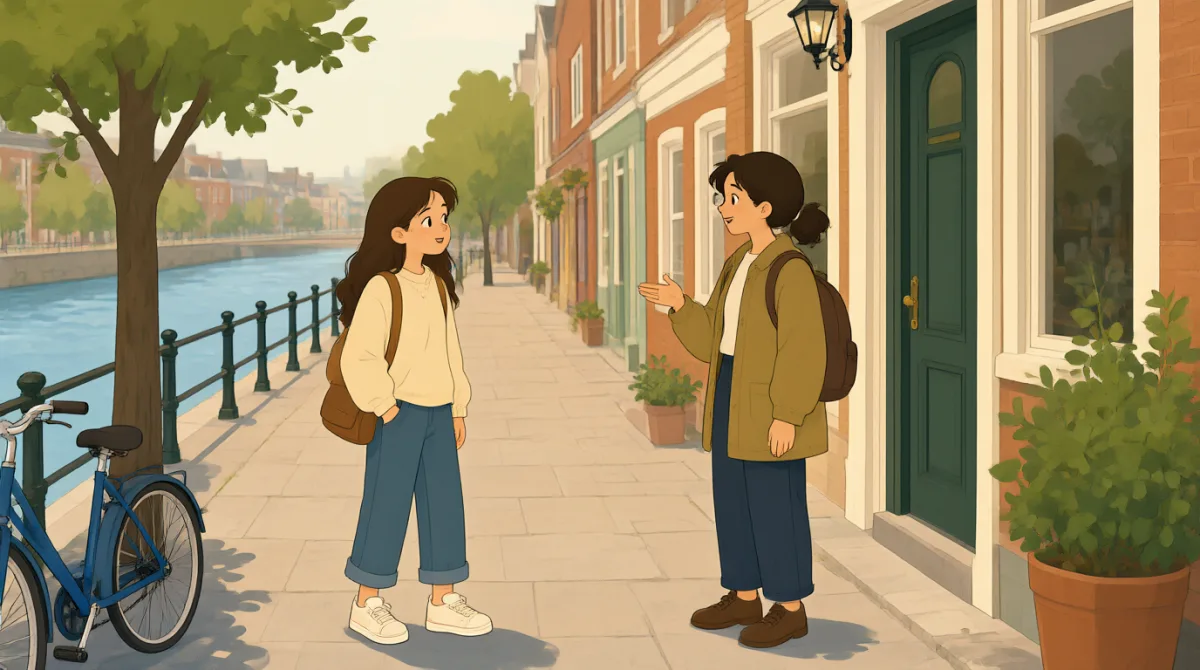

Excuse me, how do I get back to the riverside bike path?
عذرًا، كيف أعود إلى مسار الدراجات على ضفة النهر؟

Go straight to the traffic lights, then turn left.
تابعي سيركِ مستقيمةً حتى إشارات المرور، ثم انعطفي يسارًا.
Is the path close to the river from there?
هل يكون المسار قريبًا من النهر من هناك؟
Yes. Keep going for two blocks, and you’ll see it on your right.
نعم. تابعي السير لمسافتين بين شارعين، وستجدينه على يمينكِ.
Should I cross the big street near the lights?
هل أعبر الشارع الكبير قرب الإشارات؟
No, that street gets busy. Use the crosswalk and wait for the light.
لا، ذلك الشارع مزدحم. استخدمي ممر المشاة وانتظري الإشارة.
Thanks! I’ll use the crosswalk and stay on the bike path.
شكرًا! سأستخدم ممر المشاة وأبقى على مسار الدراجات.
You’re welcome. Enjoy your ride!
على الرحب والسعة. استمتعي بركوب الدراجة!
المفردات7
- Go straightتابع السير مستقيمًا
Continue forward without turning. Use it to give someone a simple direction.
واصل السير إلى الأمام من دون أن تنعطف. تُستخدم هذه العبارة لإعطاء شخص إرشادًا بسيطًا.
- traffic lightsإشارات المرور
The lights that control traffic at a road crossing. They are a useful landmark when giving directions.
الإشارات التي تنظّم حركة المرور عند التقاطعات. وهي علامة مفيدة للاستدلال عند إعطاء الاتجاهات.
- turn leftانعطف يسارًا
Change direction to the left. Use it to tell someone which way to go.
غيّر اتجاهك إلى اليسار. تُستخدم هذه العبارة لإخبار شخص بالاتجاه الذي ينبغي أن يسلكه.
- Keep goingواصل السير
Continue moving in the same direction. You can add a distance or landmark after this phrase.
واصل التقدّم في الاتجاه نفسه. يمكنك ذكر مسافة أو علامة مميزة بعد هذه العبارة.
- on your rightعلى يمينك
On the right-hand side as you move forward. Use it to describe where someone will find a place.
في الجهة اليمنى أثناء التقدّم إلى الأمام. تُستخدم لوصف المكان الذي سيجد فيه شخص ما موقعًا معينًا.
- crosswalkممر المشاة
A marked place where people can safely cross a street. Use it when giving directions or safety advice.
مكان محدد لعبور الشارع بأمان. تُستخدم هذه العبارة عند إعطاء الاتجاهات أو نصائح السلامة.
- gets busyيصبح مزدحمًا
Becomes crowded with traffic or people. Use it to warn someone that a place may be less safe or harder to use.
تزداد فيه كثافة حركة المرور أو عدد الأشخاص. تُستخدم هذه العبارة لتحذير شخص من أن المكان قد يصبح أقل أمانًا أو أصعب استخدامًا.
الجمل الأساسية7
- 1
Excuse me, how do I get back to the riverside bike path?
عذرًا، كيف أعود إلى مسار الدراجات على ضفة النهر؟
Use this polite question when you need directions to a place. Replace “the riverside bike path” with the place you want to reach.
استخدمي هذا السؤال المهذّب عندما تحتاجين إلى معرفة الطريق إلى مكان ما. استبدلي “the riverside bike path” بالمكان الذي تريدين الوصول إليه.
- 2
Go straight to the traffic lights, then turn left.
تابعي سيركِ مستقيمةً حتى إشارات المرور، ثم انعطفي يسارًا.
This gives two clear directions in order. Use “then” to show what to do next.
تتضمن هذه العبارة إرشادين واضحين بالترتيب. استخدمي “then” لتوضيح الخطوة التالية.
- 3
Is the path close to the river from there?
هل يكون المسار قريبًا من النهر من هناك؟
Use this question to check whether a place is near a landmark. Replace “the river” with another place or feature.
استخدمي هذا السؤال للتحقق مما إذا كان مكان ما قريبًا من علامة مميزة. استبدلي “the river” بمكان أو معلم آخر.
- 4
Keep going for two blocks, and you’ll see it on your right.
تابعي السير لمسافتين بين شارعين، وستجدينه على يمينكِ.
This explains how far to travel and where to look. You can change “two blocks” and “on your right” to match the directions.
توضح هذه العبارة المسافة التي ينبغي قطعها والجهة التي ينبغي النظر إليها. يمكنك تغيير “two blocks” و“on your right” لتناسب الاتجاهات.
- 5
Should I cross the big street near the lights?
هل أعبر الشارع الكبير قرب الإشارات؟
Use “Should I…?” to ask if an action is the right thing to do. Replace “cross the big street” with another action you are unsure about.
استخدمي “Should I…?” للسؤال عمّا إذا كان فعلٌ ما هو التصرف الصحيح. استبدلي “cross the big street” بفعل آخر لستِ متأكدة منه.
- 6
Use the crosswalk and wait for the light.
استخدمي ممر المشاة وانتظري الإشارة.
This gives simple safety instructions for crossing a street. You can use this pattern to give someone two actions in order.
تقدم هذه العبارة تعليمات بسيطة للسلامة عند عبور الشارع. يمكنك استخدام هذا النمط لإعطاء شخص توجيهين بالترتيب.
- 7
Thanks! I’ll use the crosswalk and stay on the bike path.
شكرًا! سأستخدم ممر المشاة وأبقى على مسار الدراجات.
Use “I’ll” to say what you plan to do after receiving advice. It is a natural way to thank someone and confirm your plan.
استخدمي “I’ll” لتوضيح ما تنوين فعله بعد تلقي النصيحة. إنها طريقة طبيعية لشكر شخص ما وتأكيد خطتك.