Asking for Directions on the Way
रास्ते में रास्ता पूछना
Emma stops to ask Mia, a local, how to get back to the riverside bike path. Mia gives her simple directions and warns her about a busy street.
एमा रुककर स्थानीय निवासी मिया से पूछती है कि नदी किनारे वाले साइकिल पथ पर वापस कैसे पहुँचे। मिया उसे आसान रास्ता बताती है और व्यस्त सड़क के बारे में सावधान करती है।
संवाद8
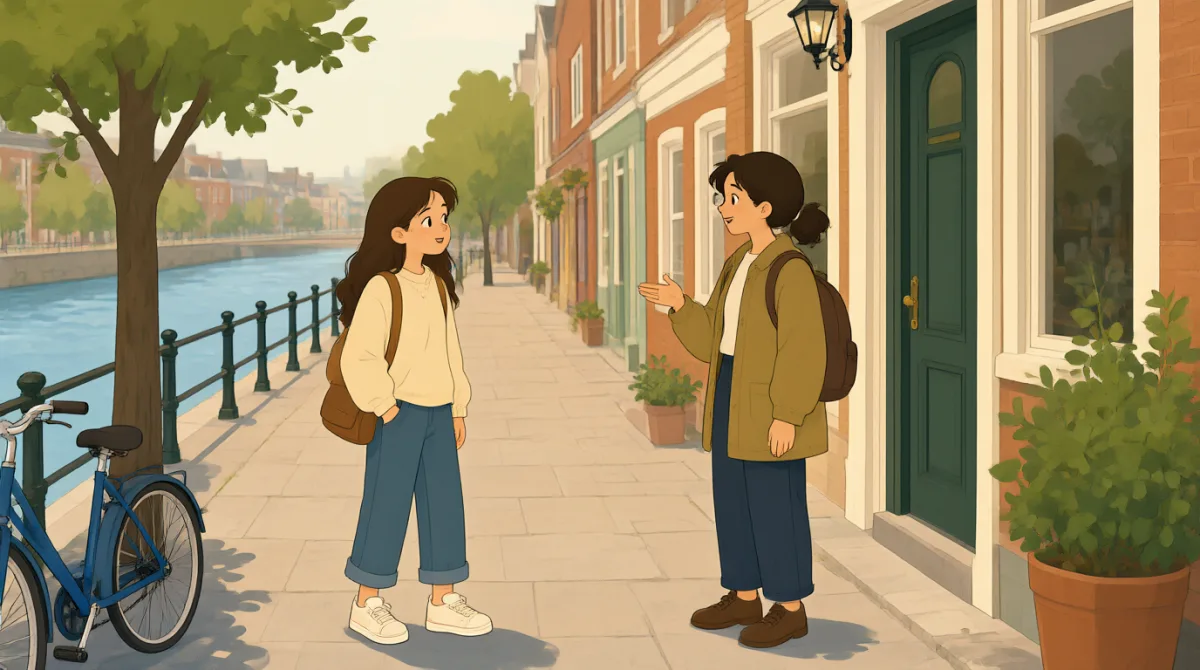

Excuse me, how do I get back to the riverside bike path?
माफ़ कीजिए, मैं नदी किनारे वाले साइकिल पथ पर वापस कैसे पहुँचूँ?

Go straight to the traffic lights, then turn left.
ट्रैफ़िक लाइट तक सीधे जाइए, फिर बाएँ मुड़िए।
Is the path close to the river from there?
वहाँ से रास्ता नदी के पास है?
Yes. Keep going for two blocks, and you’ll see it on your right.
हाँ। दो ब्लॉक तक आगे बढ़ते जाइए, वह आपको दाईं ओर दिख जाएगा।
Should I cross the big street near the lights?
क्या मुझे लाइट के पास वाली बड़ी सड़क पार करनी चाहिए?
No, that street gets busy. Use the crosswalk and wait for the light.
नहीं, उस सड़क पर काफ़ी ट्रैफ़िक रहता है। ज़ेब्रा क्रॉसिंग से पार कीजिए और हरी बत्ती का इंतज़ार कीजिए।
Thanks! I’ll use the crosswalk and stay on the bike path.
धन्यवाद! मैं ज़ेब्रा क्रॉसिंग से पार करूँगी और साइकिल पथ पर ही रहूँगी।
You’re welcome. Enjoy your ride!
कोई बात नहीं। आपकी सवारी अच्छी रहे!
शब्दावली7
- Go straightसीधे जाइए
Continue forward without turning. Use it to give someone a simple direction.
बिना मुड़े आगे बढ़ते रहना। किसी को आसान रास्ता बताने के लिए इस वाक्यांश का इस्तेमाल करें।
- traffic lightsट्रैफ़िक लाइट
The lights that control traffic at a road crossing. They are a useful landmark when giving directions.
सड़क पार करने की जगह पर यातायात को नियंत्रित करने वाली बत्तियाँ। रास्ता बताते समय इन्हें पहचान के निशान के तौर पर बताया जा सकता है।
- turn leftबाएँ मुड़िए
Change direction to the left. Use it to tell someone which way to go.
अपनी दिशा बदलकर बाईं ओर जाना। किसी को बताने के लिए इसका इस्तेमाल करें कि उसे किस तरफ़ जाना है।
- Keep goingआगे बढ़ते जाइए
Continue moving in the same direction. You can add a distance or landmark after this phrase.
उसी दिशा में चलते रहना। इस वाक्यांश के बाद आप दूरी या रास्ते की किसी पहचान का ज़िक्र कर सकते हैं।
- on your rightआपकी दाईं ओर
On the right-hand side as you move forward. Use it to describe where someone will find a place.
आगे बढ़ते समय दाईं तरफ़। किसी जगह की स्थिति बताने के लिए इसका इस्तेमाल करें।
- crosswalkज़ेब्रा क्रॉसिंग
A marked place where people can safely cross a street. Use it when giving directions or safety advice.
सड़क पार करने के लिए सफ़ेद धारियों से चिह्नित सुरक्षित जगह। रास्ता बताते या सुरक्षा की सलाह देते समय इसका इस्तेमाल करें।
- gets busyवहाँ काफ़ी ट्रैफ़िक रहता है
Becomes crowded with traffic or people. Use it to warn someone that a place may be less safe or harder to use.
वहाँ वाहनों या लोगों की भीड़ बढ़ जाती है। किसी को सावधान करने के लिए इसका इस्तेमाल करें कि वह जगह कम सुरक्षित या इस्तेमाल करने में मुश्किल हो सकती है।
मुख्य वाक्य7
- 1
Excuse me, how do I get back to the riverside bike path?
माफ़ कीजिए, मैं नदी किनारे वाले साइकिल पथ पर वापस कैसे पहुँचूँ?
Use this polite question when you need directions to a place. Replace “the riverside bike path” with the place you want to reach.
किसी जगह का रास्ता पूछने के लिए इस विनम्र सवाल का इस्तेमाल करें। “the riverside bike path” की जगह उस जगह का नाम रखें जहाँ आप पहुँचना चाहते हैं।
- 2
Go straight to the traffic lights, then turn left.
ट्रैफ़िक लाइट तक सीधे जाइए, फिर बाएँ मुड़िए।
This gives two clear directions in order. Use “then” to show what to do next.
यह क्रम से दो साफ़ निर्देश देता है। अगला कदम बताने के लिए “then” का इस्तेमाल करें।
- 3
Is the path close to the river from there?
वहाँ से रास्ता नदी के पास है?
Use this question to check whether a place is near a landmark. Replace “the river” with another place or feature.
किसी पहचान की जगह के पास कोई स्थान है या नहीं, यह पूछने के लिए इस सवाल का इस्तेमाल करें। “the river” की जगह किसी दूसरी जगह या पहचान का नाम रख सकते हैं।
- 4
Keep going for two blocks, and you’ll see it on your right.
दो ब्लॉक तक आगे बढ़ते जाइए, वह आपको दाईं ओर दिख जाएगा।
This explains how far to travel and where to look. You can change “two blocks” and “on your right” to match the directions.
इससे पता चलता है कि कितनी दूर जाना है और कहाँ देखना है। निर्देश के अनुसार “two blocks” और “on your right” बदल सकते हैं।
- 5
Should I cross the big street near the lights?
क्या मुझे लाइट के पास वाली बड़ी सड़क पार करनी चाहिए?
Use “Should I…?” to ask if an action is the right thing to do. Replace “cross the big street” with another action you are unsure about.
यह पूछने के लिए “Should I…?” का इस्तेमाल करें कि कोई काम करना सही होगा या नहीं। “cross the big street” की जगह वह काम रखें जिसके बारे में आप निश्चित नहीं हैं।
- 6
Use the crosswalk and wait for the light.
ज़ेब्रा क्रॉसिंग से पार कीजिए और बत्ती का इंतज़ार कीजिए।
This gives simple safety instructions for crossing a street. You can use this pattern to give someone two actions in order.
यह सड़क पार करने के लिए आसान सुरक्षा निर्देश देता है। किसी को क्रम से दो काम बताने के लिए भी इस ढाँचे का इस्तेमाल कर सकते हैं।
- 7
Thanks! I’ll use the crosswalk and stay on the bike path.
धन्यवाद! मैं ज़ेब्रा क्रॉसिंग से पार करूँगी और साइकिल पथ पर ही रहूँगी।
Use “I’ll” to say what you plan to do after receiving advice. It is a natural way to thank someone and confirm your plan.
सलाह मिलने के बाद आप क्या करने वाले हैं, यह बताने के लिए “I’ll” का इस्तेमाल करें। किसी को धन्यवाद देने और अपनी योजना बताने का यह स्वाभाविक तरीका है।