Asking for Directions on the Way
পথে দিকনির্দেশনা জিজ্ঞাসা করা
Emma stops to ask Mia, a local, how to get back to the riverside bike path. Mia gives her simple directions and warns her about a busy street.
এমা স্থানীয় বাসিন্দা মিয়াকে জিজ্ঞাসা করতে থামে, নদীর ধারের সাইকেলপথে কীভাবে ফিরে যেতে হবে। মিয়া তাকে সহজ দিকনির্দেশনা দেয় এবং একটি ব্যস্ত রাস্তা সম্পর্কে সতর্ক করে।
সংলাপ8
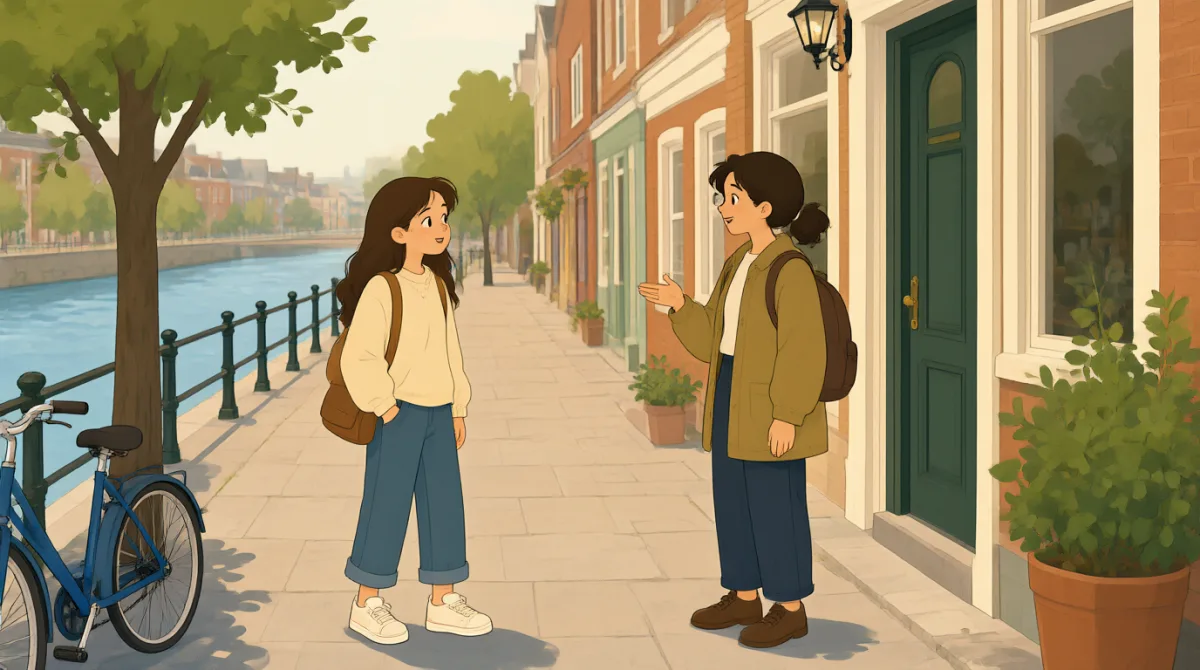

Excuse me, how do I get back to the riverside bike path?
মাফ করবেন, নদীর ধারের সাইকেলপথে কীভাবে ফিরে যাব?

Go straight to the traffic lights, then turn left.
সোজা ট্রাফিক লাইট পর্যন্ত যান, তারপর বাঁ দিকে মোড় নিন।
Is the path close to the river from there?
সেখান থেকে পথটা কি নদীর কাছাকাছি?
Yes. Keep going for two blocks, and you’ll see it on your right.
হ্যাঁ। আরও দুই ব্লক এগিয়ে যান, পথটা আপনার ডান দিকে দেখতে পাবেন।
Should I cross the big street near the lights?
লাইটের কাছে বড় রাস্তাটা কি পার হব?
No, that street gets busy. Use the crosswalk and wait for the light.
না, ওই রাস্তায় অনেক যানবাহন থাকে। জেব্রা ক্রসিং ব্যবহার করুন এবং সবুজ সংকেতের জন্য অপেক্ষা করুন।
Thanks! I’ll use the crosswalk and stay on the bike path.
ধন্যবাদ! আমি জেব্রা ক্রসিং ব্যবহার করব এবং সাইকেলপথেই থাকব।
You’re welcome. Enjoy your ride!
স্বাগতম। আনন্দ করে সাইকেল চালান!
শব্দভান্ডার7
- Go straightসোজা যান
Continue forward without turning. Use it to give someone a simple direction.
মোড় না নিয়ে সামনের দিকে এগিয়ে যেতে বলুন। কাউকে সহজ দিকনির্দেশনা দিতে এই কথাটি ব্যবহার করুন।
- traffic lightsট্রাফিক লাইট
The lights that control traffic at a road crossing. They are a useful landmark when giving directions.
রাস্তা পারাপারের সময় যানবাহন নিয়ন্ত্রণ করে যে বাতিগুলো। দিকনির্দেশনা দেওয়ার সময় এগুলোকে চেনার মতো কোনো জায়গা হিসেবে বলা যেতে পারে।
- turn leftবাঁ দিকে মোড় নিন
Change direction to the left. Use it to tell someone which way to go.
বাঁ দিকে দিক পরিবর্তন করুন। কাউকে কোন দিকে যেতে হবে তা জানাতে এই কথাটি ব্যবহার করুন।
- Keep goingএগিয়ে যান
Continue moving in the same direction. You can add a distance or landmark after this phrase.
একই দিকে চলতে থাকুন। এই কথার পরে দূরত্ব বা কোনো চেনার মতো জায়গার উল্লেখ করতে পারেন।
- on your rightআপনার ডান দিকে
On the right-hand side as you move forward. Use it to describe where someone will find a place.
সামনের দিকে এগোলে ডান পাশের দিকে। কোনো জায়গা কোথায় পাওয়া যাবে তা বোঝাতে এই কথাটি ব্যবহার করুন।
- crosswalkজেব্রা ক্রসিং
A marked place where people can safely cross a street. Use it when giving directions or safety advice.
রাস্তা নিরাপদে পার হওয়ার জন্য চিহ্নিত জায়গা। দিকনির্দেশনা বা নিরাপত্তার পরামর্শ দেওয়ার সময় এটি ব্যবহার করুন।
- gets busyযানবাহন বেড়ে যায়
Becomes crowded with traffic or people. Use it to warn someone that a place may be less safe or harder to use.
কোনো জায়গায় যানবাহন বা মানুষের ভিড় বেড়ে যায়। কোনো জায়গা কম নিরাপদ বা ব্যবহার করা কঠিন হতে পারে—এমন সতর্কতা দিতে এই কথাটি ব্যবহার করুন।
গুরুত্বপূর্ণ বাক্য7
- 1
Excuse me, how do I get back to the riverside bike path?
মাফ করবেন, নদীর ধারের সাইকেলপথে কীভাবে ফিরে যাব?
Use this polite question when you need directions to a place. Replace “the riverside bike path” with the place you want to reach.
কোনো জায়গায় যাওয়ার দিকনির্দেশনা চাইতে এই ভদ্র প্রশ্নটি ব্যবহার করুন। যেখানে যেতে চান, সেই জায়গার নাম দিয়ে “the riverside bike path” বদলে নিন।
- 2
Go straight to the traffic lights, then turn left.
সোজা ট্রাফিক লাইট পর্যন্ত যান, তারপর বাঁ দিকে মোড় নিন।
This gives two clear directions in order. Use “then” to show what to do next.
এখানে পরপর দুটি স্পষ্ট দিকনির্দেশনা দেওয়া হয়েছে। পরের কাজটি বোঝাতে “then” ব্যবহার করুন।
- 3
Is the path close to the river from there?
সেখান থেকে পথটা কি নদীর কাছাকাছি?
Use this question to check whether a place is near a landmark. Replace “the river” with another place or feature.
কোনো জায়গা পরিচিত কোনো স্থানের কাছে কি না জানতে এই প্রশ্নটি করুন। “the river”–এর বদলে অন্য কোনো জায়গা বা বৈশিষ্ট্যের নাম বসাতে পারেন।
- 4
Keep going for two blocks, and you’ll see it on your right.
আরও দুই ব্লক এগিয়ে যান, পথটা আপনার ডান দিকে দেখতে পাবেন।
This explains how far to travel and where to look. You can change “two blocks” and “on your right” to match the directions.
এতে কত দূর যেতে হবে এবং কোথায় তাকাতে হবে, তা বোঝানো হয়েছে। দিকনির্দেশনা অনুযায়ী “two blocks” এবং “on your right” বদলে নিতে পারেন।
- 5
Should I cross the big street near the lights?
লাইটের কাছে বড় রাস্তাটা কি পার হব?
Use “Should I…?” to ask if an action is the right thing to do. Replace “cross the big street” with another action you are unsure about.
কোনো কাজ করা ঠিক হবে কি না জানতে “Should I…?” ব্যবহার করুন। যে কাজটি নিয়ে নিশ্চিত নন, তা দিয়ে “cross the big street” বদলে নিন।
- 6
Use the crosswalk and wait for the light.
জেব্রা ক্রসিং ব্যবহার করুন এবং সবুজ সংকেতের জন্য অপেক্ষা করুন।
This gives simple safety instructions for crossing a street. You can use this pattern to give someone two actions in order.
রাস্তা পার হওয়ার সহজ নিরাপত্তা নির্দেশনা দিতে এই বাক্যটি ব্যবহার করুন। কাউকে পরপর দুটি কাজ বলতেও এই ধরনটি কাজে লাগে।
- 7
Thanks! I’ll use the crosswalk and stay on the bike path.
ধন্যবাদ! আমি জেব্রা ক্রসিং ব্যবহার করব এবং সাইকেলপথেই থাকব।
Use “I’ll” to say what you plan to do after receiving advice. It is a natural way to thank someone and confirm your plan.
পরামর্শ পাওয়ার পর কী করার পরিকল্পনা করছেন, তা বলতে “I’ll” ব্যবহার করুন। কাউকে ধন্যবাদ জানিয়ে নিজের পরিকল্পনা নিশ্চিত করার এটি স্বাভাবিক উপায়।