Asking for Directions on the Way
道を尋ねる
Emma stops to ask Mia, a local, how to get back to the riverside bike path. Mia gives her simple directions and warns her about a busy street.
エマは地元の人のミアに、自転車で川沿いの道に戻るにはどう行けばいいか尋ねます。ミアは簡単な道順を教え、交通量の多い通りに注意するよう伝えます。
会話8
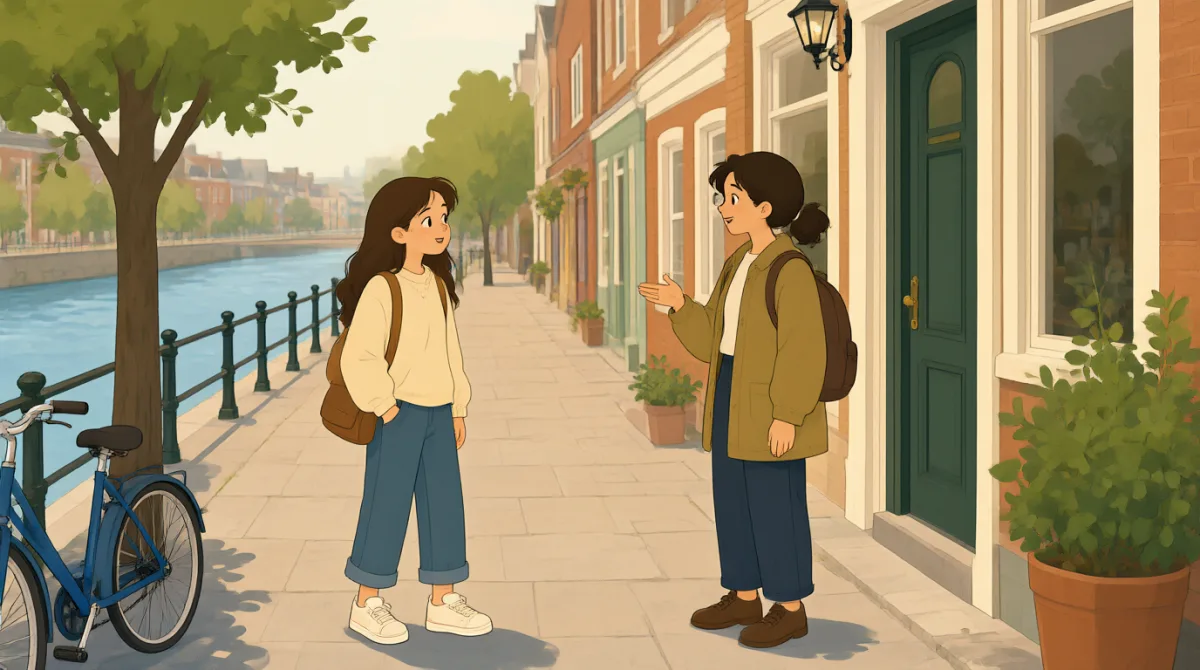

Excuse me, how do I get back to the riverside bike path?
すみません、川沿いの自転車道に戻るにはどう行けばいいですか?

Go straight to the traffic lights, then turn left.
信号までまっすぐ進んで、それから左に曲がってください。
Is the path close to the river from there?
そこからだと、その道は川の近くですか?
Yes. Keep going for two blocks, and you’ll see it on your right.
はい。2ブロック進むと、右手に見えますよ。
Should I cross the big street near the lights?
信号の近くにある大きな通りを渡ればいいですか?
No, that street gets busy. Use the crosswalk and wait for the light.
いいえ、あの通りは交通量が多くなります。横断歩道を使って、信号が変わるのを待ってください。
Thanks! I’ll use the crosswalk and stay on the bike path.
ありがとうございます!横断歩道を使って、自転車道を走ります。
You’re welcome. Enjoy your ride!
どういたしまして。自転車を楽しんでくださいね!
語彙7
- Go straightまっすぐ進む
Continue forward without turning. Use it to give someone a simple direction.
曲がらずに前へ進むことです。相手に簡単な道順を伝えるときに使います。
- traffic lights信号
The lights that control traffic at a road crossing. They are a useful landmark when giving directions.
道路の交差点で車や歩行者の通行を制御する灯火です。道順を説明するときの目印として便利です。
- turn left左に曲がる
Change direction to the left. Use it to tell someone which way to go.
左の方向へ進路を変えることです。相手にどちらへ進めばよいか伝えるときに使います。
- Keep goingそのまま進む
Continue moving in the same direction. You can add a distance or landmark after this phrase.
同じ方向へ進み続けることです。この表現のあとに、距離や目印を付け加えることもできます。
- on your right右手に
On the right-hand side as you move forward. Use it to describe where someone will find a place.
前へ進んだときの右側にある、という意味です。目的地がどこにあるか説明するときに使います。
- crosswalk横断歩道
A marked place where people can safely cross a street. Use it when giving directions or safety advice.
歩行者が安全に道路を渡るために設けられた場所です。道順や安全について伝えるときに使います。
- gets busy交通量が多くなる
Becomes crowded with traffic or people. Use it to warn someone that a place may be less safe or harder to use.
車や人で混み合うようになることです。その場所が危険になったり、通りにくくなったりする可能性を伝えるときに使います。
重要な文7
- 1
Excuse me, how do I get back to the riverside bike path?
すみません、川沿いの自転車道に戻るにはどう行けばいいですか?
Use this polite question when you need directions to a place. Replace “the riverside bike path” with the place you want to reach.
目的地までの道順を尋ねるときに使う丁寧な質問です。“the riverside bike path”を、行きたい場所に置き換えて使えます。
- 2
Go straight to the traffic lights, then turn left.
信号までまっすぐ進んで、それから左に曲がってください。
This gives two clear directions in order. Use “then” to show what to do next.
道順を2つ、順番に分かりやすく伝える表現です。“then”を使うと、次にすることを示せます。
- 3
Is the path close to the river from there?
そこからだと、その道は川の近くですか?
Use this question to check whether a place is near a landmark. Replace “the river” with another place or feature.
場所が目印の近くにあるかどうか尋ねるときに使います。“the river”は、別の場所や特徴に置き換えられます。
- 4
Keep going for two blocks, and you’ll see it on your right.
そのまま2ブロック進むと、右手に見えますよ。
This explains how far to travel and where to look. You can change “two blocks” and “on your right” to match the directions.
どのくらい進むか、どこを見ればいいかを伝える表現です。道順に合わせて、“two blocks”や“on your right”を変えられます。
- 5
Should I cross the big street near the lights?
信号の近くにある大きな通りを渡ればいいですか?
Use “Should I…?” to ask if an action is the right thing to do. Replace “cross the big street” with another action you are unsure about.
“Should I…?”は、ある行動をするのがよいか尋ねるときに使います。“cross the big street”を、どうすればよいか迷っている別の行動に置き換えられます。
- 6
Use the crosswalk and wait for the light.
横断歩道を使って、信号が変わるのを待ってください。
This gives simple safety instructions for crossing a street. You can use this pattern to give someone two actions in order.
道路を渡るときの簡単な安全指示です。この形を使って、2つの行動を順番に伝えられます。
- 7
Thanks! I’ll use the crosswalk and stay on the bike path.
ありがとうございます!横断歩道を使って、自転車道を走ります。
Use “I’ll” to say what you plan to do after receiving advice. It is a natural way to thank someone and confirm your plan.
“I’ll”は、アドバイスを受けたあとに自分がするつもりのことを伝える表現です。お礼を言いながら、自分の予定を確認する自然な言い方です。