Colleague Hesitates to Take a Snack
同事猶豫是否接受零食
You've offered a snack, but your colleague seems hesitant (e.g., 'Are you sure?', 'Don't worry about me'). You want to assure them it's fine to take some.
你提供了零食,但你的同事似乎在猶豫(例如,'你確定嗎?','別管我了')。你想讓他們放心拿一點沒關係。
對話6
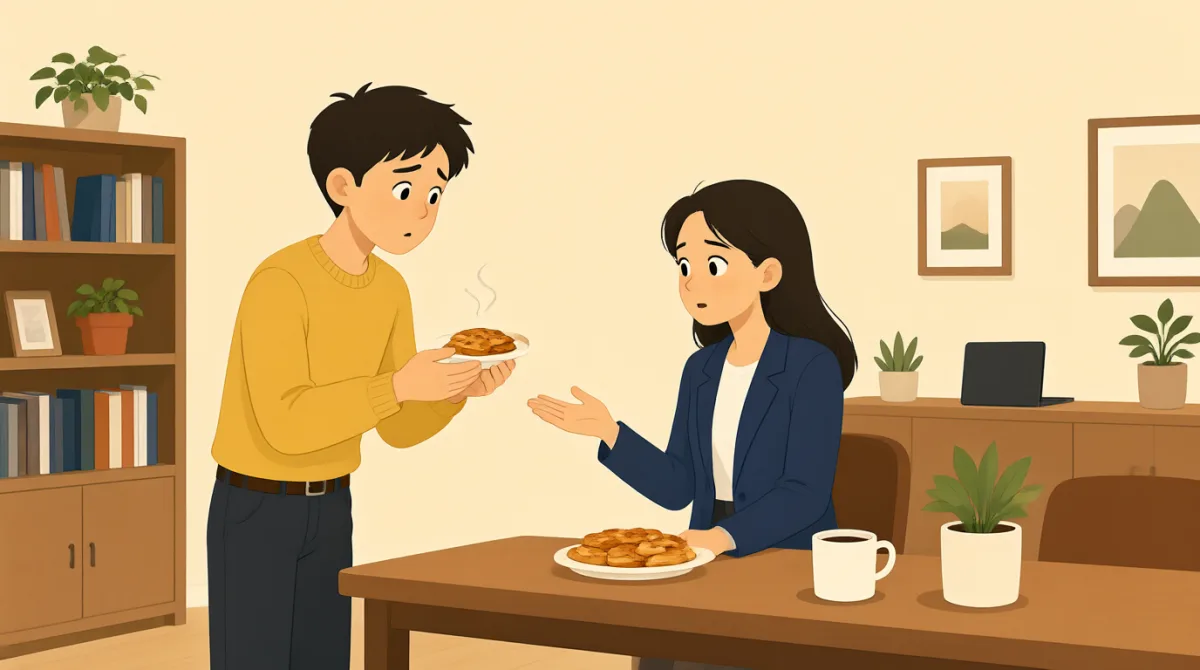

Hey, Jack, I brought some extra cookies today. Want one?
嘿,傑克,我今天多帶了些餅乾。想來一塊嗎?

Oh, are you sure? Don't you want them yourself?
哦,你確定嗎?你自己不想吃嗎?
Completely sure! I made way too many. Seriously, take a couple. They're really good.
完全確定!我做得太多了。真的,拿兩塊吧。它們非常好吃。
Well, if you insist. I don't want to take your last one.
好吧,如果你堅持的話。我可不想拿走你最後一塊。
No worries at all! I've got plenty more in the container. Help yourself!
完全沒問題!我盒子裡還有很多呢。隨便拿!
Okay, thanks, Emma! These look delicious.
好的,謝謝你,艾瑪!這些看起來真好吃。
詞彙7
- extra額外的
Means additional or more than needed. Use it when offering something you have in abundance, like 'I have extra snacks.'
表示額外的或超出所需的。想表示自己有很多東西可以分享時,可以用這個詞,比如 'I have extra snacks.'(我有多餘的零食。)
- sure確定的
Means certain or without doubt. In conversations, 'Are you sure?' shows hesitation, and 'I'm sure' reassures someone.
表示確定、毫無疑問。在對話中,'Are you sure?'(你確定嗎?)表示猶豫,而 'I'm sure'(我確定)則能讓對方放心。
- insist堅持
To strongly suggest or demand something politely. Use it like 'If you insist' to accept an offer after some reluctance.
指禮貌地堅持建議或要求某事。可以像 'If you insist'(既然你堅持)這樣使用,表示自己略有猶豫後接受對方的提議。
- worries擔心
Short for concerns or things that make you anxious. 'No worries' is a casual way to say 'Don't be concerned' or 'It's okay.'
是 concerns 的簡短說法,指顧慮或讓人焦慮的事情。'No worries' 是一種隨意的說法,意思是“別擔心”或“沒關係”。
- plenty很多
Means a large amount or more than enough. Say 'I've got plenty' to assure someone there's no shortage.
表示數量很大或綽綽有餘。可以說 'I've got plenty'(我還有很多),讓對方知道東西完全夠。
- delicious美味的
Describes food that tastes very good. Use it to compliment snacks, like 'These cookies look delicious.'
用來形容食物味道很好。可以用它來誇零食,比如 'These cookies look delicious.'(這些餅乾看起來真好吃。)
- help yourself請隨意拿
An invitation to take what you want without asking. Common in casual settings like sharing food at work.
邀請對方想拿什麼就拿,不用再問。在工作場所分享食物等輕鬆場合很常用。
關鍵句6
- 1
Hey, Jack, I brought some extra cookies today. Want one?
嘿,傑克,我今天多帶了些餅乾。想來一塊嗎?
This is a casual offer using 'Want one?' which is a short way to ask if someone wants something. Useful for friendly invitations at work; 'Hey' starts informal talks.
這是一個隨意的邀請,'Want one?' 是詢問對方想不想要某樣東西的簡短說法。在工作中和同事友好地分享東西時很實用;'Hey' 可以用來開啟輕鬆的交談。
- 2
Oh, are you sure? Don't you want them yourself?
哦,你確定嗎?你自己不想吃嗎?
Shows polite hesitation. 'Are you sure?' questions certainty, and the tag question 'Don't you...?' softens the concern. Use when you're unsure about accepting to be courteous.
這句話表達了禮貌的猶豫。'Are you sure?' 是在確認對方是否確定,而反意疑問句 'Don't you...?' 則讓關心聽起來更委婉。拿不準是否該接受時,可以這樣說來表達客氣。
- 3
Completely sure! I made way too many. Seriously, take a couple.
我當然確定!我做得太多了。真的,拿兩塊吧。
Reassures strongly with 'Completely sure!' and explains why ('way too many' means excessively more). 'Take a couple' suggests a small number. Great for encouraging someone to accept.
用 'Completely sure!' 堅定地讓對方放心,並說明原因:'way too many' 表示多得過頭了。'Take a couple' 是建議對方拿少量。對方猶豫時,這樣說能鼓勵他們接受。
- 4
Well, if you insist. I don't want to take your last one.
好吧,既然你堅持。我可不想拿走你最後一塊。
Accepts reluctantly with 'If you insist,' a common idiom for giving in politely. Explains reason to avoid seeming greedy. Use in similar sharing situations.
'If you insist' 是常見習語,表示稍有猶豫後禮貌地接受。接著說明自己不想顯得貪心。在類似的分享場合也可以這樣說。
- 5
No worries at all! I've got plenty more in the container. Help yourself!
完全沒關係!盒子裡還有很多呢。隨便拿!
'No worries' dismisses concerns casually. 'Plenty more' means lots left, and 'Help yourself' invites freely. This pattern reassures and encourages in offers.
'No worries' 用輕鬆的語氣表示不用擔心。'Plenty more' 表示還剩很多,而 'Help yourself' 則是邀請對方隨意取用。這種說法能讓對方放心,也鼓勵他們接受你的好意。
- 6
Okay, thanks, Emma! These look delicious.
好吧,謝謝你,艾瑪!這些看起來真好吃。
Simple acceptance with thanks. 'Look delicious' compliments appearance, implying taste. Use to end positively and show appreciation.
這句話簡單地接受了對方的好意並表示感謝。'Look delicious' 是在誇食物看起來很誘人,也暗示它嚐起來會很好吃。可以用這句話愉快地結束對話並表達謝意。