Colleague Hesitates to Take a Snack
เพื่อนร่วมงานลังเลที่จะรับขนม
You've offered a snack, but your colleague seems hesitant (e.g., 'Are you sure?', 'Don't worry about me'). You want to assure them it's fine to take some.
คุณเสนอขนมให้เพื่อนร่วมงาน แต่เขาดูเหมือนจะลังเล (เช่น “แน่ใจเหรอ?” หรือ “ไม่ต้องห่วงฉันหรอก”) คุณอยากยืนยันกับเขาว่ารับไปได้เลย
บทสนทนา6
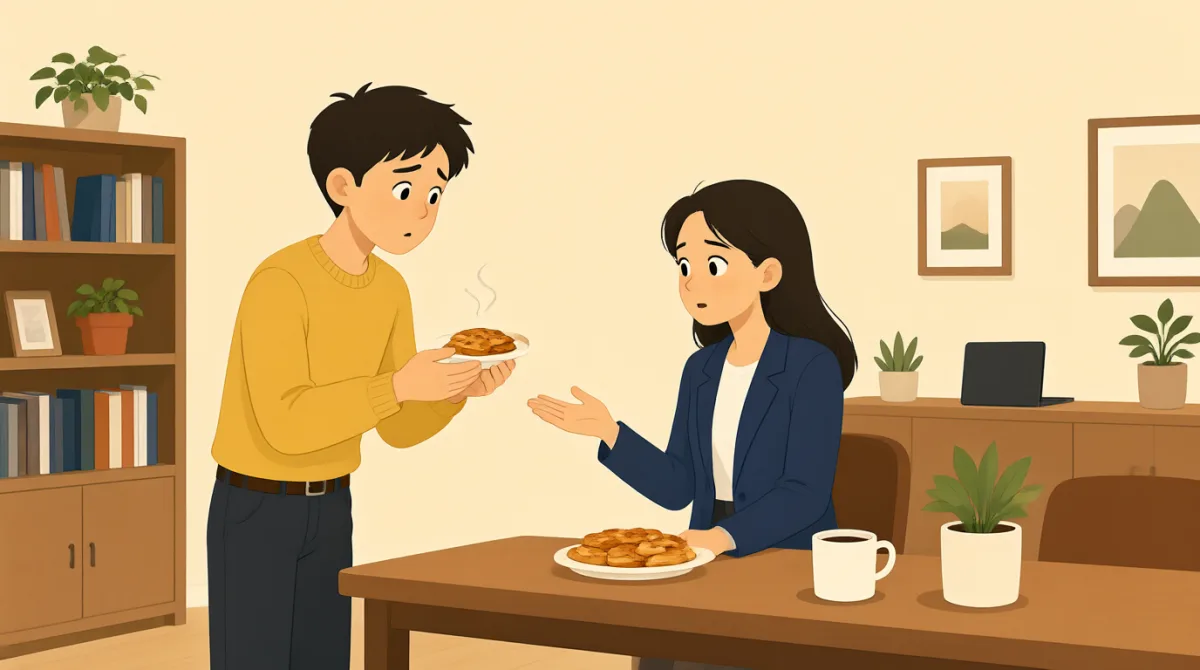

Hey, Jack, I brought some extra cookies today. Want one?
เฮ้ แจ็ก วันนี้ฉันเอาคุกกี้มาเผื่อด้วย เอาสักชิ้นไหม?

Oh, are you sure? Don't you want them yourself?
อ๋อ แน่ใจนะ? เธอไม่อยากเก็บไว้กินเองเหรอ?
Completely sure! I made way too many. Seriously, take a couple. They're really good.
แน่ใจสุด ๆ! ฉันทำมาเยอะเกินไปจริง ๆ เอาไปสักสองสามชิ้นเถอะ อร่อยมากเลยนะ
Well, if you insist. I don't want to take your last one.
งั้นถ้าเธอยืนยัน ฉันก็เอานะ ไม่อยากหยิบชิ้นสุดท้ายของเธอไป
No worries at all! I've got plenty more in the container. Help yourself!
ไม่ต้องห่วงเลย! ในกล่องยังมีอีกเยอะ หยิบได้ตามสบายเลย!
Okay, thanks, Emma! These look delicious.
โอเค ขอบใจนะ เอ็มมา! คุกกี้ดูน่าอร่อยจัง
คำศัพท์7
- extraที่มีเพิ่ม / ส่วนเกิน
Means additional or more than needed. Use it when offering something you have in abundance, like 'I have extra snacks.'
หมายถึงสิ่งที่มีเพิ่มหรือมีมากกว่าที่จำเป็น ใช้ตอนเสนอของที่มีเหลือเฟือ เช่น 'I have extra snacks.' (ฉันมีขนมเหลือเยอะเลย)
- sureแน่ใจ
Means certain or without doubt. In conversations, 'Are you sure?' shows hesitation, and 'I'm sure' reassures someone.
หมายถึงมั่นใจหรือไม่มีข้อสงสัย ในบทสนทนา 'Are you sure?' ใช้แสดงความลังเล ส่วน 'I'm sure' ใช้ยืนยันให้อีกฝ่ายสบายใจ
- insistยืนยัน
To strongly suggest or demand something politely. Use it like 'If you insist' to accept an offer after some reluctance.
หมายถึงแนะนำหรือขอให้อีกฝ่ายทำบางอย่างอย่างหนักแน่นแต่สุภาพ ใช้ในประโยคอย่าง 'If you insist' เพื่อรับข้อเสนอหลังจากลังเลอยู่เล็กน้อย
- worriesความกังวล
Short for concerns or things that make you anxious. 'No worries' is a casual way to say 'Don't be concerned' or 'It's okay.'
หมายถึงเรื่องที่ทำให้กังวลหรือไม่สบายใจ 'No worries' เป็นวิธีพูดสบาย ๆ ว่า “ไม่ต้องกังวล” หรือ “ไม่เป็นไร”
- plentyมากมาย / เหลือเฟือ
Means a large amount or more than enough. Say 'I've got plenty' to assure someone there's no shortage.
หมายถึงมีจำนวนมากหรือมีมากเกินพอ พูดว่า 'I've got plenty' เพื่อให้อีกฝ่ายมั่นใจว่าไม่ได้มีของขาดแคลน
- deliciousอร่อย
Describes food that tastes very good. Use it to compliment snacks, like 'These cookies look delicious.'
ใช้บรรยายอาหารที่มีรสชาติดีมาก ใช้ชมขนมได้ เช่น 'These cookies look delicious.' (คุกกี้พวกนี้ดูน่าอร่อยจัง)
- help yourselfหยิบได้ตามสบาย
An invitation to take what you want without asking. Common in casual settings like sharing food at work.
เป็นการเชื้อเชิญให้อีกฝ่ายหยิบสิ่งที่ต้องการได้เลยโดยไม่ต้องขออนุญาตก่อน มักใช้ในสถานการณ์สบาย ๆ เช่น แบ่งอาหารกันที่ทำงาน
ประโยคสำคัญ6
- 1
Hey, Jack, I brought some extra cookies today. Want one?
เฮ้ แจ็ก วันนี้ฉันเอาคุกกี้มาเผื่อด้วย เอาสักชิ้นไหม?
This is a casual offer using 'Want one?' which is a short way to ask if someone wants something. Useful for friendly invitations at work; 'Hey' starts informal talks.
นี่เป็นการเสนออย่างเป็นกันเอง โดยใช้ 'Want one?' ซึ่งเป็นรูปย่อของการถามว่าอีกฝ่ายอยากได้ไหม ใช้ชวนเพื่อนร่วมงานแบบสบาย ๆ ได้ ส่วน 'Hey' ใช้เริ่มบทสนทนาอย่างไม่เป็นทางการ
- 2
Oh, are you sure? Don't you want them yourself?
อ๋อ แน่ใจนะ? เธอไม่อยากเก็บไว้กินเองเหรอ?
Shows polite hesitation. 'Are you sure?' questions certainty, and the tag question 'Don't you...?' softens the concern. Use when you're unsure about accepting to be courteous.
ประโยคนี้แสดงความลังเลอย่างสุภาพ 'Are you sure?' ใช้ถามว่าแน่ใจหรือไม่ ส่วนคำถามท้ายแบบ 'Don't you...?' ช่วยให้น้ำเสียงฟังดูเป็นห่วงมากขึ้น ใช้เมื่อยังไม่แน่ใจว่าจะรับข้อเสนอดีไหมและอยากรักษามารยาท
- 3
Completely sure! I made way too many. Seriously, take a couple.
แน่ใจสุด ๆ! ฉันทำมาเยอะเกินไปจริง ๆ เอาไปสักสองสามชิ้นเถอะ
Reassures strongly with 'Completely sure!' and explains why ('way too many' means excessively more). 'Take a couple' suggests a small number. Great for encouraging someone to accept.
'Completely sure!' ใช้ยืนยันอย่างหนักแน่น และตามด้วยเหตุผลว่า 'way too many' หมายถึงมากเกินไป 'Take a couple' ชวนให้หยิบไปจำนวนเล็กน้อย เหมาะสำหรับชวนให้อีกฝ่ายรับข้อเสนอ
- 4
Well, if you insist. I don't want to take your last one.
งั้นถ้าเธอยืนยัน ฉันก็เอานะ ไม่อยากหยิบชิ้นสุดท้ายของเธอไป
Accepts reluctantly with 'If you insist,' a common idiom for giving in politely. Explains reason to avoid seeming greedy. Use in similar sharing situations.
'If you insist' เป็นสำนวนที่ใช้ยอมรับอย่างสุภาพทั้งที่ยังลังเลอยู่เล็กน้อย จากนั้นก็บอกเหตุผลเพื่อไม่ให้ดูเหมือนอยากได้ของมากเกินไป ใช้ได้ในสถานการณ์แบ่งปันของแบบนี้
- 5
No worries at all! I've got plenty more in the container. Help yourself!
ไม่ต้องห่วงเลย! ในกล่องยังมีอีกเยอะ หยิบได้ตามสบายเลย!
'No worries' dismisses concerns casually. 'Plenty more' means lots left, and 'Help yourself' invites freely. This pattern reassures and encourages in offers.
'No worries' ใช้บอกให้อีกฝ่ายไม่ต้องกังวลอย่างเป็นกันเอง 'Plenty more' หมายถึงยังมีเหลืออีกเยอะ และ 'Help yourself' เป็นการเชื้อเชิญให้หยิบได้ตามสบาย รูปแบบนี้ช่วยยืนยันและสนับสนุนให้อีกฝ่ายรับข้อเสนอ
- 6
Okay, thanks, Emma! These look delicious.
โอเค ขอบใจนะ เอ็มมา! คุกกี้ดูน่าอร่อยจัง
Simple acceptance with thanks. 'Look delicious' compliments appearance, implying taste. Use to end positively and show appreciation.
เป็นการตอบรับง่าย ๆ พร้อมกล่าวขอบคุณ 'Look delicious' ชมว่าหน้าตาน่ากินและสื่อเป็นนัยว่าน่าจะรสชาติดี ใช้ปิดบทสนทนาในแง่ดีและแสดงความซาบซึ้งได้