Approaching & Requesting Hold
पास आकर दरवाज़ा रोकने का अनुरोध
You are rushing towards the elevator, and someone inside notices you and holds the door. You might say 'Can you hold that?' or just 'Thanks!' as you approach.
आप तेज़ी से लिफ्ट की ओर जा रहे हैं और अंदर मौजूद कोई व्यक्ति आपको देखकर दरवाज़ा रोक लेता है। पास आते हुए आप कह सकते हैं, 'Can you hold that?' या बस 'Thanks!' कह सकते हैं।
संवाद4
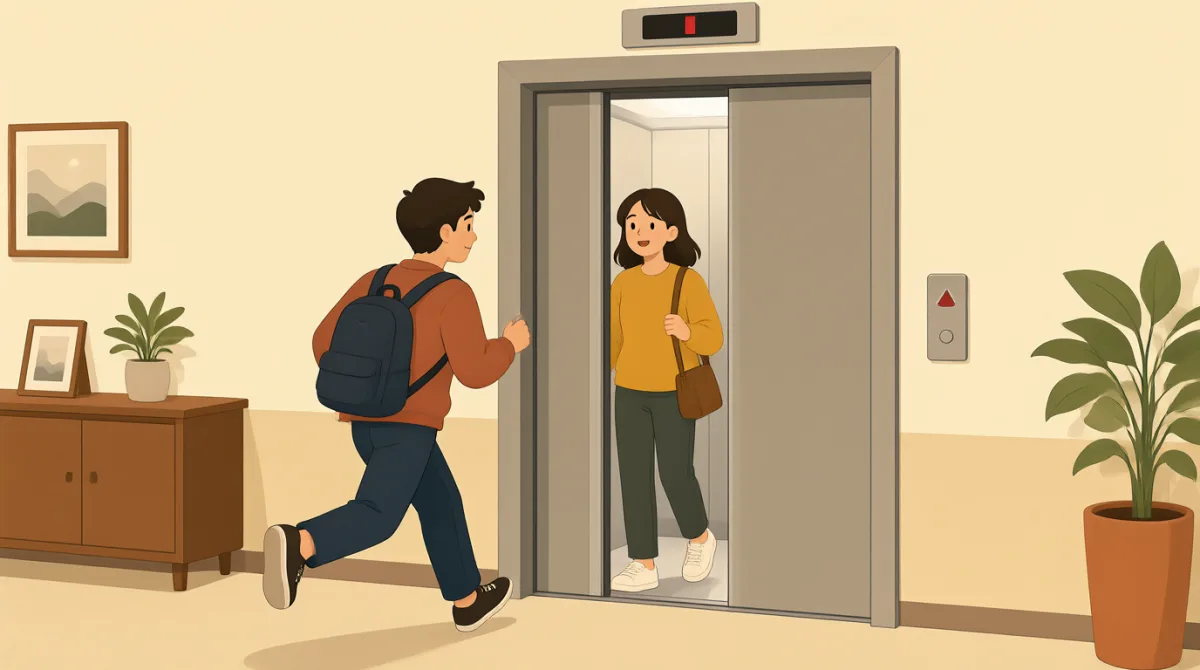

Oh, can you possibly hold that for just a second?
ओह, क्या आप बस एक पल के लिए दरवाज़ा रोक सकते हैं?

Sure, no problem! Coming right up.
ज़रूर, कोई बात नहीं! अभी रोकता हूँ।
Thanks so much, really appreciate it!
बहुत-बहुत धन्यवाद, मैं सचमुच आपका आभारी हूँ!
Anytime. Don't worry about it.
कोई बात नहीं। इसकी चिंता मत कीजिए।
शब्दावली5
- holdरोकना
To hold something means to keep it open or in place. In this context, 'hold the door' means to press the button to keep the elevator door from closing so someone can enter.
किसी चीज़ को 'hold' करने का मतलब है उसे खुला रखना या उसकी जगह पर बनाए रखना। इस संदर्भ में, 'hold the door' का मतलब है बटन दबाकर लिफ्ट का दरवाज़ा बंद होने से रोकना, ताकि कोई अंदर आ सके।
- possiblyसंभव हो तो
Possibly is used to make a polite request, similar to 'if possible.' It softens the question to sound more courteous, like asking nicely without demanding.
'Possibly' का इस्तेमाल विनम्रता से अनुरोध करने के लिए होता है, कुछ-कुछ 'if possible' (अगर संभव हो तो) की तरह। इससे सवाल का लहजा नरम और विनम्र हो जाता है, मानो आप बिना ज़ोर डाले अच्छे से अनुरोध कर रहे हों।
- secondपल
Here, 'second' means a very short time, like one moment. It's common in requests to ask for a brief delay, as in 'wait just a second.'
यहाँ 'second' का मतलब बहुत कम समय, यानी एक पल है। थोड़ी देर रुकने का अनुरोध करते समय यह आम है, जैसे 'wait just a second' (बस एक पल रुकिए)।
- appreciateआभारी होना
To appreciate means to be grateful for someone's help or kindness. It's a polite way to express thanks, often used in formal or sincere situations.
'Appreciate' का मतलब है किसी की मदद या दयालुता के लिए आभारी होना। धन्यवाद जताने का यह एक विनम्र तरीका है, जिसका इस्तेमाल अक्सर औपचारिक या दिल से आभार व्यक्त करने के लिए होता है।
- anytimeकभी भी
Anytime means 'at any time' or 'you're welcome anytime.' It's a casual response to thanks, showing the help was no big deal and offered willingly.
'Anytime' का मतलब है 'at any time' (कभी भी) या 'you're welcome anytime' (आपका स्वागत है, कभी भी)। धन्यवाद के जवाब में यह एक अनौपचारिक प्रतिक्रिया है। इससे पता चलता है कि मदद करना कोई बड़ी बात नहीं थी और आपने खुशी से मदद की।
मुख्य वाक्य4
- 1
Oh, can you possibly hold that for just a second?
ओह, क्या आप बस एक पल के लिए दरवाज़ा रोक सकते हैं?
This is a polite request to keep the elevator door open briefly. Use it when you're approaching quickly and need a moment. The structure uses 'can you' for asking permission, with 'possibly' and 'just a second' to make it softer and less demanding. It's useful in everyday courtesy situations like elevators or doors.
लिफ्ट का दरवाज़ा थोड़ी देर खुला रखने के लिए यह एक विनम्र अनुरोध है। जब आप जल्दी से लिफ्ट की ओर आ रहे हों और आपको एक पल की ज़रूरत हो, तब इसका इस्तेमाल करें। इसमें अनुमति माँगने के लिए 'can you' है, और 'possibly' तथा 'just a second' इसे नरम और कम ज़ोरदार बनाते हैं। लिफ्ट या दरवाज़े जैसी रोज़मर्रा की स्थितियों में यह काम आता है।
- 2
Sure, no problem!
ज़रूर, कोई बात नहीं!
This is a friendly agreement to help. 'Sure' means yes enthusiastically, and 'no problem' shows it's easy to do. Use this to respond positively to requests. It's informal and common in casual interactions, helping build rapport.
यह मदद करने के लिए दोस्ताना सहमति जताने का तरीका है। 'Sure' का मतलब उत्साह से हाँ कहना है, और 'no problem' बताता है कि ऐसा करना आसान है। किसी अनुरोध का सकारात्मक जवाब देने के लिए इसका इस्तेमाल करें। यह अनौपचारिक बातचीत में आम है और लोगों के बीच अपनापन बढ़ाता है।
- 3
Thanks so much, really appreciate it!
बहुत-बहुत धन्यवाद, मैं सचमुच आपका आभारी हूँ!
This expresses strong gratitude after receiving help. 'Thanks so much' is emphatic thanks, and 'really appreciate it' adds sincerity. Use it right after someone assists you. It's a key phrase for polite thanks in service or favor scenarios, with simple present tense for ongoing feelings.
मदद मिलने के बाद इससे दिल से आभार व्यक्त होता है। 'Thanks so much' ज़ोर देकर धन्यवाद कहता है, जबकि 'really appreciate it' आपकी कृतज्ञता को और सच्चा बनाता है। किसी के मदद करने के तुरंत बाद इसका इस्तेमाल करें। सेवा या एहसान से जुड़ी स्थितियों में विनम्रता से धन्यवाद देने के लिए यह एक उपयोगी वाक्यांश है। इसमें वर्तमान काल से मौजूदा भावना व्यक्त होती है।
- 4
Anytime. Don't worry about it.
कोई बात नहीं। इसकी चिंता मत कीजिए।
This is a casual way to say 'you're welcome' and dismiss any need for thanks. 'Anytime' means happy to help again, and 'don't worry about it' means no need to feel obligated. Use it to respond to thanks humbly. It's practical for everyday politeness, using imperative for reassurance.
धन्यवाद के जवाब में 'you're welcome' कहने और सामने वाले को यह जताने का यह अनौपचारिक तरीका है कि उसे धन्यवाद देने की ज़रूरत नहीं है। 'Anytime' का मतलब है कि आप फिर से खुशी से मदद करेंगे, और 'don't worry about it' का मतलब है कि सामने वाले को एहसानमंद महसूस करने की ज़रूरत नहीं। धन्यवाद का विनम्रता से जवाब देने के लिए इसका इस्तेमाल करें। रोज़मर्रा की शिष्टता में यह काम आता है और आश्वस्त करने के लिए इसमें आज्ञार्थक रूप है।