Approaching & Requesting Hold
الاقتراب وطلب إبقاء الباب مفتوحًا
You are rushing towards the elevator, and someone inside notices you and holds the door. You might say 'Can you hold that?' or just 'Thanks!' as you approach.
أنت تسرع نحو المصعد، فيلاحظك شخص بداخله ويُبقي الباب مفتوحًا. قد تقول وأنت تقترب: «هل يمكنك إبقاء الباب مفتوحًا؟» أو تكتفي بقول: «شكرًا!»
حوار4
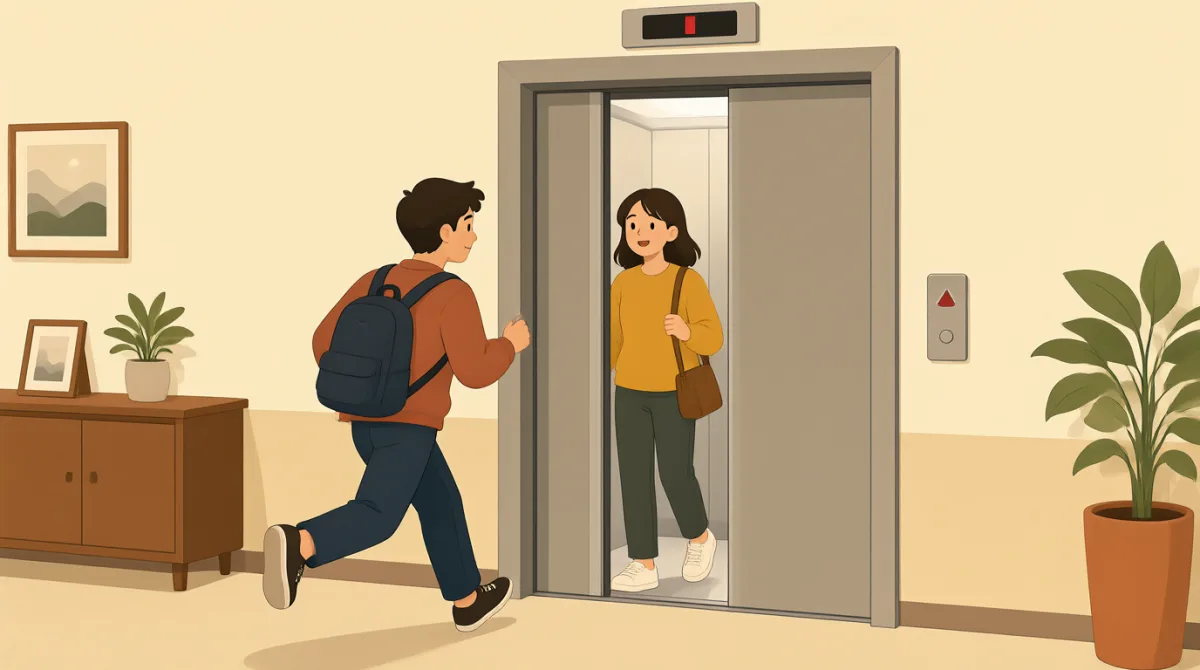

Oh, can you possibly hold that for just a second?
عذرًا، هل يمكنك من فضلك إبقاء الباب مفتوحًا للحظة؟

Sure, no problem! Coming right up.
بالتأكيد، لا مشكلة! تفضلي.
Thanks so much, really appreciate it!
شكرًا جزيلًا، أقدّر لك ذلك حقًا!
Anytime. Don't worry about it.
على الرحب والسعة. لا داعي للقلق.
المفردات5
- holdيُبقي مفتوحًا
To hold something means to keep it open or in place. In this context, 'hold the door' means to press the button to keep the elevator door from closing so someone can enter.
يعني الفعل 'hold' إبقاء شيء مفتوحًا أو ثابتًا في مكانه. في هذا السياق، تعني عبارة 'hold the door' الضغط على الزر لإبقاء باب المصعد مفتوحًا حتى يتمكن شخص من الدخول.
- possiblyربما
Possibly is used to make a polite request, similar to 'if possible.' It softens the question to sound more courteous, like asking nicely without demanding.
تُستخدم كلمة 'possibly' لتلطيف الطلب، وهي قريبة في معناها من 'if possible'. فهي تجعل السؤال أكثر تهذيبًا، كأنك تطلب بلطف بدلًا من أن تأمر.
- secondلحظة
Here, 'second' means a very short time, like one moment. It's common in requests to ask for a brief delay, as in 'wait just a second.'
تعني كلمة 'second' هنا فترة قصيرة جدًا، أي لحظة. وكثيرًا ما تُستخدم عند طلب الانتظار قليلًا، كما في عبارة 'wait just a second'.
- appreciateيُقدّر
To appreciate means to be grateful for someone's help or kindness. It's a polite way to express thanks, often used in formal or sincere situations.
يعني الفعل 'appreciate' أن تكون ممتنًا لمساعدة شخص أو لطفه. وهو أسلوب مهذب للتعبير عن الشكر، ويُستخدم غالبًا في المواقف الرسمية أو عند الرغبة في التعبير بصدق.
- anytimeفي أي وقت
Anytime means 'at any time' or 'you're welcome anytime.' It's a casual response to thanks, showing the help was no big deal and offered willingly.
تعني كلمة 'anytime' «في أي وقت» أو «يمكنك طلب المساعدة في أي وقت». وهي رد عفوي على الشكر، يبيّن أن المساعدة لم تكن عبئًا وأنك قدمتها عن طيب خاطر.
الجمل الأساسية4
- 1
Oh, can you possibly hold that for just a second?
عذرًا، هل يمكنك من فضلك إبقاء الباب مفتوحًا للحظة؟
This is a polite request to keep the elevator door open briefly. Use it when you're approaching quickly and need a moment. The structure uses 'can you' for asking permission, with 'possibly' and 'just a second' to make it softer and less demanding. It's useful in everyday courtesy situations like elevators or doors.
هذا طلب مهذب لإبقاء باب المصعد مفتوحًا لفترة قصيرة. استخدمه عندما تقترب بسرعة وتحتاج إلى لحظة. تتضمن الجملة 'can you' لطلب المساعدة، وتأتي معها 'possibly' و'just a second' لتجعل الطلب ألطف وأقل إلحاحًا. وهي مفيدة في مواقف المجاملة اليومية، مثل المصاعد والأبواب.
- 2
Sure, no problem!
بالتأكيد، لا مشكلة!
This is a friendly agreement to help. 'Sure' means yes enthusiastically, and 'no problem' shows it's easy to do. Use this to respond positively to requests. It's informal and common in casual interactions, helping build rapport.
هذا رد ودود بالموافقة على المساعدة. تعني 'Sure' «بالتأكيد»، وتُظهر 'no problem' أن الأمر سهل. استخدم هذا الرد الإيجابي على الطلبات. إنه تعبير غير رسمي وشائع في الأحاديث اليومية، ويساعد على توطيد الألفة.
- 3
Thanks so much, really appreciate it!
شكرًا جزيلًا، أقدّر لك ذلك حقًا!
This expresses strong gratitude after receiving help. 'Thanks so much' is emphatic thanks, and 'really appreciate it' adds sincerity. Use it right after someone assists you. It's a key phrase for polite thanks in service or favor scenarios, with simple present tense for ongoing feelings.
تعبّر هذه الجملة عن امتنان كبير بعد تلقي المساعدة. وتُستخدم 'Thanks so much' للتعبير عن شكر قوي، فيما تضيف 'really appreciate it' إحساسًا بالصدق. قلها فور أن يساعدك أحد. إنها عبارة مهمة للشكر المهذب عند تلقي خدمة أو معروف، وتستخدم المضارع البسيط للتعبير عن شعور مستمر.
- 4
Anytime. Don't worry about it.
على الرحب والسعة. لا داعي للقلق.
This is a casual way to say 'you're welcome' and dismiss any need for thanks. 'Anytime' means happy to help again, and 'don't worry about it' means no need to feel obligated. Use it to respond to thanks humbly. It's practical for everyday politeness, using imperative for reassurance.
هذه طريقة عفوية لقول «على الرحب والسعة» والتأكيد أن الشكر ليس ضروريًا. تعني 'Anytime' أنك سعيد بتقديم المساعدة مجددًا، وتعني 'don't worry about it' أنه لا داعي لأن تشعر بأنك مدين بشيء. استخدمها للرد بتواضع على الشكر. إنها مفيدة في المجاملات اليومية، وتستخدم صيغة الأمر للطمأنة.