Losing Your Wallet
Cüzdanını Kaybetmek
On his way home, Leo realizes his wallet is missing. He and Emma retrace his steps and call a nearby shop.
Leo eve giderken cüzdanının kayıp olduğunu fark eder. Emma’yla birlikte geçtiği yerleri yeniden kontrol eder ve yakındaki bir dükkânı arar.
Diyalog8
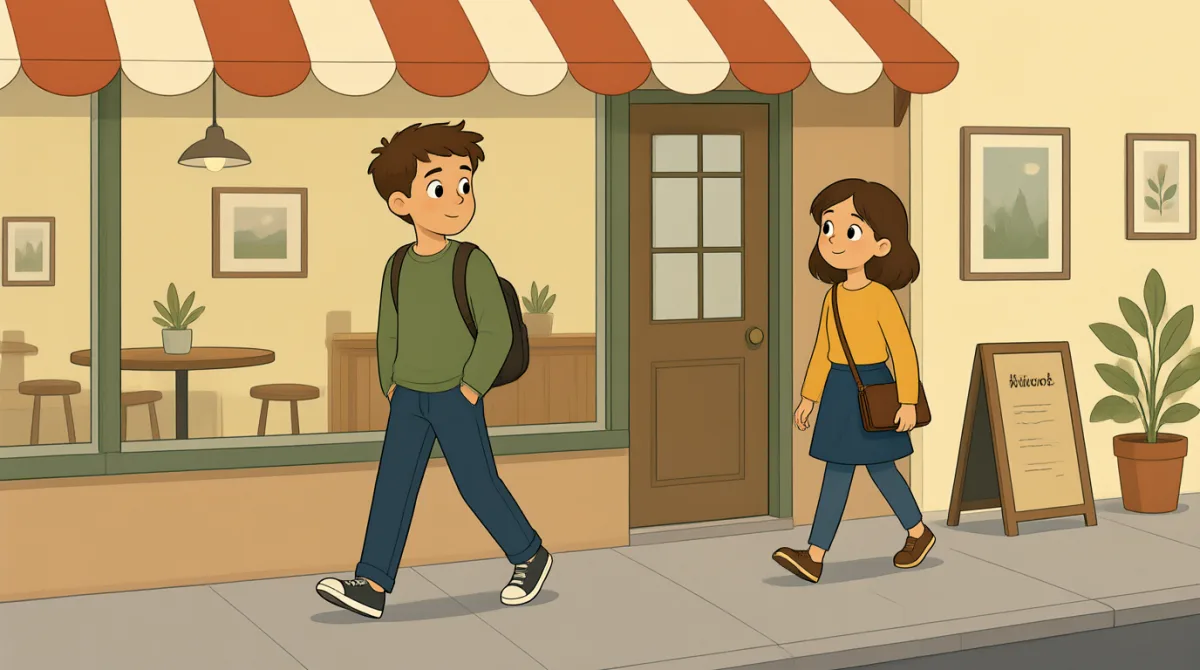

Emma, I think I lost my wallet on the way home.
Emma, sanırım eve dönerken cüzdanımı kaybettim.

Oh no! When did you last see it?
Eyvah! En son ne zaman gördün?
I paid for a drink at the corner shop, then took the bus.
Köşedeki dükkândan bir içecek aldım, sonra da otobüse bindim.
Let’s retrace your steps. Did you check your pockets and bag?
Geçtiğin yerlere bir daha bakalım. Ceplerini ve çantanı kontrol ettin mi?
Yes, I checked everything. It’s not there.
Evet, her yere baktım. Burada değil.
Let’s call the shop. Maybe you left it by the counter.
Dükkânı arayalım. Belki kasanın yanında unutmuşsundur.
Good idea. I’ll call them now and ask if they found it.
İyi fikir. Şimdi arayıp bulup bulmadıklarını soracağım.
If they don’t have it, we can check with the bus company.
Onlarda yoksa otobüs şirketine de sorabiliriz.
Kelime Bilgisi8
- on the way homeeve giderken
This means while going home. Use it to say when or where something happened during your trip.
“on the way home”, eve giderken demektir. Yolculuğun sırasında bir şeyin ne zaman ya da nerede olduğunu anlatmak için kullanılır.
- corner shopköşedeki dükkân
A small shop near a street corner. You can use this phrase when talking about a nearby local store.
“corner shop”, sokak köşesine yakın küçük bir dükkân demektir. Yakındaki yerel bir dükkândan söz ederken bu ifadeyi kullanabilirsin.
- retrace your stepsgeçtiğin yerlere yeniden bakmak
This means to go back over the places you visited. Use it when you are trying to find something you lost.
“retrace your steps”, gittiğin yerleri yeniden dolaşmak demektir. Kaybettiğin bir şeyi ararken kullanabilirsin.
- check your pockets and bagceplerini ve çantanı kontrol etmek
This means to look inside your pockets and bag for something. You can use it when searching for a lost item.
“check your pockets and bag”, bir şey aramak için ceplerinin ve çantanın içine bakmak demektir. Kaybolan bir eşyayı ararken kullanabilirsin.
- by the counterkasanın yanında
This means next to or near the counter in a shop. Use it to describe where someone may have left something.
“by the counter”, dükkândaki kasanın yanında ya da yakınında demektir. Birinin bir eşyayı nerede unutmuş olabileceğini anlatmak için kullanılır.
- call themonları aramak
This means to phone the people you are talking about. Here, it means calling the shop.
“call them”, sözünü ettiğin kişileri telefonla aramak demektir. Burada dükkânı aramak anlamında kullanılıyor.
- found itbuldu
This means discovered or picked up the missing item. Use it to ask if someone has found something you lost.
“found it”, kayıp eşyayı bulmak ya da eline almak demektir. Kaybettiğin bir şeyi birinin bulup bulmadığını sorarken kullanabilirsin.
- check with the bus companyotobüs şirketine danışmak
This means contact the bus company to ask about something. Use it when you need information or help from them.
“check with the bus company”, bir şey sormak için otobüs şirketiyle iletişime geçmek demektir. Bilgiye ya da onların yardımına ihtiyaç duyduğunda kullanabilirsin.
Önemli Cümleler7
- 1
I think I lost my wallet on the way home.
Sanırım eve dönerken cüzdanımı kaybettim.
Use this to explain that you may have lost something while traveling home. You can change “my wallet” to another item.
Eve giderken bir şeyi kaybetmiş olabileceğini anlatmak için bu cümleyi kullan. “my wallet” yerine başka bir eşya söyleyebilirsin.
- 2
When did you last see it?
En son ne zaman gördün?
This is a useful question when helping someone find a missing item. Replace “it” with the item you are looking for.
Bu, kayıp bir eşyayı bulmasına yardım ettiğin birine sorabileceğin kullanışlı bir soru. Aradığın eşyaya göre “it” yerine başka bir şey söyleyebilirsin.
- 3
Let’s retrace your steps.
Geçtiğin yerlere yeniden bakalım.
Use this suggestion when you want to go back over the places someone visited. It is helpful when searching for a lost item.
Birinin gittiği yerleri yeniden dolaşmayı önerirken bu cümleyi kullan. Kayıp bir eşya aranırken işe yarar.
- 4
Did you check your pockets and bag?
Ceplerini ve çantanı kontrol ettin mi?
This is a simple way to ask if someone has looked in likely places. You can replace “your pockets and bag” with other places to check.
Bu, birine olası yerlere bakıp bakmadığını sormanın basit bir yoludur. “your pockets and bag” yerine kontrol edilecek başka yerler söyleyebilirsin.
- 5
Maybe you left it by the counter.
Belki kasanın yanında unutmuşsundur.
Use this to suggest where someone might have left an item. Replace “by the counter” with another possible location.
Birinin bir eşyayı nerede unutmuş olabileceğini önermek için bu cümleyi kullan. “by the counter” yerine başka bir olası yer söyleyebilirsin.
- 6
I’ll call them now and ask if they found it.
Şimdi onları arayıp bulup bulmadıklarını soracağım.
This sentence explains what you are going to do next. You can replace “them” with a person or business you plan to contact.
Bu cümle, sırada ne yapacağını anlatır. İletişime geçeceğin bir kişiden ya da işletmeden söz ederken “them” yerine başka bir ifade kullanabilirsin.
- 7
If they don’t have it, we can check with the bus company.
Onlarda yoksa otobüs şirketine danışabiliriz.
Use this to suggest a second option if the first one does not work. The pattern “If…, we can…” is useful for making a simple plan.
İlk seçenek işe yaramazsa başka bir seçeneği önermek için bu cümleyi kullan. “If…, we can…” kalıbı basit bir plan yapmak için kullanışlıdır.