Presenting Library Card & Books
Kütüphane Kartını ve Kitapları Sunma
The librarian greets the patron, who then presents their library card and the books they wish to check out.
Kütüphaneci ziyaretçiyi karşılar; ziyaretçi de kütüphane kartını ve ödünç almak istediği kitapları sunar.
Diyalog6
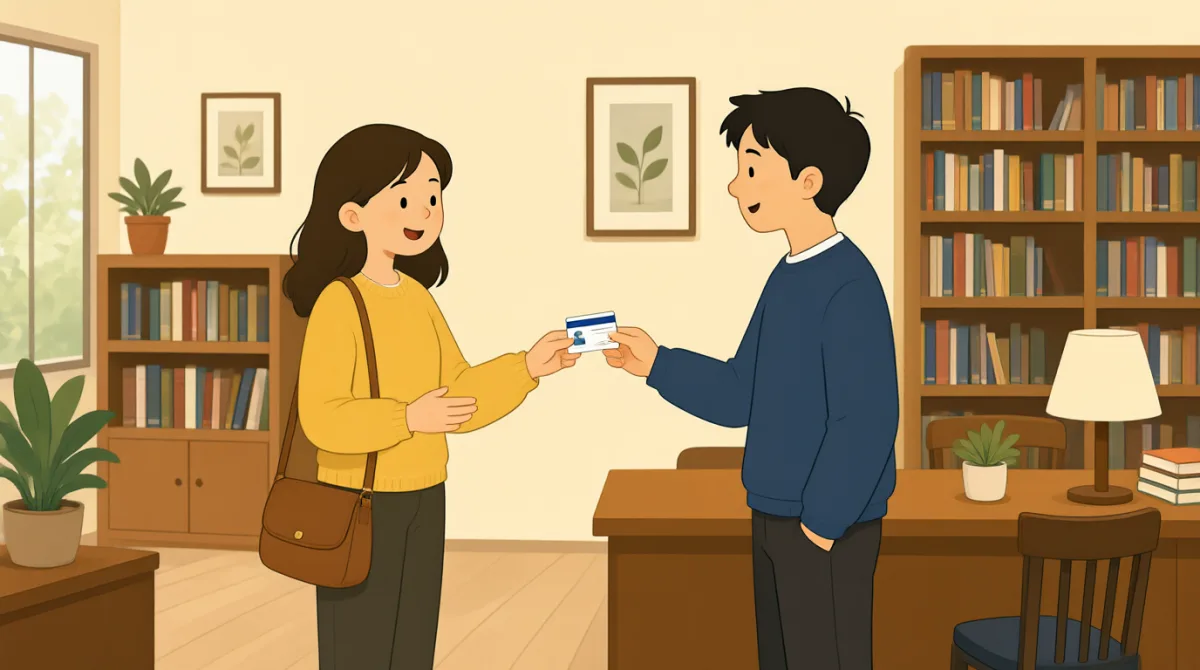

Hi there. Ready to check out?
Merhaba. Ödünç almaya hazır mısınız?

Yes, please. Here's my card, and these are the books.
Evet, lütfen. Kartım burada, kitaplar da bunlar.
Alright, let's get these scanned.
Pekâlâ, bunları tarayalım.
They'll be due back on October 25th.
Bunları 25 Ekim'de iade etmeniz gerekiyor.
Okay, great. Thank you!
Tamam, harika. Teşekkür ederim!
You're welcome. Have a good day!
Rica ederim. İyi günler!
Kelime Bilgisi4
- check outödünç almak
This means to borrow books from a library. Use it when you're ready to take books home after selecting them.
Bu ifade, kütüphaneden kitap ödünç almak anlamına gelir. Kitaplarınızı seçtikten sonra onları eve götürmeye hazır olduğunuzda kullanılır.
- library cardkütüphane kartı
A special ID card that allows you to borrow books from the library. You need to show it at the desk.
Kütüphaneden kitap ödünç almanızı sağlayan özel bir kimlik kartıdır. Gişede göstermeniz gerekir.
- scannedtaranmış
Means using a machine to read the barcode on books to record them as borrowed. It's a quick process at the checkout desk.
Kitapları ödünç alındı olarak kaydetmek için üzerlerindeki barkodun bir makineyle okunması anlamına gelir. Ödünç verme gişesinde hızlıca yapılır.
- due backiade edilmesi gereken
The date by which you must return the borrowed books to the library. It helps avoid late fees.
Ödünç aldığınız kitapları kütüphaneye iade etmeniz gereken tarihtir. Bu tarihe uymak gecikme ücretlerinden kaçınmanıza yardımcı olur.
Önemli Cümleler5
- 1
Hi there. Ready to check out?
Merhaba. Ödünç almaya hazır mısınız?
This is a friendly greeting from the librarian asking if the customer is ready to borrow books. It's useful for starting service interactions; 'Hi there' is casual, and the question uses present tense for immediate action.
Kütüphaneci, müşterinin kitap ödünç almaya hazır olup olmadığını sorarken samimi bir şekilde selam verir. Hizmet konuşmalarını başlatmak için kullanışlıdır; 'Hi there' gündelik bir selamlamadır ve soru, hemen yapılacak bir eylemi sormak için şimdiki zamanla kurulur.
- 2
Yes, please. Here's my card, and these are the books.
Evet, lütfen. Kartım burada, kitaplar da bunlar.
The patron politely agrees and presents their items. 'Yes, please' is a common polite response; 'here's' is a contraction of 'here is' for showing something. Use this when handing over your library card and books.
Ziyaretçi nazikçe kabul eder ve eşyalarını uzatır. 'Yes, please' yaygın ve nazik bir yanıttır; 'here's', bir şeyi gösterirken kullanılan 'here is' ifadesinin kısaltılmış hâlidir. Kütüphane kartınızı ve kitaplarınızı uzatırken kullanabilirsiniz.
- 3
Alright, let's get these scanned.
Pekâlâ, bunları tarayalım.
The librarian agrees to proceed with checking out. 'Alright' means okay; 'let's' is a contraction for 'let us' suggesting joint action in a helpful way. It's practical for service situations to move things forward.
Kütüphaneci, ödünç verme işlemine devam etmeyi kabul eder. 'Alright' “peki” anlamına gelir; 'let's', ortak bir eylem öneren 'let us' ifadesinin kısaltılmış hâlidir ve yardımsever bir hava taşır. Hizmet sırasında işleri ilerletmek için kullanışlıdır.
- 4
They'll be due back on October 25th.
Bunları 25 Ekim'de iade etmeniz gerekiyor.
Informs the due date for return. 'They'll be' is future tense contraction of 'they will be'; it explains the return policy. Use this to tell someone when something is expected back, like in rentals.
İade edilmesi gereken tarihi bildirir. 'They'll be', 'they will be' ifadesinin gelecek zaman kısaltmasıdır; burada iade tarihini belirtir. Kiralanan eşyalar gibi bir şeyin ne zaman geri getirilmesi gerektiğini söylerken kullanabilirsiniz.
- 5
You're welcome. Have a good day!
Rica ederim. İyi günler!
A polite response to thanks, ending the interaction positively. 'You're welcome' acknowledges gratitude; 'Have a good day' is a common farewell. It's essential for courteous endings in customer service.
Teşekküre verilen nazik bir yanıttır ve konuşmayı olumlu bir şekilde sonlandırır. 'You're welcome' teşekkür edildiğini nazikçe karşılar; 'Have a good day' yaygın bir vedalaşma ifadesidir. Müşteri hizmetlerinde konuşmaları kibarca bitirmek için önemlidir.