Presenting Library Card & Books
ยื่นบัตรห้องสมุดและหนังสือ
The librarian greets the patron, who then presents their library card and the books they wish to check out.
บรรณารักษ์ทักทายผู้ใช้บริการ จากนั้นผู้ใช้บริการยื่นบัตรห้องสมุดและหนังสือที่ต้องการยืม
บทสนทนา6
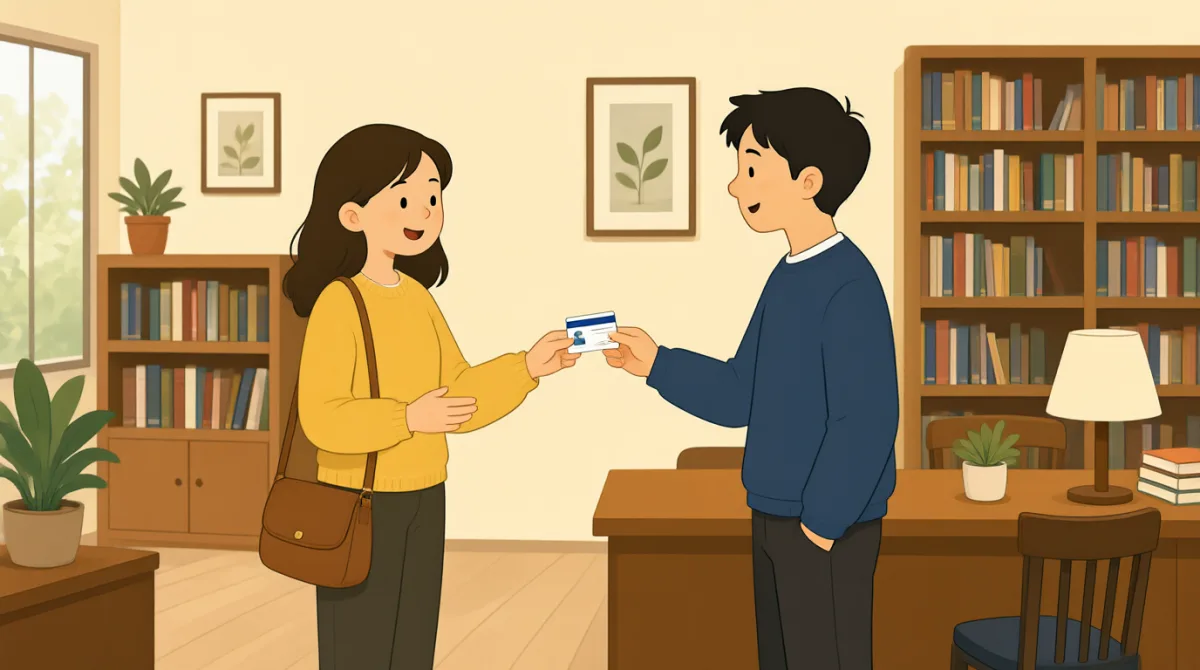

Hi there. Ready to check out?
สวัสดีค่ะ พร้อมยืมหนังสือหรือยังคะ

Yes, please. Here's my card, and these are the books.
พร้อมครับ นี่บัตรของผม แล้วนี่ก็หนังสือครับ
Alright, let's get these scanned.
ได้เลยค่ะ เดี๋ยวสแกนหนังสือให้เลยนะคะ
They'll be due back on October 25th.
กำหนดคืนวันที่ 25 ตุลาคมนะคะ
Okay, great. Thank you!
โอเค เยี่ยมเลยครับ ขอบคุณครับ
You're welcome. Have a good day!
ยินดีค่ะ ขอให้วันนี้เป็นวันที่ดีนะคะ
คำศัพท์4
- check outยืม (หนังสือจากห้องสมุด)
This means to borrow books from a library. Use it when you're ready to take books home after selecting them.
หมายถึงการยืมหนังสือจากห้องสมุด ใช้คำนี้เมื่อเลือกหนังสือเสร็จและพร้อมนำกลับบ้าน
- library cardบัตรห้องสมุด
A special ID card that allows you to borrow books from the library. You need to show it at the desk.
บัตรประจำตัวที่ใช้ยืมหนังสือจากห้องสมุด ต้องยื่นบัตรนี้ที่เคาน์เตอร์
- scannedสแกน
Means using a machine to read the barcode on books to record them as borrowed. It's a quick process at the checkout desk.
หมายถึงการใช้เครื่องอ่านบาร์โค้ดบนหนังสือเพื่อบันทึกว่ามีการยืมแล้ว เป็นขั้นตอนสั้น ๆ ที่เคาน์เตอร์ยืมหนังสือ
- due backกำหนดคืน
The date by which you must return the borrowed books to the library. It helps avoid late fees.
วันที่ต้องนำหนังสือที่ยืมไปมาคืนห้องสมุด การคืนตามกำหนดช่วยหลีกเลี่ยงค่าปรับล่าช้า
ประโยคสำคัญ5
- 1
Hi there. Ready to check out?
สวัสดีค่ะ พร้อมยืมหนังสือหรือยังคะ
This is a friendly greeting from the librarian asking if the customer is ready to borrow books. It's useful for starting service interactions; 'Hi there' is casual, and the question uses present tense for immediate action.
ประโยคนี้เป็นคำทักทายอย่างเป็นกันเองจากบรรณารักษ์ เพื่อถามว่าผู้ใช้บริการพร้อมยืมหนังสือหรือยัง ใช้เริ่มบทสนทนาเมื่อต้อนรับผู้ใช้บริการได้ 'Hi there' เป็นคำทักทายแบบสบาย ๆ ส่วนคำถามใช้รูปปัจจุบันเพื่อถามถึงสิ่งที่กำลังจะทำทันที
- 2
Yes, please. Here's my card, and these are the books.
พร้อมครับ นี่บัตรของผม แล้วนี่ก็หนังสือครับ
The patron politely agrees and presents their items. 'Yes, please' is a common polite response; 'here's' is a contraction of 'here is' for showing something. Use this when handing over your library card and books.
ผู้ใช้บริการตอบรับอย่างสุภาพพร้อมยื่นสิ่งของให้ 'Yes, please' เป็นคำตอบรับอย่างสุภาพที่ใช้กันทั่วไป ส่วน 'here's' ย่อมาจาก 'here is' ใช้ตอนยื่นหรือชี้ให้ดูสิ่งของ ใช้ประโยคนี้เมื่อนำบัตรห้องสมุดและหนังสือส่งให้บรรณารักษ์
- 3
Alright, let's get these scanned.
ได้เลยค่ะ เดี๋ยวสแกนหนังสือให้เลยนะคะ
The librarian agrees to proceed with checking out. 'Alright' means okay; 'let's' is a contraction for 'let us' suggesting joint action in a helpful way. It's practical for service situations to move things forward.
บรรณารักษ์ตอบรับว่าจะดำเนินการยืมหนังสือต่อ 'Alright' หมายถึงตกลงหรือได้เลย ส่วน 'let's' ย่อมาจาก 'let us' ใช้ชวนให้ทำสิ่งหนึ่งร่วมกันอย่างเป็นมิตร ประโยคนี้เหมาะกับการให้บริการเพื่อดำเนินเรื่องต่อ
- 4
They'll be due back on October 25th.
กำหนดคืนวันที่ 25 ตุลาคมนะคะ
Informs the due date for return. 'They'll be' is future tense contraction of 'they will be'; it explains the return policy. Use this to tell someone when something is expected back, like in rentals.
ประโยคนี้แจ้งวันที่ต้องคืนหนังสือ 'They'll be' เป็นรูปย่อของ 'they will be' ซึ่งเป็นรูปอนาคต ใช้บอกกำหนดคืนตามระเบียบห้องสมุด หรือบอกว่าเมื่อไรสิ่งของที่ยืมไปควรจะถูกนำมาคืน เช่น สิ่งของที่เช่าหรือยืม
- 5
You're welcome. Have a good day!
ยินดีค่ะ ขอให้วันนี้เป็นวันที่ดีนะคะ
A polite response to thanks, ending the interaction positively. 'You're welcome' acknowledges gratitude; 'Have a good day' is a common farewell. It's essential for courteous endings in customer service.
เป็นคำตอบรับคำขอบคุณอย่างสุภาพและช่วยจบบทสนทนาในทางที่ดี 'You're welcome' ใช้ตอบรับเมื่อมีคนขอบคุณ ส่วน 'Have a good day' เป็นคำกล่าวลาอย่างที่ใช้กันทั่วไป การใช้สองวลีนี้ช่วยให้การให้บริการจบลงอย่างสุภาพ