Finding Your Seat
หาที่นั่ง
Emma gets on the bus and checks her ticket number. She asks Mia for help finding her seat and puts her small bag nearby.
เอ็มม่าขึ้นรถบัสแล้วตรวจดูหมายเลขที่นั่งบนตั๋ว เธอขอให้มีอาช่วยหาที่นั่ง แล้ววางกระเป๋าใบเล็กไว้ใกล้ ๆ
บทสนทนา8
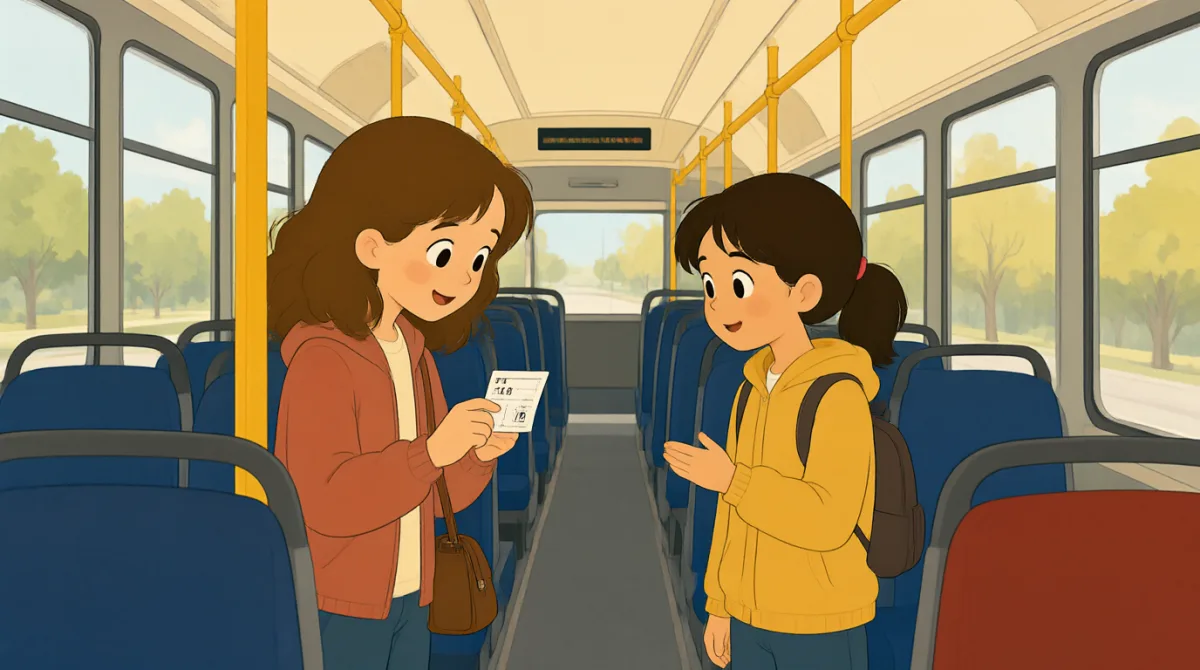

Excuse me, my ticket says seat 14. Is that on this bus?
ขอโทษนะคะ ในตั๋วเขียนว่าที่นั่งหมายเลข 14 ใช่ที่นั่งบนรถคันนี้ไหมคะ

Yes, it is. Your seat is by the window, about halfway down.
ใช่ค่ะ ที่นั่งของคุณอยู่ริมหน้าต่าง ประมาณกลางคันค่ะ
Thanks! Could you help me find it? The numbers are hard to see.
ขอบคุณค่ะ ช่วยหาที่นั่งให้หน่อยได้ไหมคะ ตัวเลขมองเห็นยากจังค่ะ
Sure. Follow me. Look for the number above each seat.
ได้เลยค่ะ ตามมาค่ะ มองหาหมายเลขที่อยู่เหนือที่นั่งแต่ละที่นะคะ
Oh, there it is. Can I put my small bag here?
อ๋อ อยู่นั่นเอง วางกระเป๋าใบเล็กไว้ตรงนี้ได้ไหมคะ
Yes, you can put it under the seat in front of you.
ได้ค่ะ วางไว้ใต้ที่นั่งข้างหน้าคุณได้เลยค่ะ
Great. I don't want it to block the aisle.
ดีเลยค่ะ ฉันไม่อยากให้มันกีดขวางทางเดิน
Good idea. Keep your ticket with you, and enjoy the ride!
ดีแล้วค่ะ เก็บตั๋วไว้กับตัวนะคะ ขอให้เดินทางสนุกค่ะ!
คำศัพท์8
- Excuse meขอโทษนะคะ
Use this polite phrase to get someone's attention or ask a question.
ใช้คำสุภาพนี้เพื่อเรียกความสนใจจากใครสักคนหรือถามคำถามค่ะ
- ticket saysในตั๋วเขียนว่า
This means the information is written on your ticket. You can use it to talk about details on a ticket or other document.
หมายความว่าข้อมูลนั้นเขียนอยู่บนตั๋วค่ะ ใช้พูดถึงรายละเอียดบนตั๋วหรือเอกสารอื่น ๆ ได้
- by the windowริมหน้าต่าง
This describes a seat next to the window. You can use “by the” to say that something is next to a place or object.
ใช้บอกว่าที่นั่งอยู่ติดกับหน้าต่างค่ะ ใช้ “by the” เพื่อบอกว่าสิ่งหนึ่งอยู่ติดกับสถานที่หรือสิ่งของได้
- halfway downประมาณกลางคัน
This means partway along something, not near the beginning or the end. It helps describe where a seat is on the bus.
หมายถึงอยู่ช่วงกลาง ๆ ของสิ่งใดสิ่งหนึ่ง ไม่ได้อยู่ใกล้ต้นหรือท้ายค่ะ ใช้บอกตำแหน่งที่นั่งบนรถบัสได้
- Follow meตามฉันมา
Use this phrase to ask someone to come with you while you show them the way.
ใช้วลีนี้ชวนใครสักคนให้เดินตามคุณไป ขณะที่คุณพาเขาไปยังที่หมายค่ะ
- under the seat in front of youใต้ที่นั่งข้างหน้าคุณ
This tells someone where to put a bag or other item. You can use “under the” to describe a place below something.
ใช้บอกตำแหน่งที่จะวางกระเป๋าหรือสิ่งของอื่น ๆ ค่ะ ใช้ “under the” เพื่อบอกว่าบางสิ่งอยู่ข้างใต้สิ่งอื่นได้
- block the aisleกีดขวางทางเดิน
This means to stop people from walking along the aisle. You can use “block” when something is in the way.
หมายถึงขวางไม่ให้คนเดินไปตามทางเดินค่ะ ใช้ “block” เมื่อมีบางสิ่งกีดขวางทาง
- Keep your ticket with youเก็บตั๋วไว้กับตัว
This means to carry your ticket and not leave it behind. You can use “keep [something] with you” for important items.
หมายถึงพกตั๋วติดตัวไว้และไม่ทิ้งไว้ที่ไหนค่ะ ใช้ “keep [something] with you” กับสิ่งของสำคัญที่ควรพกติดตัวได้
ประโยคสำคัญ8
- 1
Excuse me, my ticket says seat 14. Is that on this bus?
ขอโทษนะคะ ในตั๋วเขียนว่าที่นั่งหมายเลข 14 ใช่ที่นั่งบนรถคันนี้ไหมคะ
Use this to politely check whether your ticket is for the bus you are on. You can replace “seat 14” with your own seat number.
ใช้ประโยคนี้ถามอย่างสุภาพว่าตั๋วของคุณใช้กับรถบัสคันที่คุณกำลังโดยสารอยู่หรือไม่ค่ะ เปลี่ยน “seat 14” เป็นหมายเลขที่นั่งของคุณได้
- 2
Your seat is by the window, about halfway down.
ที่นั่งของคุณอยู่ริมหน้าต่าง ประมาณกลางคันค่ะ
This is a useful way to describe where a seat is. You can change “by the window” and “halfway down” to give other location details.
นี่เป็นวิธีที่มีประโยชน์ในการบอกตำแหน่งที่นั่งค่ะ เปลี่ยน “by the window” และ “halfway down” เป็นรายละเอียดตำแหน่งอื่นได้
- 3
Could you help me find it?
ช่วยหาที่นั่งให้หน่อยได้ไหมคะ
Use this polite question when you need help locating something. Replace “it” with the item or place you are looking for.
ใช้คำถามสุภาพนี้เมื่อคุณต้องการความช่วยเหลือในการหาบางสิ่งค่ะ เปลี่ยน “it” เป็นสิ่งของหรือสถานที่ที่คุณกำลังหาได้
- 4
Follow me.
ตามฉันมาค่ะ
Use this short phrase to show someone the way. It is useful when you are guiding someone to a place.
ใช้วลีสั้น ๆ นี้เพื่อบอกทางให้ใครสักคนค่ะ เหมาะเวลาพาใครไปยังสถานที่หนึ่ง
- 5
Can I put my small bag here?
วางกระเป๋าใบเล็กของฉันไว้ตรงนี้ได้ไหมคะ
Use this to ask permission to put something in a particular place. You can replace “my small bag” with another item.
ใช้ถามเพื่อขออนุญาตวางสิ่งของไว้ในตำแหน่งหนึ่งค่ะ เปลี่ยน “my small bag” เป็นสิ่งของอย่างอื่นได้
- 6
You can put it under the seat in front of you.
วางไว้ใต้ที่นั่งข้างหน้าคุณได้ค่ะ
This gives a clear instruction about where to place something. You can change the location phrase to suggest a different spot.
ประโยคนี้บอกตำแหน่งที่จะวางสิ่งของอย่างชัดเจนค่ะ เปลี่ยนวลีบอกตำแหน่งเพื่อแนะนำที่วางอื่นได้
- 7
I don't want it to block the aisle.
ฉันไม่อยากให้มันกีดขวางทางเดินค่ะ
Use this to explain that you do not want an item to get in people's way. You can replace “the aisle” with another walkway or space.
ใช้ประโยคนี้อธิบายว่าคุณไม่อยากให้สิ่งของไปขวางทางคนอื่นค่ะ เปลี่ยน “the aisle” เป็นทางเดินหรือพื้นที่อื่นได้
- 8
Keep your ticket with you, and enjoy the ride!
เก็บตั๋วไว้กับตัวนะคะ แล้วก็ขอให้เดินทางสนุกค่ะ!
This is a friendly reminder to hold on to your ticket, followed by a warm wish for the trip. You can use “Keep your [item] with you” to remind someone to carry something important.
นี่เป็นการเตือนอย่างเป็นมิตรให้เก็บตั๋วไว้กับตัว ตามด้วยคำอวยพรให้เดินทางโดยสวัสดิภาพค่ะ ใช้ “Keep your [item] with you” เพื่อเตือนใครสักคนให้พกสิ่งสำคัญติดตัวไว้ได้