Putting Your Bag Under the Bus
เก็บกระเป๋าไว้ใต้รถบัส
At the bus station, Emma asks the driver, David, where to put her suitcase. David helps her store it safely under the bus.
ที่สถานีรถบัส เอมมาถามเดวิด คนขับรถ ว่าควรวางกระเป๋าเดินทางไว้ตรงไหน เดวิดช่วยเธอเก็บกระเป๋าไว้ใต้รถอย่างปลอดภัย
บทสนทนา8
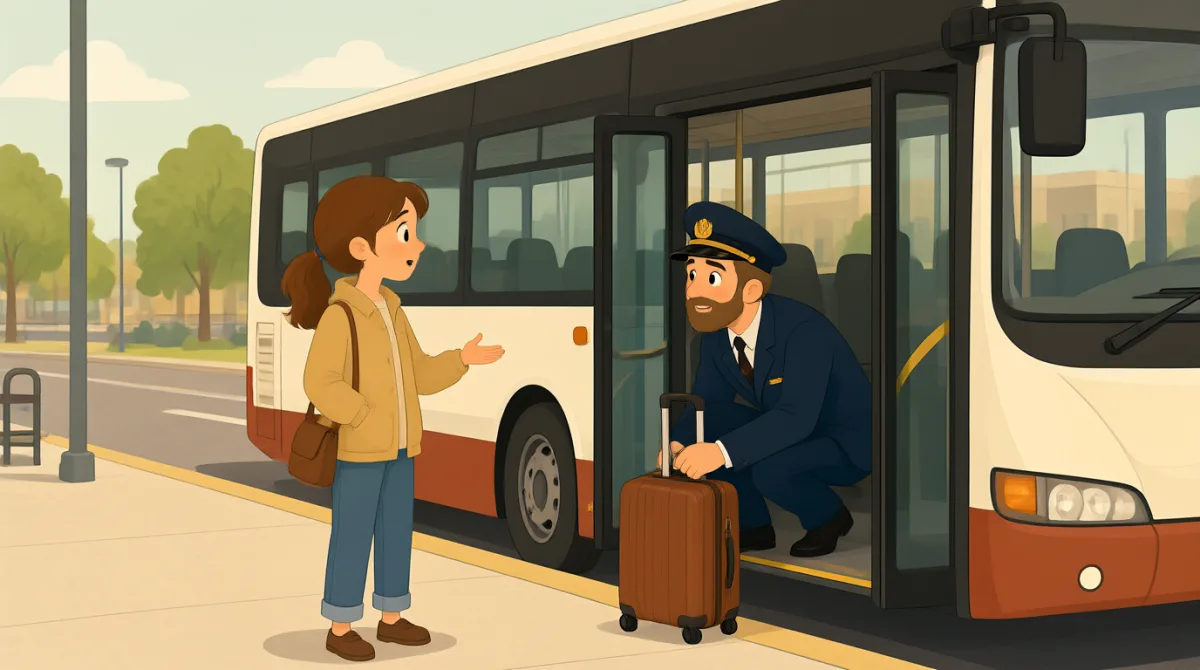

Excuse me, where should I put my suitcase?
ขอโทษนะคะ ควรวางกระเป๋าเดินทางไว้ตรงไหนคะ

Put it under the bus, please. I’ll open the luggage door.
วางไว้ใต้รถได้เลยครับ ผมจะเปิดประตูช่องเก็บสัมภาระให้
Is this the right place? It’s a little heavy.
ตรงนี้ถูกไหมคะ มันหนักนิดหน่อยค่ะ
Yes, that’s right. I can help you lift it.
ใช่ครับ ตรงนั้นแหละ ผมช่วยยกได้นะครับ
Thank you. Should I take my small bag with me?
ขอบคุณค่ะ ฉันควรเอากระเป๋าใบเล็กติดตัวไปด้วยไหมคะ
Yes, keep your small bag with you on the bus.
ครับ เอากระเป๋าใบเล็กติดตัวไปบนรถนะครับ
Okay. Is my suitcase safe under the bus?
โอเคค่ะ กระเป๋าเดินทางของฉันปลอดภัยไหมคะถ้าไว้ใต้รถ
Yes. I’ll close the door now. Please keep your ticket with you.
ปลอดภัยครับ ผมจะปิดประตูแล้วนะครับ อย่าลืมเก็บตั๋วไว้กับตัวด้วยนะครับ
คำศัพท์7
- put it under the busวางไว้ใต้รถบัส
This means to place an item in the storage space below the bus. You can use “put it under” to say where to store something.
หมายถึงวางสิ่งของไว้ในช่องเก็บสัมภาระใต้รถบัส ใช้ “put it under” เพื่อบอกว่าจะเก็บของไว้ตรงไหน
- luggage doorประตูช่องเก็บสัมภาระ
This is the door to the bus’s luggage storage space. You may hear this phrase when a driver helps you store a suitcase.
คือประตูที่เปิดไปยังช่องเก็บสัมภาระของรถบัส คุณอาจได้ยินคำนี้เวลาคนขับช่วยเก็บกระเป๋าเดินทาง
- a little heavyหนักนิดหน่อย
This means something is somewhat difficult to lift because of its weight. You can say “It’s a little heavy” when asking someone for help.
หมายถึงของชิ้นนั้นหนักจนยกได้ค่อนข้างลำบาก คุณพูดว่า “It’s a little heavy” เพื่อขอความช่วยเหลือจากใครสักคนได้
- lift itยกมันขึ้น
This means to raise something off the ground. Use “lift” when talking about picking up a heavy bag or box.
หมายถึงยกสิ่งของให้พ้นจากพื้น ใช้ “lift” เมื่อพูดถึงการยกกระเป๋าหรือกล่องหนัก ๆ
- keep your small bag with youเอากระเป๋าใบเล็กติดตัวไปด้วย
This means to take your small bag onto the bus instead of putting it in the luggage storage. You can use “keep … with you” for things you want to carry.
หมายถึงนำกระเป๋าใบเล็กขึ้นรถบัสไปด้วย แทนที่จะเก็บไว้ในช่องเก็บสัมภาระ ใช้ “keep … with you” กับสิ่งของที่ต้องการพกติดตัวได้
- close the doorปิดประตู
This means to shut the door. You can use “close” when asking someone to shut a door or other opening.
หมายถึงปิดประตู ใช้ “close” เมื่อต้องการบอกให้ใครปิดประตูหรือช่องเปิดอื่น ๆ
- keep your ticket with youเก็บตั๋วไว้กับตัว
This means to hold on to your ticket and not leave it behind. You can use “keep … with you” for important things you need while traveling.
หมายถึงถือตั๋วติดตัวไว้ ไม่ทิ้งหรือลืมไว้ที่ไหน ใช้ “keep … with you” กับของสำคัญที่ต้องใช้ระหว่างเดินทางได้
ประโยคสำคัญ7
- 1
Excuse me, where should I put my suitcase?
ขอโทษนะคะ ควรวางกระเป๋าเดินทางไว้ตรงไหนคะ
Use this polite question to ask where to place your luggage. You can replace “my suitcase” with another item, such as “my backpack.”
ใช้คำถามสุภาพนี้เพื่อถามว่าควรวางสัมภาระไว้ตรงไหน เปลี่ยน “my suitcase” เป็นสิ่งของอย่างอื่นได้ เช่น “my backpack”
- 2
I’ll open the luggage door.
ผมจะเปิดประตูช่องเก็บสัมภาระให้
This tells someone what you are going to do to help. Use “I’ll” plus a verb to offer or explain an action.
ประโยคนี้ใช้บอกอีกฝ่ายว่าคุณกำลังจะทำอะไรเพื่อช่วย ใช้ “I’ll” ตามด้วยคำกริยาเพื่อเสนอตัวช่วยหรือบอกว่าจะทำอะไร
- 3
It’s a little heavy.
มันหนักนิดหน่อย
Use this sentence to explain that something is somewhat difficult to lift. You can say it when asking for help with a bag or box.
ใช้ประโยคนี้เพื่อบอกว่าของชิ้นนั้นหนักจนยกได้ค่อนข้างลำบาก คุณพูดแบบนี้เพื่อขอให้ช่วยยกกระเป๋าหรือกล่องได้
- 4
I can help you lift it.
ผมช่วยคุณยกได้นะครับ
This is a simple way to offer help with something heavy. Replace “lift it” with another action, such as “carry it.”
นี่เป็นวิธีง่าย ๆ ในการเสนอตัวช่วยยกของหนัก เปลี่ยน “lift it” เป็นการกระทำอย่างอื่นได้ เช่น “carry it”
- 5
Should I take my small bag with me?
ฉันควรเอากระเป๋าใบเล็กติดตัวไปด้วยไหมคะ
Use this question to check whether you should bring an item along. Replace “my small bag” with another thing you may need.
ใช้คำถามนี้เพื่อตรวจสอบว่าควรนำสิ่งของติดตัวไปด้วยหรือไม่ เปลี่ยน “my small bag” เป็นสิ่งอื่นที่คุณอาจต้องใช้ได้
- 6
Yes, keep your small bag with you on the bus.
ครับ เอากระเป๋าใบเล็กติดตัวไปบนรถนะครับ
This gives a clear instruction about what to carry onto the bus. You can use “keep [item] with you” when someone should not put an item away.
ประโยคนี้เป็นคำแนะนำที่ชัดเจนว่าควรพกอะไรขึ้นรถบัส ใช้ “keep [item] with you” เมื่อต้องการบอกว่าไม่ควรเก็บสิ่งของชิ้นนั้นไว้ที่อื่น
- 7
Please keep your ticket with you.
กรุณาเก็บตั๋วไว้กับตัวนะครับ
This is a polite reminder to hold on to an important item. Replace “your ticket” with something else you need to keep close.
นี่เป็นคำเตือนสุภาพให้เก็บของสำคัญไว้กับตัว เปลี่ยน “your ticket” เป็นสิ่งอื่นที่คุณต้องเก็บไว้ใกล้ตัวได้