Asking the Chef a Question
ถามเชฟ
Emma asks Grace how to make the sauce less salty. Grace suggests adding a little water and tasting it again.
เอ็มมาถามเกรซว่าทำอย่างไรให้ซอสเค็มน้อยลง เกรซแนะนำให้เติมน้ำเล็กน้อยแล้วชิมอีกครั้ง
บทสนทนา8
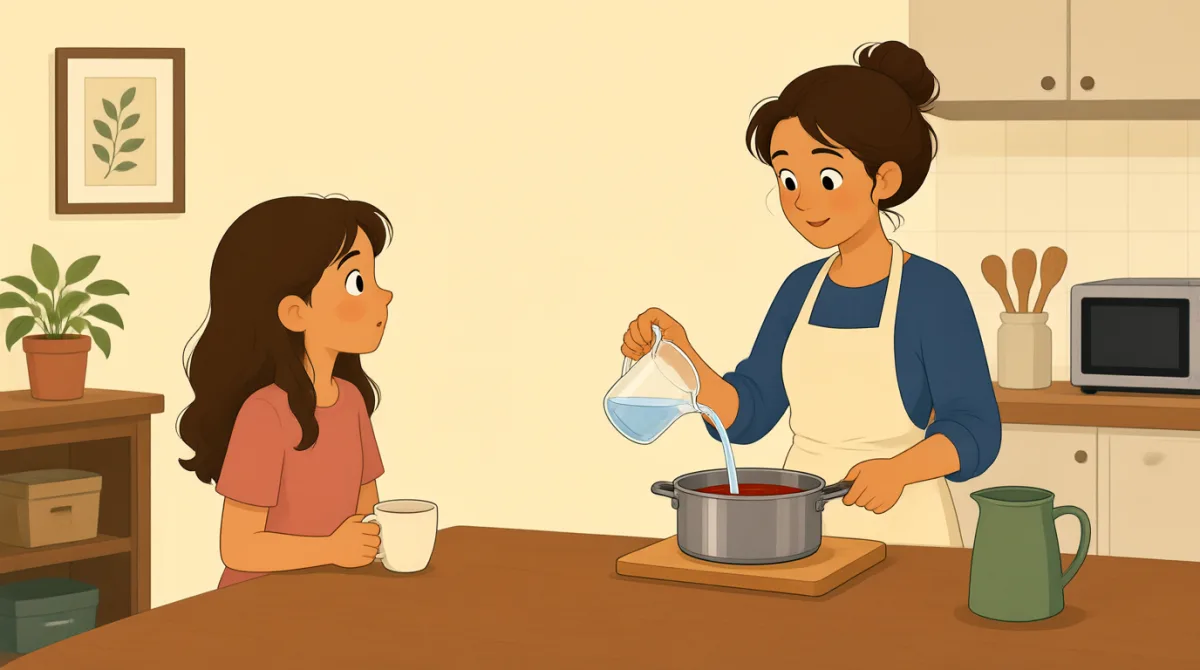

Grace, I think the sauce is too salty. Can I fix it?
เกรซ เราว่าซอสมันเค็มไปหน่อย แก้ได้ไหม

Yes. Add a little water, and then stir it well.
ได้สิ เติมน้ำลงไปนิดหน่อย แล้วคนให้เข้ากันดีๆ นะ
Should I add the water now, while it’s still hot?
ควรเติมน้ำตอนนี้เลยไหม ตอนที่ยังร้อนอยู่
Yes, that’s fine. Add just a little at first.
ได้เลย ตอนแรกเติมแค่นิดเดียวพอนะ
Okay, I added some. Should I taste it again?
โอเค เติมลงไปแล้วนิดหน่อย ควรชิมอีกครั้งไหม
Yes, use a clean spoon and taste it carefully.
ชิมเลย ใช้ช้อนสะอาด แล้วชิมอย่างระมัดระวังนะ
It tastes much better now. Should I add more water?
ตอนนี้รสชาติดีขึ้นเยอะเลย ต้องเติมน้ำอีกไหม
No, it’s good now. A little water made a big difference.
ไม่ต้องแล้ว ตอนนี้กำลังดีเลย เติมน้ำแค่นิดเดียวก็ทำให้รสชาติต่างไปมาก
คำศัพท์7
- too saltyเค็มเกินไป
This means the sauce has more salt than you want. You can use “too” before an adjective to say something is more than you like.
หมายถึงซอสมีเกลือมากกว่าที่ต้องการ เราใช้ “too” วางหน้า adjective เพื่อบอกว่าบางอย่างมากเกินไปจนไม่ชอบได้
- fix itแก้ให้ดีขึ้น
Here, this means to make the sauce taste better. You can use “fix it” when you want to correct a problem.
ในที่นี้หมายถึงทำให้ซอสมีรสชาติดีขึ้น ใช้ “fix it” เมื่อต้องการแก้ปัญหาได้
- stir it wellคนให้เข้ากันดีๆ
This means to mix the sauce thoroughly with a spoon. You can say “stir it well” when giving someone a cooking instruction.
หมายถึงใช้ช้อนคนซอสให้ทั่ว เราพูดว่า “stir it well” เมื่อต้องการบอกวิธีทำอาหารได้
- at firstตอนแรก
This means at the beginning. Here, Grace says to add only a small amount of water at the beginning.
หมายถึงในช่วงเริ่มต้น ในที่นี้เกรซบอกให้เติมน้ำเพียงเล็กน้อยในตอนแรก
- taste it againชิมอีกครั้ง
This means to try the sauce once more to check its flavor. You can use this phrase after changing or adding something to food.
หมายถึงลองชิมซอสอีกครั้งเพื่อตรวจดูรสชาติ ใช้สำนวนนี้ได้หลังจากปรับหรือเติมอะไรลงในอาหาร
- a clean spoonช้อนสะอาด
This means a spoon that has been washed and is ready to use. It is useful advice when tasting food while cooking.
หมายถึงช้อนที่ล้างแล้วและพร้อมใช้งาน คำแนะนำนี้มีประโยชน์เมื่อชิมอาหารระหว่างทำอาหาร
- made a big differenceทำให้เกิดความเปลี่ยนแปลงอย่างมาก
This means caused a noticeable change. You can use it to describe how a small action improved a situation.
หมายถึงทำให้เกิดความเปลี่ยนแปลงที่เห็นได้ชัด ใช้สำนวนนี้อธิบายว่าการกระทำเล็กๆ ช่วยให้สถานการณ์ดีขึ้นได้
ประโยคสำคัญ7
- 1
I think the sauce is too salty.
เราว่าซอสเค็มเกินไป
Use this sentence to describe a problem with food. You can replace “the sauce” and “too salty” to talk about other dishes or problems.
ใช้ประโยคนี้เพื่อบอกปัญหาเกี่ยวกับอาหาร เปลี่ยน “the sauce” และ “too salty” เป็นชื่ออาหารอื่นหรือปัญหาอื่นได้
- 2
Can I fix it?
ฉันแก้ได้ไหม
This is a simple way to ask if you can correct a problem. You can use “Can I fix it?” in many everyday situations.
นี่เป็นวิธีง่ายๆ ในการถามว่าเราจะแก้ปัญหาได้ไหม ใช้ “Can I fix it?” ได้ในสถานการณ์ทั่วไปหลายแบบ
- 3
Add a little water, and then stir it well.
เติมน้ำลงไปนิดหน่อย แล้วคนให้เข้ากันดีๆ
This gives two clear cooking instructions in order. You can use “Add a little [ingredient], and then stir it well” for other recipes.
ประโยคนี้บอกขั้นตอนการทำอาหารสองอย่างตามลำดับอย่างชัดเจน ใช้ “Add a little [ingredient], and then stir it well” กับสูตรอาหารอื่นได้
- 4
Should I add the water now, while it’s still hot?
ควรเติมน้ำตอนนี้เลยไหม ตอนที่ยังร้อนอยู่
Use this question to ask if it is the right time to do something. You can replace “add the water” with another action.
ใช้คำถามนี้เพื่อถามว่าตอนนี้เป็นเวลาที่เหมาะจะทำอะไรหรือยัง เปลี่ยน “add the water” เป็นการกระทำอื่นได้
- 5
Should I taste it again?
ควรชิมอีกครั้งไหม
This is a useful way to check what to do next while cooking. You can use “Should I [action] again?” to ask for advice.
นี่เป็นวิธีที่มีประโยชน์ในการถามว่าควรทำอะไรต่อระหว่างทำอาหาร ใช้ “Should I [action] again?” เพื่อขอคำแนะนำได้
- 6
Yes, use a clean spoon and taste it carefully.
ได้เลย ใช้ช้อนสะอาดแล้วชิมอย่างระมัดระวังนะ
This sentence gives practical advice for tasting food safely. You can use “Use a clean [item] and [action] carefully” to give similar instructions.
ประโยคนี้ให้คำแนะนำที่ทำตามได้จริงเพื่อชิมอาหารอย่างปลอดภัย ใช้ “Use a clean [item] and [action] carefully” เพื่อบอกวิธีทำแบบเดียวกันได้
- 7
A little water made a big difference.
น้ำแค่นิดเดียวก็ทำให้รสชาติต่างไปมาก
Use this sentence to say that a small change had a noticeable effect. You can replace “water” with another thing that helped.
ใช้ประโยคนี้เพื่อบอกว่าการเปลี่ยนแปลงเพียงเล็กน้อยส่งผลให้เห็นได้ชัด เปลี่ยน “water” เป็นสิ่งอื่นที่ช่วยได้