Following the Recipe
ทำตามสูตรอาหาร
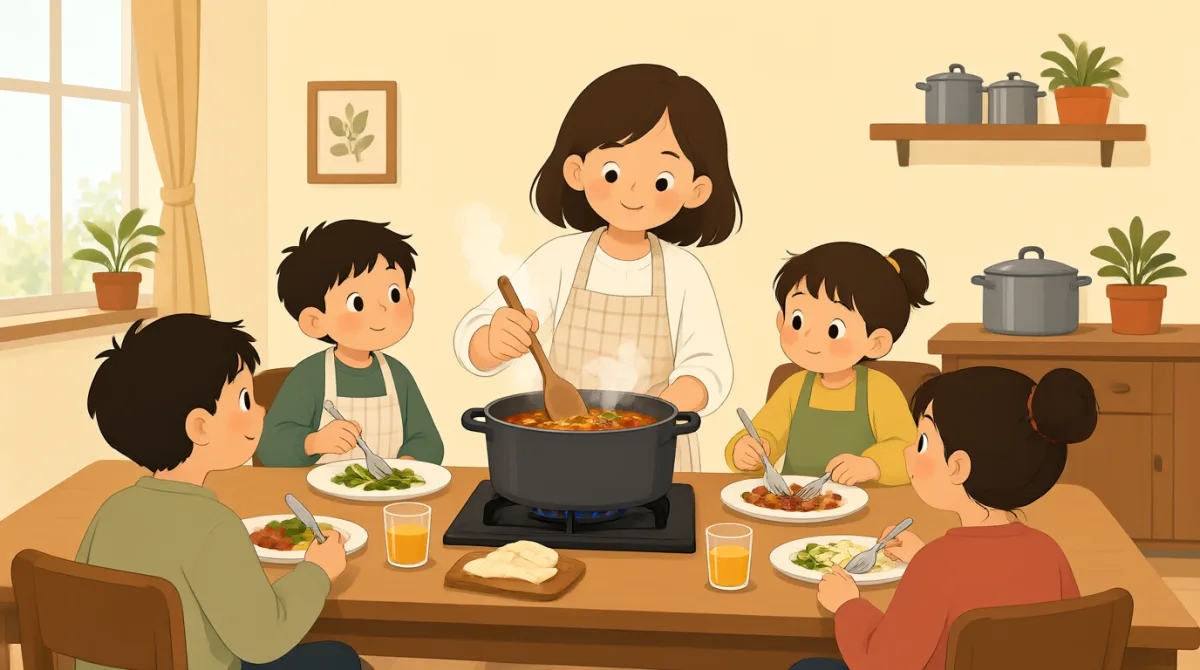
The class follows the recipe and adds the ingredients to a pot. Grace explains when to stir and how long to cook the food.
ทุกคนในคลาสทำตามสูตรและใส่ส่วนผสมลงในหม้อ เกรซอธิบายว่าควรคนตอนไหนและต้องปรุงอาหารนานแค่ไหน
บทสนทนา9

Now, read the recipe. First, pour two cups of water into the pot.
เอาละ อ่านสูตรก่อนนะ ขั้นแรก เทน้ำสองถ้วยลงในหม้อ

Should I add the tomatoes now, or wait until the water gets hot?
ใส่มะเขือเทศตอนนี้เลยดีไหม หรือรอให้น้ำร้อนก่อน?
Wait until it boils. Then add the tomatoes, beans, and a little salt.
รอจนกว่าน้ำจะเดือด แล้วค่อยใส่มะเขือเทศ ถั่ว แล้วก็เกลือนิดหน่อย

How long should we cook everything? I don't want to burn lunch.
ต้องปรุงทุกอย่างนานแค่ไหนเหรอ? ฉันไม่อยากทำมื้อกลางวันไหม้นะ
Cook it for ten minutes. Stir it gently every few minutes.
ปรุงสิบนาทีนะ ค่อย ๆ คนทุกสองสามนาที
The soup is bubbling now. Should I turn the heat down?
ซุปเริ่มเดือดปุด ๆ แล้ว ควรลดไฟลงไหม?
Yes, turn it down to low. Keep stirring so nothing sticks.
ใช่ ลดไฟลงเป็นไฟอ่อนนะ แล้วคนต่อไปเรื่อย ๆ จะได้ไม่ติดหม้อ
I stirred it, and the beans feel soft. Can we taste it now?
ฉันคนแล้ว ถั่วนิ่มแล้วนะ ชิมตอนนี้ได้ไหม?
Sure. Take a small spoonful, and tell me if it needs more salt.
ได้เลย ตักชิมสักคำเล็ก ๆ แล้วบอกหน่อยว่าต้องเติมเกลืออีกไหม
คำศัพท์8
- pour two cups of waterเทน้ำสองถ้วย
This means to put two cups of water into the pot. You can use “pour” when adding a liquid to a container.
หมายถึงเทน้ำสองถ้วยลงในหม้อ ใช้ “pour” (เท) เมื่อต้องเติมของเหลวลงในภาชนะได้
- until it boilsจนกว่าจะเดือด
This means to wait until the water gets very hot and starts bubbling. You can say “until it boils” when explaining when to do something.
หมายถึงรอจนน้ำร้อนมากและเริ่มมีฟอง ใช้ “until it boils” (จนกว่าจะเดือด) เพื่อบอกว่าควรทำบางอย่างเมื่อไรได้
- add the tomatoesใส่มะเขือเทศ
This means to put the tomatoes into the pot. Use “add” when putting an ingredient into food.
หมายถึงใส่มะเขือเทศลงในหม้อ ใช้ “add” (ใส่/เติม) เมื่อต้องใส่ส่วนผสมลงในอาหารได้
- stir it gentlyค่อย ๆ คน
This means to mix the food slowly and carefully with a spoon. You can use “stir gently” when giving cooking instructions.
หมายถึงใช้ช้อนคนอาหารอย่างช้า ๆ และระมัดระวัง ใช้ “stir gently” (ค่อย ๆ คน) เมื่อต้องบอกวิธีทำอาหารได้
- turn it down to lowลดไฟลงเป็นไฟอ่อน
This means to lower the heat to a low setting. You can use this phrase when a dish needs to cook more slowly.
หมายถึงลดความร้อนลงเป็นระดับไฟอ่อน ใช้สำนวนนี้เมื่ออาหารต้องปรุงต่อด้วยไฟที่เบาลงได้
- sticksติดก้นหม้อ
Here, “sticks” means food gets attached to the bottom of the pot. You can say “so nothing sticks” when explaining why you should stir.
ในที่นี้ “sticks” หมายถึงอาหารติดอยู่ที่ก้นหม้อ ใช้ “so nothing sticks” (จะได้ไม่มีอะไรติดหม้อ) เพื่ออธิบายเหตุผลที่ควรคนอาหารได้
- a small spoonfulหนึ่งช้อนเล็ก ๆ
This means a small amount of food that fits on a spoon. Use it when tasting food or serving a little.
หมายถึงอาหารปริมาณเล็กน้อยที่พอดีกับช้อน ใช้เมื่อต้องชิมอาหารหรือตักเสิร์ฟนิดหน่อยได้
- needs more saltต้องเติมเกลืออีก
This means the food may need extra salt to taste better. You can use this phrase when asking someone to check the flavor.
หมายถึงอาหารอาจต้องเติมเกลืออีกเพื่อให้รสชาติดีขึ้น ใช้สำนวนนี้เมื่อต้องขอให้ใครช่วยชิมและดูรสชาติได้
ประโยคสำคัญ8
- 1
First, pour two cups of water into the pot.
ขั้นแรก เทน้ำสองถ้วยลงในหม้อ
This gives a clear first step in a recipe. You can reuse the pattern “First, pour [amount] of [liquid] into the [container].”
ประโยคนี้บอกขั้นตอนแรกของสูตรอาหารได้อย่างชัดเจน ลองนำรูปแบบ “First, pour [amount] of [liquid] into the [container].” ไปใช้ซ้ำได้ โดยเปลี่ยนปริมาณ ของเหลว และภาชนะตามต้องการ
- 2
Should I add the tomatoes now, or wait until the water gets hot?
ควรใส่มะเขือเทศตอนนี้เลยไหม หรือรอให้น้ำร้อนก่อน?
This is a useful way to ask whether to do something now or later. Replace “add the tomatoes” with another task to ask about the right time.
นี่เป็นวิธีที่ใช้ถามได้ดีว่าควรทำบางอย่างตอนนี้หรือค่อยทำทีหลัง ลองเปลี่ยน “add the tomatoes” เป็นงานอย่างอื่น เพื่อถามว่าควรทำตอนไหน
- 3
Cook it for ten minutes.
ปรุงสิบนาที
This tells someone how long to cook something. You can use “Cook it for [time]” to give a simple cooking instruction.
ประโยคนี้บอกว่าควรปรุงอาหารนานแค่ไหน ใช้ “Cook it for [time]” เพื่อบอกวิธีทำอาหารแบบง่าย ๆ ได้
- 4
Stir it gently every few minutes.
ค่อย ๆ คนทุกสองสามนาที
This gives both the action and how often to do it. You can change “gently” or “every few minutes” to give different instructions.
ประโยคนี้บอกทั้งสิ่งที่ต้องทำและความถี่ที่ต้องทำ ลองเปลี่ยน “gently” หรือ “every few minutes” เพื่อบอกวิธีทำแบบอื่นได้
- 5
Yes, turn it down to low.
ใช่ ลดไฟลงเป็นไฟอ่อน
This is a short, practical instruction for lowering the heat. You can replace “low” with another heat setting, such as “medium.”
นี่เป็นคำสั่งสั้น ๆ ที่ใช้บอกให้ลดไฟได้ ลองเปลี่ยน “low” เป็นระดับความร้อนอื่น เช่น “medium” ได้
- 6
Keep stirring so nothing sticks.
คนต่อไปเรื่อย ๆ จะได้ไม่มีอะไรติดหม้อ
This explains what to keep doing and why. Use “Keep [verb]-ing so [result]” to give a helpful reminder.
ประโยคนี้อธิบายว่าควรทำอะไรต่อและทำไปเพื่ออะไร ใช้ “Keep [verb]-ing so [result]” เพื่อเตือนหรือแนะนำอย่างเป็นประโยชน์ได้
- 7
Can we taste it now?
ชิมตอนนี้ได้ไหม?
This is a simple way to ask if it is okay to try some food. You can replace “taste it” with another action to ask permission.
นี่เป็นวิธีง่าย ๆ ในการถามว่าลองชิมอาหารได้ไหม ลองเปลี่ยน “taste it” เป็นการกระทำอย่างอื่นเพื่อขออนุญาตได้
- 8
Take a small spoonful, and tell me if it needs more salt.
ตักชิมสักคำเล็ก ๆ แล้วบอกหน่อยว่าต้องเติมเกลืออีกไหม
This gives someone two clear steps: taste a little and say what the food needs. You can replace “more salt” with another ingredient or seasoning.
ประโยคนี้บอกสองขั้นตอนชัดเจน คือชิมเล็กน้อยแล้วบอกว่าอาหารต้องเติมอะไร ลองเปลี่ยน “more salt” เป็นส่วนผสมหรือเครื่องปรุงอื่นได้