The First Swimming Lesson
บทเรียนว่ายน้ำครั้งแรก
Emma brings her daughter to the first lesson and meets Mia, the swimming coach. Mia explains what the children will do in class.
เอ็มมาพาลูกสาวมาเรียนว่ายน้ำครั้งแรกและพบกับมีอา โค้ชสอนว่ายน้ำ มีอาอธิบายว่าเด็ก ๆ จะทำอะไรในชั้นเรียน
บทสนทนา8
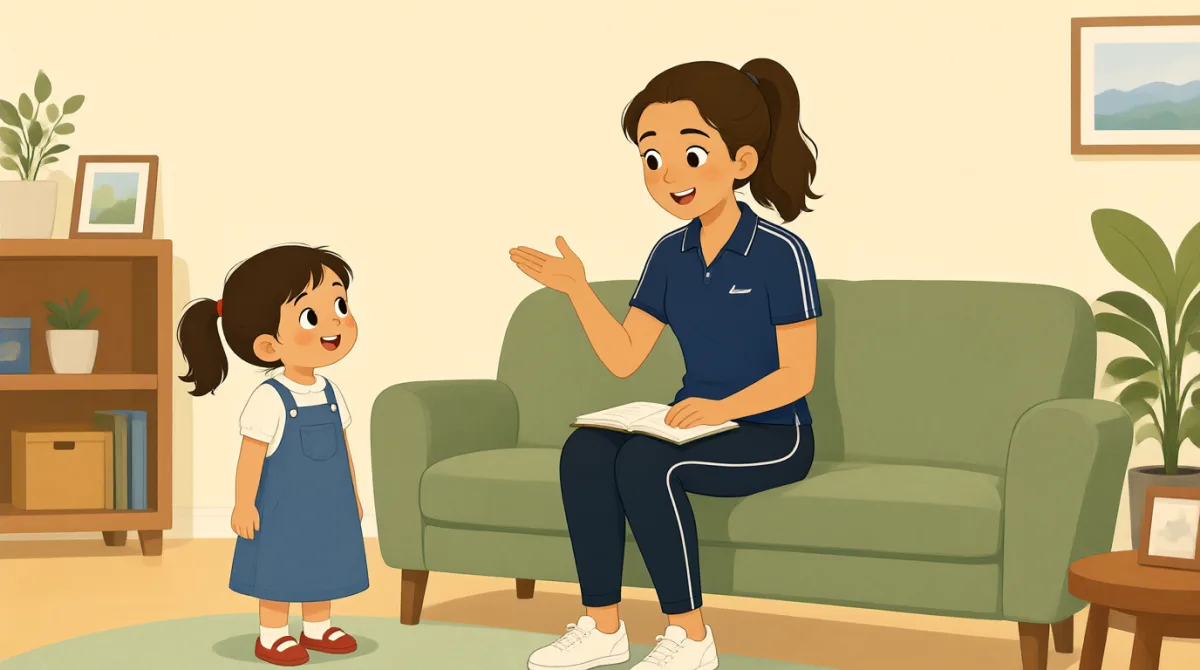

Hi, I’m here for my daughter’s first swimming lesson.
สวัสดีค่ะ พาลูกสาวมาเรียนว่ายน้ำครั้งแรกค่ะ

Welcome! I’m Mia, her coach. Let’s get her ready by the pool.
ยินดีต้อนรับค่ะ ฉันชื่อมีอา เป็นโค้ชของเธอค่ะ เราไปเตรียมตัวกันที่ข้างสระนะคะ
What will the children do in class today?
วันนี้เด็ก ๆ จะทำอะไรกันในชั้นเรียนคะ
We’ll start with a warm-up, then practice kicking and blowing bubbles.
เราจะเริ่มด้วยการอบอุ่นร่างกาย จากนั้นจะฝึกเตะขาและเป่าฟองอากาศค่ะ
That sounds fun. Should she wear her goggles now?
ฟังดูสนุกจังค่ะ เธอควรใส่แว่นตาว่ายน้ำตอนนี้เลยไหมคะ
Yes, please. She should also wear her swim cap and bring a towel.
ใส่เลยค่ะ แล้วก็ให้เธอสวมหมวกว่ายน้ำและนำผ้าขนหนูมาด้วยนะคะ
Okay. Can I watch from here during the lesson?
ได้ค่ะ ระหว่างเรียนฉันดูจากตรงนี้ได้ไหมคะ
Of course. Please stay behind the glass, and I’ll come talk to you afterward.
ได้เลยค่ะ กรุณาอยู่หลังผนังกระจกนะคะ แล้วฉันจะออกมาคุยด้วยหลังจากเรียนเสร็จค่ะ
คำศัพท์8
- first swimming lessonบทเรียนว่ายน้ำครั้งแรก
This is the first class a child has to learn how to swim. You can use “first” before the name of a new class or activity.
คำนี้หมายถึงชั้นเรียนแรกที่เด็กมาเรียนว่ายน้ำ คุณใช้ “first” นำหน้าชื่อชั้นเรียนหรือกิจกรรมใหม่ได้ค่ะ
- get her readyเตรียมตัวให้เธอ
This means help her prepare for the lesson. You can use “get someone ready” before an activity or event.
หมายถึงช่วยเตรียมเธอให้พร้อมสำหรับบทเรียน คุณใช้ “get someone ready” ก่อนพูดถึงกิจกรรมหรือเหตุการณ์ที่กำลังจะเกิดขึ้นได้ค่ะ
- warm-upการอบอุ่นร่างกาย
A warm-up is easy exercise at the start of a class. It helps the body get ready for more activity.
การอบอุ่นร่างกายคือการออกกำลังกายเบา ๆ ตอนเริ่มชั้นเรียน เพื่อเตรียมร่างกายให้พร้อมทำกิจกรรมที่หนักขึ้นค่ะ
- blowing bubblesการเป่าฟองอากาศ
This means breathing out into the water to make bubbles. Children often practice this when learning to swim.
หมายถึงการหายใจออกลงในน้ำให้เกิดฟองอากาศ เด็ก ๆ มักฝึกทำแบบนี้ตอนเรียนว่ายน้ำค่ะ
- gogglesแว่นตาว่ายน้ำ
Goggles are special glasses that protect your eyes in the water. You can ask, “Should I wear my goggles now?”
แว่นตาว่ายน้ำคือแว่นพิเศษที่ช่วยปกป้องดวงตาในน้ำ คุณถามได้ว่า “Should I wear my goggles now?” (ฉันควรใส่แว่นตาว่ายน้ำตอนนี้ไหมคะ) ค่ะ
- swim capหมวกว่ายน้ำ
A swim cap is a close-fitting hat worn in the pool. You can use “wear a swim cap” to talk about putting one on.
หมวกว่ายน้ำคือหมวกที่กระชับศีรษะและสวมใส่เมื่ออยู่ในสระ คุณใช้ “wear a swim cap” เพื่อพูดถึงการสวมหมวกว่ายน้ำได้ค่ะ
- behind the glassหลังผนังกระจก
This means on the other side of the glass, where parents can watch the lesson. You can use “behind” to say where someone should stay.
หมายถึงอยู่อีกด้านของกระจก ซึ่งเป็นบริเวณที่ผู้ปกครองดูบทเรียนได้ คุณใช้ “behind” เพื่อบอกว่าควรอยู่ตรงไหนได้ค่ะ
- afterwardหลังจากนั้น
“Afterward” means after something is finished. You can use it to say when you will do something later.
“Afterward” หมายถึงหลังจากบางอย่างเสร็จสิ้นแล้ว คุณใช้คำนี้เพื่อบอกว่าจะทำบางอย่างเมื่อไรในภายหลังได้ค่ะ
ประโยคสำคัญ7
- 1
I’m here for my daughter’s first swimming lesson.
พาลูกสาวมาเรียนว่ายน้ำครั้งแรกค่ะ
Use this sentence to explain why you have come somewhere. You can replace “my daughter’s first swimming lesson” with another appointment or activity.
ใช้ประโยคนี้อธิบายว่าคุณมาที่นี่ทำไม คุณเปลี่ยน “my daughter’s first swimming lesson” เป็นนัดหมายหรือกิจกรรมอื่นได้ค่ะ
- 2
Let’s get her ready by the pool.
เราไปเตรียมตัวกันที่ข้างสระนะคะ
This is a friendly way to suggest preparing someone for an activity. Replace “her” with another person, and change “by the pool” to the place where you will get ready.
ประโยคนี้เป็นวิธีชวนอย่างเป็นมิตรให้เตรียมใครสักคนสำหรับกิจกรรม เปลี่ยน “her” เป็นคนอื่น และเปลี่ยน “by the pool” เป็นสถานที่ที่จะเตรียมตัวได้ค่ะ
- 3
What will the children do in class today?
วันนี้เด็ก ๆ จะทำอะไรกันในชั้นเรียนคะ
Use this question to ask about a class plan. You can replace “the children” with “we” or “my child” to ask about other people.
ใช้คำถามนี้ถามเกี่ยวกับแผนการสอน คุณเปลี่ยน “the children” เป็น “we” หรือ “my child” เพื่อถามถึงคนกลุ่มอื่นได้ค่ะ
- 4
We’ll start with a warm-up, then practice kicking and blowing bubbles.
เราจะเริ่มด้วยการอบอุ่นร่างกาย จากนั้นจะฝึกเตะขาและเป่าฟองอากาศค่ะ
This sentence explains what will happen first and next. Use “We’ll start with…” to describe the beginning of a lesson or activity.
ประโยคนี้อธิบายว่าจะทำอะไรก่อนและทำอะไรต่อ คุณใช้ “We’ll start with…” เพื่อบอกจุดเริ่มต้นของบทเรียนหรือกิจกรรมได้ค่ะ
- 5
Should she wear her goggles now?
เธอควรใส่แว่นตาว่ายน้ำตอนนี้เลยไหมคะ
Use “Should she…?” to ask if someone ought to do something. Replace “she” and “wear her goggles” to ask about another person or action.
ใช้ “Should she…?” เพื่อถามว่าใครสักคนควรทำอะไรหรือไม่ เปลี่ยน “she” และ “wear her goggles” เพื่อถามถึงคนอื่นหรือการกระทำอย่างอื่นได้ค่ะ
- 6
Can I watch from here during the lesson?
ระหว่างเรียนฉันดูจากตรงนี้ได้ไหมคะ
This is a polite way to ask permission to watch. You can replace “watch” with another activity and “the lesson” with another event.
นี่เป็นวิธีสุภาพในการขออนุญาตดู คุณเปลี่ยน “watch” เป็นกิจกรรมอื่น และเปลี่ยน “the lesson” เป็นเหตุการณ์อื่นได้ค่ะ
- 7
Please stay behind the glass, and I’ll come talk to you afterward.
กรุณาอยู่หลังผนังกระจกนะคะ แล้วฉันจะออกมาคุยด้วยหลังจากเรียนเสร็จค่ะ
This sentence gives a polite instruction and explains what will happen later. Use “Please stay…” to ask someone to remain in a place.
ประโยคนี้เป็นคำขออย่างสุภาพและอธิบายว่าจะเกิดอะไรขึ้นภายหลัง คุณใช้ “Please stay…” เพื่อขอให้ใครสักคนอยู่ในสถานที่หนึ่งต่อได้ค่ะ