Carrying It All Home
ขนของทั้งหมดกลับบ้าน
After shopping, Emma and Jack figure out how to carry everything home. They split the bags and make sure nothing gets left behind.
หลังจากซื้อของเสร็จ เอ็มมากับแจ็กก็ช่วยกันคิดว่าจะขนทุกอย่างกลับบ้านยังไง ทั้งคู่แบ่งถุงกันถือและเช็กให้แน่ใจว่าไม่มีอะไรตกหล่น
บทสนทนา8
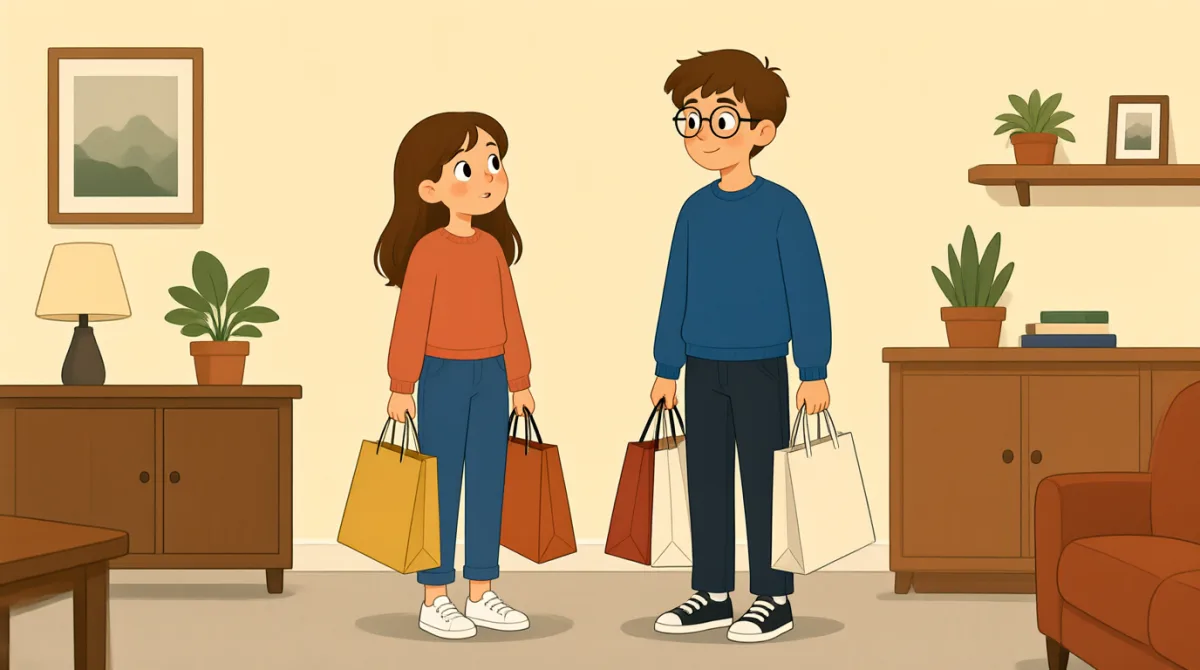

These bags are heavier than I thought. Can you carry the drinks?
ถุงพวกนี้หนักกว่าที่คิดอีก เธอช่วยถือเครื่องดื่มได้ไหม

Sure. I’ll take the drinks and the paper plates. You take the food.
ได้เลย ฉันถือเครื่องดื่มกับจานกระดาษเอง เธอถืออาหารไปนะ
Good idea. Let’s split the bags so neither of us carries too much.
ดีเลย เราแบ่งถุงกันดีกว่า จะได้ไม่มีใครต้องถือของหนักเกินไป
I’ll put the bread on top. We don’t want it to get squashed.
ฉันวางขนมปังไว้ข้างบนละกัน เราไม่อยากให้มันโดนทับแบน
Thanks! Did we get everything? I don’t want to leave anything behind.
ขอบใจนะ เราได้ของครบหรือยัง ฉันไม่อยากลืมอะไรไว้
Let me check the list. We have the food, drinks, cups, and napkins.
ขอฉันเช็กรายการก่อนนะ เรามีอาหาร เครื่องดื่ม แก้ว แล้วก็ผ้าเช็ดปากครบแล้ว
Great. I’ll carry this bag, and you can take the last two.
เยี่ยมเลย ฉันถือถุงนี้เอง ส่วนเธอถืออีกสองถุงสุดท้ายนะ
Okay. Let’s head home before the ice cream melts.
โอเค กลับบ้านกันเถอะ ก่อนที่ไอศกรีมจะละลาย
คำศัพท์8
- carryถือ
To hold and take something with you. Here, Emma and Jack carry the shopping bags home.
หมายถึงจับหรือยกสิ่งของติดตัวไปด้วย ในบทสนทนานี้ เอ็มมากับแจ็กช่วยกันถือถุงของกลับบ้าน
- split the bagsแบ่งถุงกันถือ
To share the bags between two people. You can use this phrase when dividing things so everyone carries a fair amount.
หมายถึงแบ่งถุงให้คนสองคนช่วยกันถือ ใช้สำนวนนี้ได้เมื่อแบ่งของกัน เพื่อให้แต่ละคนถือของในปริมาณที่พอเหมาะ
- on topไว้ข้างบน
In the highest position, above other things. Here, Jack puts the bread on top to protect it.
หมายถึงอยู่ตำแหน่งสูงสุด เหนือสิ่งของอื่น ๆ ในบทสนทนานี้ แจ็กวางขนมปังไว้ข้างบนเพื่อป้องกันไม่ให้โดนทับ
- get squashedโดนทับแบน
To be pressed and become flat or damaged. Use this phrase when something soft might be crushed under heavier items.
หมายถึงถูกกดจนแบนหรือเสียหาย ใช้สำนวนนี้เมื่อของนุ่ม ๆ อาจถูกของที่หนักกว่าทับจนเสียรูป
- leave anything behindลืมอะไรไว้
To forget or not take something with you. You can use this phrase to check that you have all your belongings.
หมายถึงลืมหรือไม่ได้เอาของบางอย่างติดตัวไปด้วย ใช้สำนวนนี้เพื่อตรวจสอบว่าคุณเอาของติดตัวไปครบหรือเปล่า
- check the listเช็กรายการ
To look at a list and make sure everything is included. This is useful when checking items before you leave a shop.
หมายถึงดูรายการและตรวจให้แน่ใจว่ามีของครบทุกอย่าง ใช้ได้เมื่อเช็กสิ่งของก่อนออกจากร้าน
- head homeกลับบ้าน
To start going home. You can use this common phrase when you are ready to leave and go back home.
หมายถึงเริ่มเดินทางกลับบ้าน เป็นสำนวนที่ใช้กันทั่วไปเมื่อพร้อมออกจากที่หนึ่งเพื่อกลับบ้าน
- meltsละลาย
Changes from solid to liquid because of heat. Here, the ice cream may melt if they take too long to get home.
หมายถึงเปลี่ยนจากของแข็งเป็นของเหลวเพราะความร้อน ในที่นี้ ไอศกรีมอาจละลายถ้าพวกเขาใช้เวลานานเกินไปกว่าจะกลับถึงบ้าน
ประโยคสำคัญ7
- 1
Can you carry the drinks?
เธอช่วยถือเครื่องดื่มได้ไหม
A simple way to ask someone to carry something. Replace “the drinks” with another item, such as “the bags” or “the boxes.”
เป็นวิธีง่าย ๆ ในการขอให้ใครช่วยถือของ แทน “the drinks” ด้วยสิ่งของอย่างอื่นได้ เช่น “the bags” หรือ “the boxes”
- 2
Let’s split the bags so neither of us carries too much.
เราแบ่งถุงกันดีกว่า จะได้ไม่มีใครต้องถือของหนักเกินไป
Use this to suggest sharing a task fairly. You can replace “the bags” with other things you need to divide.
ใช้ประโยคนี้เพื่อเสนอให้แบ่งงานกันอย่างยุติธรรม คุณแทน “the bags” ด้วยสิ่งอื่นที่ต้องแบ่งกันได้
- 3
We don’t want it to get squashed.
เราไม่อยากให้มันโดนทับแบน
This explains why something needs to be handled carefully. Replace “it” with an item that could be crushed, such as bread or fruit.
ประโยคนี้อธิบายว่าทำไมสิ่งของจึงต้องได้รับการดูแลอย่างระมัดระวัง แทน “it” ด้วยของที่อาจถูกทับได้ เช่น ขนมปังหรือผลไม้
- 4
Did we get everything?
เราได้ของครบหรือยัง
A useful question for checking that you have all the things you need. You can ask it before leaving a shop or another place.
เป็นคำถามที่มีประโยชน์เมื่อต้องตรวจว่าคุณมีของที่ต้องการครบหรือยัง ถามได้ก่อนออกจากร้านหรือสถานที่อื่น ๆ
- 5
I don’t want to leave anything behind.
ฉันไม่อยากลืมอะไรไว้
Use this to say that you want to take all your belongings with you. It is helpful when checking a list or packing up.
ใช้ประโยคนี้เพื่อบอกว่าคุณอยากเอาของติดตัวไปให้ครบ มีประโยชน์เมื่อกำลังเช็กรายการหรือเก็บของ
- 6
Let me check the list.
ขอฉันเช็กรายการก่อนนะ
A natural way to say that you will look at a list to confirm something. You can use it when shopping, preparing for a trip, or checking tasks.
เป็นวิธีพูดอย่างเป็นธรรมชาติว่าคุณจะดูรายการเพื่อยืนยันบางอย่าง ใช้ได้ตอนซื้อของ เตรียมตัวเดินทาง หรือเช็กงานที่ต้องทำ
- 7
Let’s head home before the ice cream melts.
กลับบ้านกันเถอะ ก่อนที่ไอศกรีมจะละลาย
This suggests going home soon and gives a reason for leaving. Replace “the ice cream melts” with another reason to hurry.
ประโยคนี้ชวนให้รีบกลับบ้าน พร้อมบอกเหตุผลที่ควรออกจากที่นี่ แทน “the ice cream melts” ด้วยเหตุผลอื่นที่ทำให้ต้องรีบได้