Carrying It All Home
सब कुछ घर ले जाना
After shopping, Emma and Jack figure out how to carry everything home. They split the bags and make sure nothing gets left behind.
खरीदारी के बाद एमा और जैक सोचते हैं कि सारी चीज़ें घर कैसे ले जाएँ। वे थैले बाँट लेते हैं और पक्का करते हैं कि कुछ भी पीछे न छूट जाए।
संवाद8
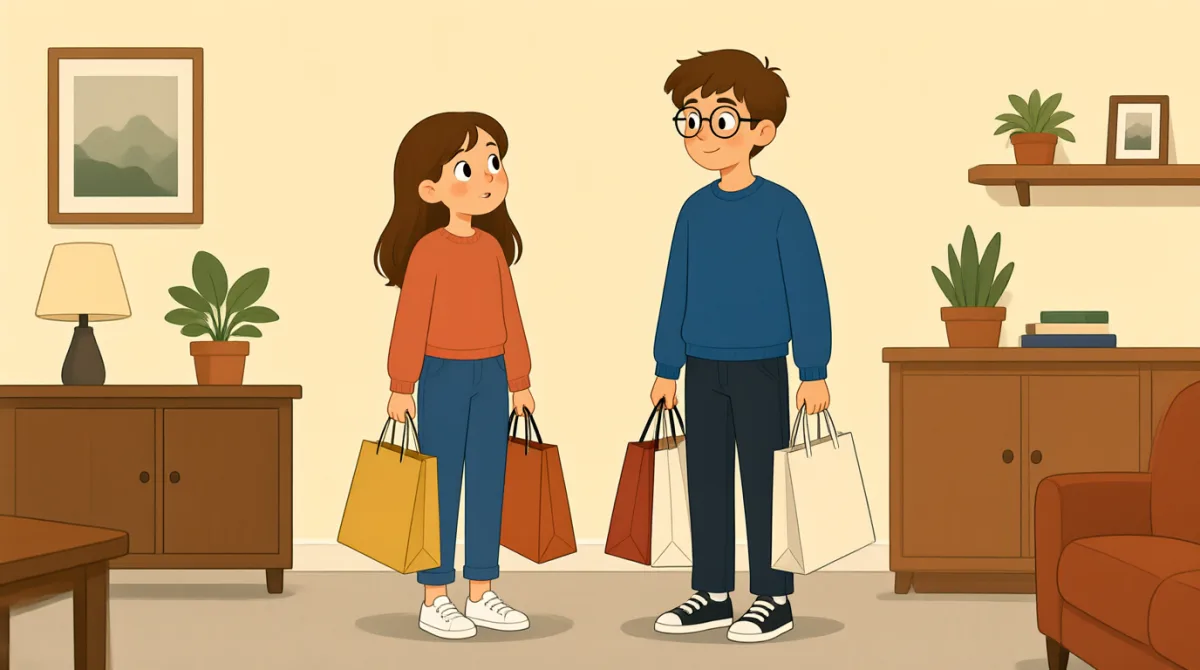

These bags are heavier than I thought. Can you carry the drinks?
ये थैले मेरी सोच से ज़्यादा भारी हैं। क्या तुम पेय ले जा सकते हो?

Sure. I’ll take the drinks and the paper plates. You take the food.
ज़रूर। मैं पेय और कागज़ की प्लेटें ले लेता हूँ। तुम खाना ले लो।
Good idea. Let’s split the bags so neither of us carries too much.
अच्छा विचार है। चलो थैले बाँट लेते हैं, ताकि हममें से किसी को भी बहुत ज़्यादा सामान न उठाना पड़े।
I’ll put the bread on top. We don’t want it to get squashed.
मैं ब्रेड को सबसे ऊपर रखूँगा। हम नहीं चाहते कि वह दबकर खराब हो जाए।
Thanks! Did we get everything? I don’t want to leave anything behind.
धन्यवाद! क्या हमने सब कुछ ले लिया? मैं कुछ भी पीछे नहीं छोड़ना चाहती।
Let me check the list. We have the food, drinks, cups, and napkins.
मुझे सूची जाँचने दो। हमारे पास खाना, पेय, कप और नैपकिन हैं।
Great. I’ll carry this bag, and you can take the last two.
बहुत बढ़िया। मैं यह थैला ले जाऊँगी और तुम बाकी के दो ले लो।
Okay. Let’s head home before the ice cream melts.
ठीक है। आइसक्रीम पिघलने से पहले चलो घर चलते हैं।
शब्दावली8
- carryले जाना
To hold and take something with you. Here, Emma and Jack carry the shopping bags home.
किसी चीज़ को हाथ में लेकर अपने साथ ले जाना। यहाँ एमा और जैक खरीदारी के थैले घर ले जा रहे हैं।
- split the bagsथैले बाँट लेना
To share the bags between two people. You can use this phrase when dividing things so everyone carries a fair amount.
दो लोगों के बीच थैले बाँट लेना। इस वाक्यांश का इस्तेमाल तब कर सकते हो जब चीज़ें इस तरह बाँटनी हों कि हर व्यक्ति बराबर मात्रा उठाए।
- on topसबसे ऊपर
In the highest position, above other things. Here, Jack puts the bread on top to protect it.
दूसरी चीज़ों के ऊपर, सबसे ऊँची जगह पर। यहाँ जैक ब्रेड को सुरक्षित रखने के लिए सबसे ऊपर रखता है।
- get squashedदबकर खराब हो जाना
To be pressed and become flat or damaged. Use this phrase when something soft might be crushed under heavier items.
दबने से चपटा या खराब हो जाना। इस वाक्यांश का इस्तेमाल तब करो जब कोई नरम चीज़ भारी सामान के नीचे दब सकती हो।
- leave anything behindकुछ भी पीछे छोड़ देना
To forget or not take something with you. You can use this phrase to check that you have all your belongings.
किसी चीज़ को भूल जाना या अपने साथ न ले जाना। इस वाक्यांश का इस्तेमाल यह जाँचने के लिए कर सकते हो कि तुम्हारा सारा सामान तुम्हारे पास है।
- check the listसूची जाँचना
To look at a list and make sure everything is included. This is useful when checking items before you leave a shop.
किसी सूची को देखकर यह पक्का करना कि उसमें सब कुछ शामिल है। दुकान से निकलने से पहले सामान जाँचते समय यह बहुत उपयोगी है।
- head homeघर की ओर चल पड़ना
To start going home. You can use this common phrase when you are ready to leave and go back home.
घर जाने के लिए निकलना शुरू करना। जब तुम जाने और घर वापस लौटने के लिए तैयार हो, तब इस आम वाक्यांश का इस्तेमाल कर सकते हो।
- meltsपिघलता है
Changes from solid to liquid because of heat. Here, the ice cream may melt if they take too long to get home.
गर्मी के कारण ठोस से तरल में बदलना। यहाँ, अगर वे घर पहुँचने में बहुत देर करेंगे तो आइसक्रीम पिघल सकती है।
मुख्य वाक्य7
- 1
Can you carry the drinks?
क्या तुम पेय ले जा सकते हो?
A simple way to ask someone to carry something. Replace “the drinks” with another item, such as “the bags” or “the boxes.”
किसी से कुछ ले जाने के लिए कहने का यह एक सरल तरीका है। “the drinks” की जगह कोई और चीज़ रख सकते हो, जैसे “the bags” या “the boxes”।
- 2
Let’s split the bags so neither of us carries too much.
चलो थैले बाँट लेते हैं, ताकि हममें से किसी को भी बहुत ज़्यादा सामान न उठाना पड़े।
Use this to suggest sharing a task fairly. You can replace “the bags” with other things you need to divide.
किसी काम को उचित रूप से बाँटने का सुझाव देने के लिए इसका इस्तेमाल करो। “the bags” की जगह ऐसी दूसरी चीज़ें रख सकते हो जिन्हें तुम्हें बाँटना है।
- 3
We don’t want it to get squashed.
हम नहीं चाहते कि वह दबकर खराब हो जाए।
This explains why something needs to be handled carefully. Replace “it” with an item that could be crushed, such as bread or fruit.
इससे पता चलता है कि किसी चीज़ को सावधानी से सँभालना क्यों ज़रूरी है। “it” की जगह ऐसी चीज़ का नाम रख सकते हो जो दबकर खराब हो सकती है, जैसे ब्रेड या फल।
- 4
Did we get everything?
क्या हमने सब कुछ ले लिया?
A useful question for checking that you have all the things you need. You can ask it before leaving a shop or another place.
यह जाँचने के लिए यह एक उपयोगी सवाल है कि तुम्हारे पास ज़रूरत की सारी चीज़ें हैं या नहीं। इसे दुकान या किसी दूसरी जगह से निकलने से पहले पूछ सकते हो।
- 5
I don’t want to leave anything behind.
मैं कुछ भी पीछे नहीं छोड़ना चाहती।
Use this to say that you want to take all your belongings with you. It is helpful when checking a list or packing up.
यह कहने के लिए इसका इस्तेमाल करो कि तुम अपना सारा सामान अपने साथ ले जाना चाहती हो। सूची जाँचते या सामान समेटते समय यह वाक्यांश उपयोगी है।
- 6
Let me check the list.
मुझे सूची जाँचने दो।
A natural way to say that you will look at a list to confirm something. You can use it when shopping, preparing for a trip, or checking tasks.
किसी बात की पुष्टि करने के लिए सूची देखने की बात कहने का यह एक स्वाभाविक तरीका है। खरीदारी करते समय, यात्रा की तैयारी करते समय या कामों की जाँच करते समय इसका इस्तेमाल कर सकते हो।
- 7
Let’s head home before the ice cream melts.
आइसक्रीम पिघलने से पहले चलो घर चलते हैं।
This suggests going home soon and gives a reason for leaving. Replace “the ice cream melts” with another reason to hurry.
इससे जल्दी घर जाने का सुझाव मिलता है और जाने का कारण भी बताया जाता है। “the ice cream melts” की जगह जल्दी करने का कोई दूसरा कारण रख सकते हो।