Carrying It All Home
Zaniesienie wszystkiego do domu
After shopping, Emma and Jack figure out how to carry everything home. They split the bags and make sure nothing gets left behind.
Po zakupach Emma i Jack zastanawiają się, jak zanieść wszystko do domu. Dzielą między siebie torby i upewniają się, że niczego nie zostawili.
Dialog8
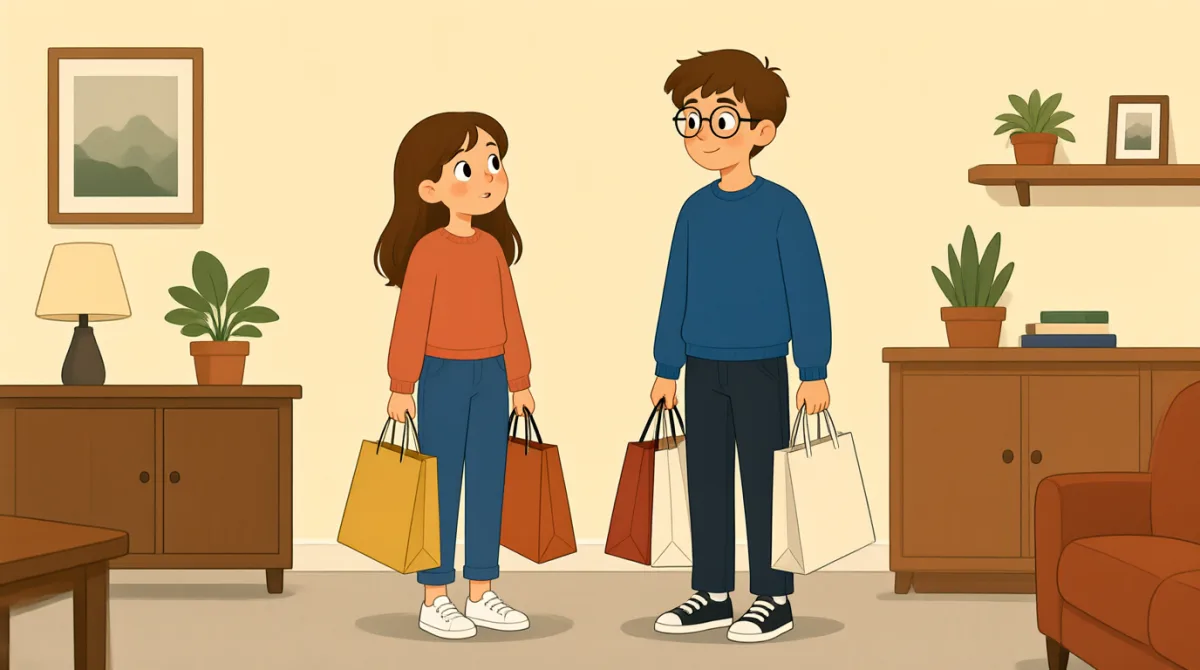

These bags are heavier than I thought. Can you carry the drinks?
Te torby są cięższe, niż myślałam. Możesz nieść napoje?

Sure. I’ll take the drinks and the paper plates. You take the food.
Jasne. Wezmę napoje i papierowe talerzyki. Ty weź jedzenie.
Good idea. Let’s split the bags so neither of us carries too much.
Dobry pomysł. Podzielmy torby, żeby żadne z nas nie niosło za dużo.
I’ll put the bread on top. We don’t want it to get squashed.
Położę chleb na wierzchu. Nie chcemy, żeby się zgniótł.
Thanks! Did we get everything? I don’t want to leave anything behind.
Dzięki! Wzięliśmy wszystko? Nie chcę niczego zostawić.
Let me check the list. We have the food, drinks, cups, and napkins.
Sprawdzę listę. Mamy jedzenie, napoje, kubki i serwetki.
Great. I’ll carry this bag, and you can take the last two.
Świetnie. Ja poniosę tę torbę, a ty możesz wziąć dwie ostatnie.
Okay. Let’s head home before the ice cream melts.
Dobrze. Chodźmy do domu, zanim lody się roztopią.
Słownictwo8
- carrynieść
To hold and take something with you. Here, Emma and Jack carry the shopping bags home.
Trzymać coś i zabierać to ze sobą. Tutaj Emma i Jack niosą torby z zakupami do domu.
- split the bagspodzielić torby
To share the bags between two people. You can use this phrase when dividing things so everyone carries a fair amount.
Rozdzielić torby między dwie osoby. Tego wyrażenia możesz użyć, gdy dzielisz rzeczy tak, żeby każdy niósł sprawiedliwą część.
- on topna wierzchu
In the highest position, above other things. Here, Jack puts the bread on top to protect it.
Na najwyższej pozycji, nad innymi rzeczami. Tutaj Jack kładzie chleb na wierzchu, żeby go ochronić.
- get squashedzostać zgniecionym
To be pressed and become flat or damaged. Use this phrase when something soft might be crushed under heavier items.
Zostać ściśniętym i spłaszczyć się lub ulec uszkodzeniu. Tego wyrażenia używa się, gdy coś miękkiego może zostać zgniecione pod cięższymi rzeczami.
- leave anything behindzostawić coś
To forget or not take something with you. You can use this phrase to check that you have all your belongings.
Zapomnieć o czymś albo nie zabrać tego ze sobą. Tego wyrażenia możesz użyć, żeby upewnić się, że masz wszystkie swoje rzeczy.
- check the listsprawdzić listę
To look at a list and make sure everything is included. This is useful when checking items before you leave a shop.
Przejrzeć listę i upewnić się, że wszystko się na niej znajduje. Przydaje się to podczas sprawdzania rzeczy przed wyjściem ze sklepu.
- head homeruszyć do domu
To start going home. You can use this common phrase when you are ready to leave and go back home.
Zacząć iść do domu. Tego popularnego wyrażenia możesz użyć, gdy jesteś gotowy wyjść i wrócić do domu.
- meltstopnieje
Changes from solid to liquid because of heat. Here, the ice cream may melt if they take too long to get home.
Zmienia stan stały w ciekły pod wpływem ciepła. Tutaj lody mogą się roztopić, jeśli zbyt długo będą wracać do domu.
Kluczowe zdania7
- 1
Can you carry the drinks?
Możesz nieść napoje?
A simple way to ask someone to carry something. Replace “the drinks” with another item, such as “the bags” or “the boxes.”
To prosty sposób, żeby poprosić kogoś o niesienie czegoś. Zamiast “the drinks” możesz wstawić inną rzecz, na przykład “the bags” albo “the boxes”.
- 2
Let’s split the bags so neither of us carries too much.
Podzielmy torby, żeby żadne z nas nie niosło za dużo.
Use this to suggest sharing a task fairly. You can replace “the bags” with other things you need to divide.
Użyj tego zdania, żeby zaproponować sprawiedliwy podział zadania. Zamiast “the bags” możesz wstawić inne rzeczy, które trzeba podzielić.
- 3
We don’t want it to get squashed.
Nie chcemy, żeby się zgniótł.
This explains why something needs to be handled carefully. Replace “it” with an item that could be crushed, such as bread or fruit.
To zdanie wyjaśnia, dlaczego z czymś trzeba obchodzić się ostrożnie. Zamiast “it” wstaw rzecz, którą można zgnieść, na przykład chleb albo owoce.
- 4
Did we get everything?
Wzięliśmy wszystko?
A useful question for checking that you have all the things you need. You can ask it before leaving a shop or another place.
To przydatne pytanie, gdy chcesz sprawdzić, czy masz wszystkie potrzebne rzeczy. Możesz je zadać przed wyjściem ze sklepu albo z innego miejsca.
- 5
I don’t want to leave anything behind.
Nie chcę niczego zostawić.
Use this to say that you want to take all your belongings with you. It is helpful when checking a list or packing up.
Użyj tego zdania, żeby powiedzieć, że chcesz zabrać ze sobą wszystkie swoje rzeczy. Przydaje się podczas sprawdzania listy albo pakowania.
- 6
Let me check the list.
Sprawdzę listę.
A natural way to say that you will look at a list to confirm something. You can use it when shopping, preparing for a trip, or checking tasks.
To naturalny sposób, żeby powiedzieć, że zajrzysz do listy i coś potwierdzisz. Możesz tak powiedzieć podczas zakupów, przygotowań do podróży albo sprawdzania zadań.
- 7
Let’s head home before the ice cream melts.
Chodźmy do domu, zanim lody się roztopią.
This suggests going home soon and gives a reason for leaving. Replace “the ice cream melts” with another reason to hurry.
To zdanie sugeruje, żeby wkrótce wrócić do domu, i podaje powód wyjścia. Zamiast “the ice cream melts” możesz wstawić inny powód, dla którego trzeba się spieszyć.