Changing Trains
เปลี่ยนขบวนรถไฟ
At the transfer station, Emma asks Jack where to go. They follow the signs to the next train.
ที่สถานีเปลี่ยนขบวน เอ็มมาถามแจ็กว่าต้องไปทางไหน ทั้งคู่เดินตามป้ายไปขึ้นรถไฟขบวนถัดไป
บทสนทนา8
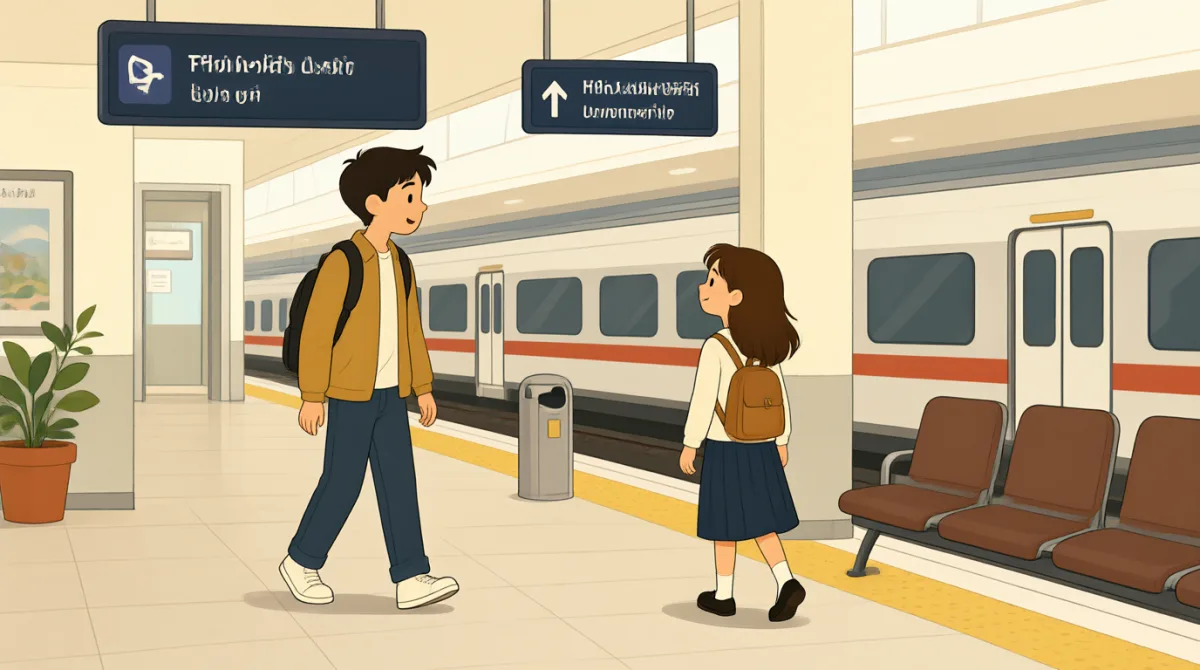

Jack, where do I go for the next train?
แจ็ก ฉันต้องไปทางไหนถึงจะขึ้นรถไฟขบวนถัดไปได้?

Follow the blue signs to Line 2.
เดินตามป้ายสีน้ำเงินไปที่สาย 2
Do I need to go upstairs?
ฉันต้องขึ้นไปชั้นบนไหม?
Yes. Take the stairs up, then turn left.
ใช่ ขึ้นบันไดไป แล้วเลี้ยวซ้าย
Is the train to the city center?
รถไฟขบวนนี้ไปใจกลางเมืองใช่ไหม?
Yes. Check the sign before you get on.
ใช่ ดูป้ายก่อนขึ้นรถนะ
Thanks. I think I can find it now.
ขอบใจนะ ตอนนี้ฉันคิดว่าน่าจะหาเจอแล้ว
No problem. The signs are easy to follow.
ไม่เป็นไร ป้ายพวกนี้ดูตามได้ง่าย
คำศัพท์8
- next trainรถไฟขบวนถัดไป
This means the train you need to take after your current train. Use it when asking which train to take next.
หมายถึงรถไฟที่ต้องขึ้นต่อจากขบวนที่กำลังนั่งอยู่ ใช้ถามว่าต้องขึ้นรถไฟขบวนไหนต่อ
- blue signsป้ายสีน้ำเงิน
These are the blue signs that show the way to Line 2. You can follow signs to find a train or place.
หมายถึงป้ายสีน้ำเงินที่บอกทางไปสาย 2 คุณสามารถเดินตามป้ายเพื่อหารถไฟหรือสถานที่ต่าง ๆ ได้
- Line 2สาย 2
This is the name of a subway route. Use “Line” and a number to talk about a subway route.
เป็นชื่อเส้นทางรถไฟใต้ดิน ใช้ “Line” ตามด้วยตัวเลขเพื่อพูดถึงเส้นทางรถไฟใต้ดิน
- upstairsชั้นบน
This means to a higher floor. You can ask if you need to go upstairs to reach a train.
หมายถึงไปยังชั้นที่สูงกว่า คุณถามได้ว่าต้องขึ้นไปชั้นบนเพื่อไปขึ้นรถไฟไหม
- turn leftเลี้ยวซ้าย
This means to go in the direction on your left. Use it when giving or following directions.
หมายถึงไปในทิศทางทางซ้าย ใช้บอกหรือทำตามเส้นทางได้
- city centerใจกลางเมือง
This means the central part of a city. You can use it to ask where a train is going.
หมายถึงบริเวณศูนย์กลางของเมือง ใช้ถามได้ว่ารถไฟกำลังจะไปที่ไหน
- get onขึ้นรถ
This means to enter a train or bus. Check the sign before you get on the train.
หมายถึงเข้าไปบนรถไฟหรือรถโดยสาร ดูป้ายให้เรียบร้อยก่อนขึ้นรถไฟ
- No problem.ไม่เป็นไร
This is a friendly way to say that helping was not difficult. You can say it after someone thanks you.
เป็นคำพูดเป็นกันเองเพื่อบอกว่าการช่วยเหลือไม่ได้ลำบากอะไร พูดได้หลังจากมีคนขอบคุณ
ประโยคสำคัญ8
- 1
Jack, where do I go for the next train?
แจ็ก ฉันต้องไปทางไหนถึงจะขึ้นรถไฟขบวนถัดไปได้?
Use this to ask where to go to catch another train. You can change “the next train” to another place or service.
ใช้ถามว่าต้องไปทางไหนเพื่อขึ้นรถไฟอีกขบวน คุณเปลี่ยน “the next train” เป็นสถานที่หรือบริการอื่นได้
- 2
Follow the blue signs to Line 2.
เดินตามป้ายสีน้ำเงินไปที่สาย 2
This gives a simple direction. You can replace “the blue signs” and “Line 2” with other signs or routes.
ประโยคนี้ใช้บอกทางอย่างง่าย ๆ คุณเปลี่ยน “the blue signs” และ “Line 2” เป็นป้ายหรือเส้นทางอื่นได้
- 3
Do I need to go upstairs?
ฉันต้องขึ้นไปชั้นบนไหม?
Use this to check if you need to go to a higher floor. Replace “upstairs” with another direction, such as “downstairs.”
ใช้ถามว่าต้องไปชั้นที่สูงขึ้นหรือไม่ คุณเปลี่ยน “upstairs” เป็นทิศทางอื่น เช่น “downstairs” ได้
- 4
Yes. Take the stairs up, then turn left.
ใช่ ขึ้นบันไดไป แล้วเลี้ยวซ้าย
This gives two clear steps for finding a place. Use “then” to show what to do next.
ประโยคนี้บอกขั้นตอนสองอย่างที่ชัดเจนเพื่อไปยังสถานที่หนึ่ง ใช้ “then” เพื่อบอกว่าต้องทำอะไรต่อ
- 5
Is the train to the city center?
รถไฟขบวนนี้ไปใจกลางเมืองใช่ไหม?
Use this to check where a train is going. You can replace “the city center” with another destination.
ใช้ถามว่ารถไฟกำลังจะไปที่ไหน คุณเปลี่ยน “the city center” เป็นจุดหมายอื่นได้
- 6
Check the sign before you get on.
ดูป้ายก่อนขึ้นรถนะ
This is useful advice before boarding a train or bus. You can replace “the sign” with other information you need to check.
คำแนะนำนี้มีประโยชน์ก่อนขึ้นรถไฟหรือรถโดยสาร คุณเปลี่ยน “the sign” เป็นข้อมูลอื่นที่ต้องตรวจสอบได้
- 7
I think I can find it now.
ตอนนี้ฉันคิดว่าน่าจะหาเจอแล้ว
Use this to say that you understand how to find a place. Replace “it” with the place or thing you are looking for.
ใช้บอกว่าคุณเข้าใจแล้วว่าจะหาสถานที่หนึ่งได้อย่างไร คุณเปลี่ยน “it” เป็นสถานที่หรือสิ่งของที่กำลังหาได้
- 8
The signs are easy to follow.
ป้ายพวกนี้ดูตามได้ง่าย
This means the signs make it simple to find the right way. You can use “easy to follow” to describe clear directions or instructions.
หมายถึงป้ายช่วยให้หาทางที่ถูกต้องได้ง่าย คุณใช้ “easy to follow” เพื่ออธิบายเส้นทางหรือคำแนะนำที่ชัดเจนได้