Changing Trains
Przesiadka
At the transfer station, Emma asks Jack where to go. They follow the signs to the next train.
Na stacji przesiadkowej Emma pyta Jacka, dokąd iść. Podążają za znakami do następnego pociągu.
Dialog8
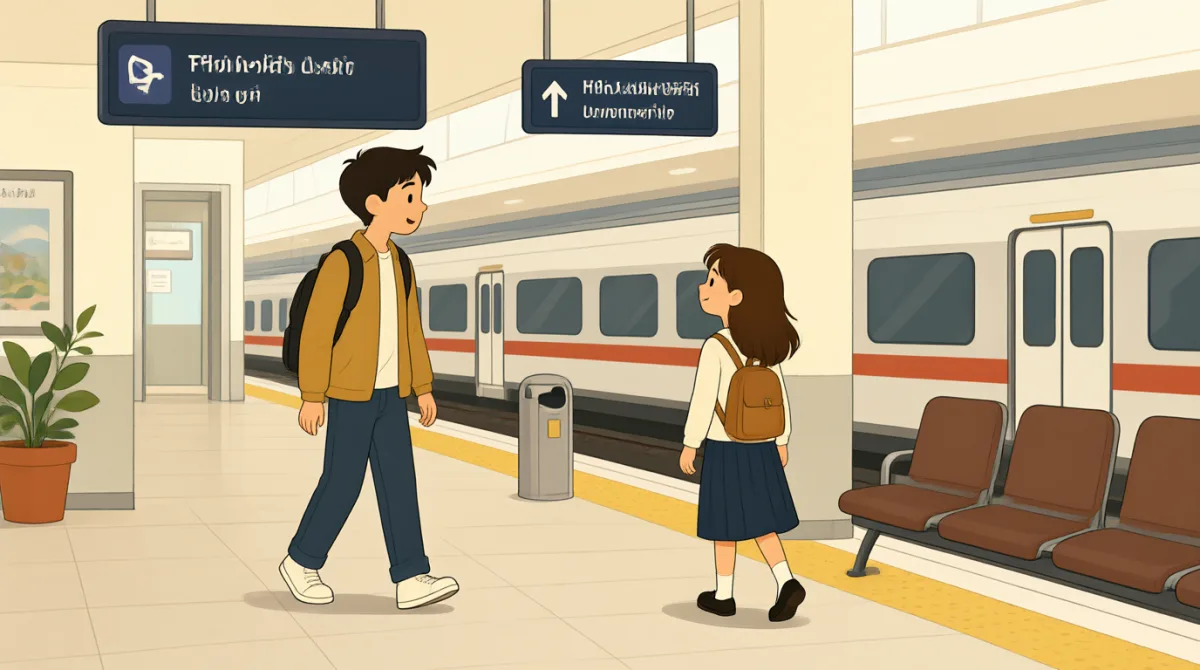

Jack, where do I go for the next train?
Jack, dokąd mam iść, żeby złapać następny pociąg?

Follow the blue signs to Line 2.
Idź za niebieskimi znakami na linię 2.
Do I need to go upstairs?
Muszę iść na górę?
Yes. Take the stairs up, then turn left.
Tak. Wejdź po schodach, a potem skręć w lewo.
Is the train to the city center?
Ten pociąg jedzie do centrum?
Yes. Check the sign before you get on.
Tak. Sprawdź znak, zanim wsiądziesz.
Thanks. I think I can find it now.
Dzięki. Chyba już go znajdę.
No problem. The signs are easy to follow.
Nie ma sprawy. Łatwo podążać za znakami.
Słownictwo8
- next trainnastępny pociąg
This means the train you need to take after your current train. Use it when asking which train to take next.
Chodzi o pociąg, którym trzeba jechać po obecnym. Użyj tego wyrażenia, gdy pytasz, którym pociągiem jechać dalej.
- blue signsniebieskie znaki
These are the blue signs that show the way to Line 2. You can follow signs to find a train or place.
Chodzi o niebieskie znaki wskazujące drogę na linię 2. Możesz podążać za znakami, żeby znaleźć pociąg albo jakieś miejsce.
- Line 2linia 2
This is the name of a subway route. Use “Line” and a number to talk about a subway route.
To nazwa trasy metra. Po angielsku używamy słowa “Line” i numeru, mówiąc o trasie metra.
- upstairsna górę
This means to a higher floor. You can ask if you need to go upstairs to reach a train.
To znaczy na wyższe piętro. Możesz zapytać, czy musisz iść na górę, żeby dostać się do pociągu.
- turn leftskręcić w lewo
This means to go in the direction on your left. Use it when giving or following directions.
To znaczy pójść w lewą stronę. Użyj tego wyrażenia, gdy wskazujesz komuś drogę lub za nią podążasz.
- city centercentrum miasta
This means the central part of a city. You can use it to ask where a train is going.
To centralna część miasta. Możesz użyć tego wyrażenia, pytając, dokąd jedzie pociąg.
- get onwsiąść
This means to enter a train or bus. Check the sign before you get on the train.
To znaczy wejść do pociągu lub autobusu. Zanim wsiądziesz do pociągu, sprawdź znak.
- No problem.Nie ma sprawy.
This is a friendly way to say that helping was not difficult. You can say it after someone thanks you.
To przyjazny sposób, by powiedzieć, że pomoc nie sprawiła kłopotu. Możesz tak odpowiedzieć, gdy ktoś ci dziękuje.
Kluczowe zdania8
- 1
Jack, where do I go for the next train?
Jack, dokąd mam iść, żeby złapać następny pociąg?
Use this to ask where to go to catch another train. You can change “the next train” to another place or service.
Użyj tego pytania, gdy chcesz się dowiedzieć, dokąd iść, żeby przesiąść się do innego pociągu. Możesz zastąpić “the next train” innym miejscem lub środkiem transportu.
- 2
Follow the blue signs to Line 2.
Idź za niebieskimi znakami na linię 2.
This gives a simple direction. You can replace “the blue signs” and “Line 2” with other signs or routes.
To prosty sposób na wskazanie drogi. Możesz zastąpić “the blue signs” i “Line 2” innymi znakami lub trasami.
- 3
Do I need to go upstairs?
Muszę iść na górę?
Use this to check if you need to go to a higher floor. Replace “upstairs” with another direction, such as “downstairs.”
Użyj tego pytania, by sprawdzić, czy musisz przejść na wyższe piętro. Zastąp “upstairs” innym kierunkiem, na przykład “downstairs”.
- 4
Yes. Take the stairs up, then turn left.
Tak. Wejdź po schodach, a potem skręć w lewo.
This gives two clear steps for finding a place. Use “then” to show what to do next.
To dwa jasne kroki, które pomogą znaleźć jakieś miejsce. Użyj “then”, żeby wskazać, co zrobić jako następne.
- 5
Is the train to the city center?
Ten pociąg jedzie do centrum miasta?
Use this to check where a train is going. You can replace “the city center” with another destination.
Użyj tego pytania, by sprawdzić, dokąd jedzie pociąg. Możesz zastąpić “the city center” innym celem podróży.
- 6
Check the sign before you get on.
Sprawdź znak, zanim wsiądziesz.
This is useful advice before boarding a train or bus. You can replace “the sign” with other information you need to check.
To przydatna rada przed wejściem do pociągu lub autobusu. Możesz zastąpić “the sign” inną informacją, którą trzeba sprawdzić.
- 7
I think I can find it now.
Chyba już go znajdę.
Use this to say that you understand how to find a place. Replace “it” with the place or thing you are looking for.
Użyj tego zdania, by powiedzieć, że wiesz już, jak znaleźć dane miejsce. Zastąp “it” miejscem lub rzeczą, której szukasz.
- 8
The signs are easy to follow.
Łatwo podążać za znakami.
This means the signs make it simple to find the right way. You can use “easy to follow” to describe clear directions or instructions.
To znaczy, że dzięki znakom łatwo znaleźć właściwą drogę. Wyrażenia “easy to follow” możesz użyć, opisując jasne wskazówki lub instrukcje.