Changing Trains
電車の乗り換え
At the transfer station, Emma asks Jack where to go. They follow the signs to the next train.
乗り換え駅で、エマがジャックに次はどこへ行けばいいか尋ねます。二人は案内表示に従って、次の電車へ向かいます。
会話8
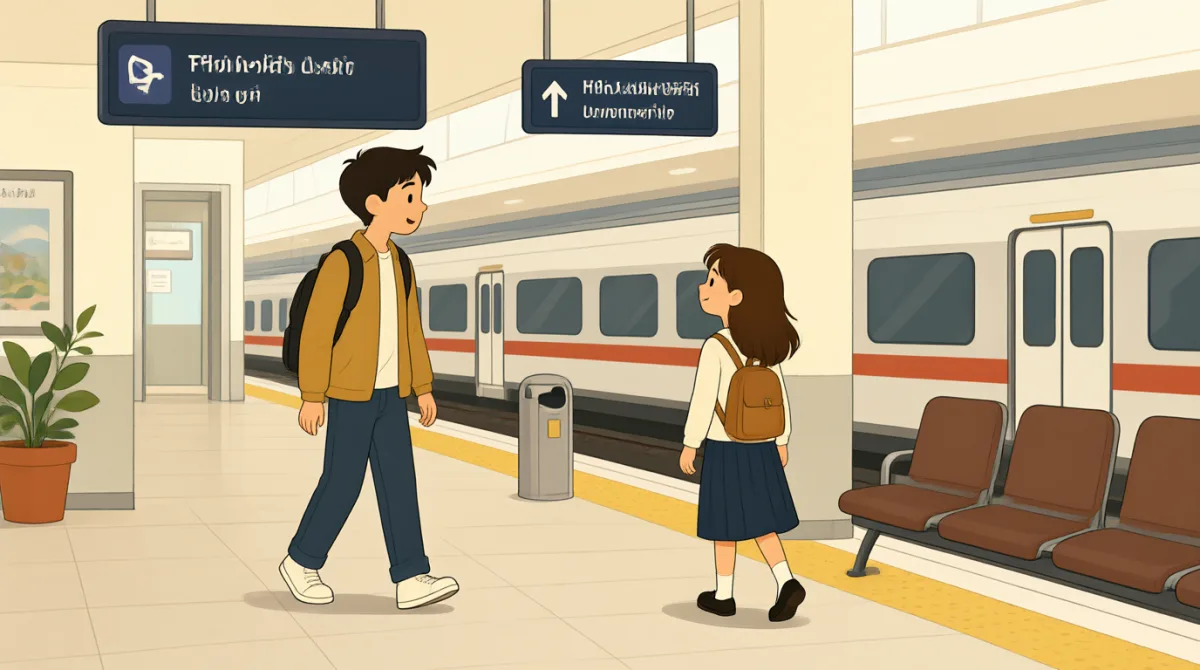

Jack, where do I go for the next train?
ジャック、次の電車に乗るにはどこへ行けばいいの?

Follow the blue signs to Line 2.
青い案内表示に沿って2番線に行って。
Do I need to go upstairs?
上の階に行かなきゃいけないの?
Yes. Take the stairs up, then turn left.
そうだよ。階段を上って、それから左に曲がって。
Is the train to the city center?
この電車は街の中心部に行くの?
Yes. Check the sign before you get on.
そうだよ。乗る前に案内表示を確認してね。
Thanks. I think I can find it now.
ありがとう。もう見つけられそう。
No problem. The signs are easy to follow.
どういたしまして。案内表示は分かりやすいよ。
語彙8
- next train次の電車
This means the train you need to take after your current train. Use it when asking which train to take next.
今乗っている電車の次に乗る電車のことです。次はどの電車に乗ればいいか尋ねるときに使えます。
- blue signs青い案内表示
These are the blue signs that show the way to Line 2. You can follow signs to find a train or place.
2番線への行き方を示す青い案内表示のことです。電車や目的地を探すときは、案内表示に沿って進めます。
- Line 22番線
This is the name of a subway route. Use “Line” and a number to talk about a subway route.
地下鉄の路線名です。地下鉄の路線について話すときは、「Line」と数字を組み合わせて表します。
- upstairs上の階へ
This means to a higher floor. You can ask if you need to go upstairs to reach a train.
より高い階へ行くという意味です。電車に乗るために上の階へ行く必要があるか尋ねるときに使えます。
- turn left左に曲がる
This means to go in the direction on your left. Use it when giving or following directions.
左の方向へ進むという意味です。道順を教えたり、道順に従ったりするときに使えます。
- city center街の中心部
This means the central part of a city. You can use it to ask where a train is going.
街の中心となる地域のことです。電車がどこへ向かうのか尋ねるときにも使えます。
- get on乗る
This means to enter a train or bus. Check the sign before you get on the train.
電車やバスに乗り込むという意味です。電車に乗る前に案内表示を確認しましょう。
- No problem.どういたしまして。
This is a friendly way to say that helping was not difficult. You can say it after someone thanks you.
手伝うのは大したことではなかったと伝える、親しみのある言い方です。お礼を言われたあとに使えます。
重要な文8
- 1
Jack, where do I go for the next train?
ジャック、次の電車に乗るにはどこへ行けばいいの?
Use this to ask where to go to catch another train. You can change “the next train” to another place or service.
別の電車に乗るためにどこへ行けばいいか尋ねる表現です。「the next train」を別の場所や交通機関に置き換えて使えます。
- 2
Follow the blue signs to Line 2.
青い案内表示に沿って2番線に行って。
This gives a simple direction. You can replace “the blue signs” and “Line 2” with other signs or routes.
簡単な道順を伝える表現です。「the blue signs」や「Line 2」を、ほかの案内表示や路線に置き換えられます。
- 3
Do I need to go upstairs?
上の階に行かなきゃいけないの?
Use this to check if you need to go to a higher floor. Replace “upstairs” with another direction, such as “downstairs.”
上の階へ行く必要があるか確認するときに使います。「upstairs」を「downstairs」など、別の方向を表す言葉に置き換えられます。
- 4
Yes. Take the stairs up, then turn left.
そうだよ。階段を上って、それから左に曲がって。
This gives two clear steps for finding a place. Use “then” to show what to do next.
目的地を見つけるための手順を二つ、分かりやすく伝えています。「then」は次にすることを示す言葉です。
- 5
Is the train to the city center?
この電車は街の中心部に行くの?
Use this to check where a train is going. You can replace “the city center” with another destination.
電車がどこへ向かうのか確認するときに使います。「the city center」を別の目的地に置き換えられます。
- 6
Check the sign before you get on.
乗る前に案内表示を確認してね。
This is useful advice before boarding a train or bus. You can replace “the sign” with other information you need to check.
電車やバスに乗る前に役立つアドバイスです。「the sign」を、確認が必要な別の情報に置き換えられます。
- 7
I think I can find it now.
もう見つけられそう。
Use this to say that you understand how to find a place. Replace “it” with the place or thing you are looking for.
場所の見つけ方が分かったと伝える表現です。「it」を、探している場所や物に置き換えて使えます。
- 8
The signs are easy to follow.
案内表示は分かりやすいよ。
This means the signs make it simple to find the right way. You can use “easy to follow” to describe clear directions or instructions.
案内表示のおかげで、正しい道を簡単に見つけられるという意味です。「easy to follow」は、分かりやすい道順や説明を表すときにも使えます。