Changing Trains
換乘列車
At the transfer station, Emma asks Jack where to go. They follow the signs to the next train.
到達換乘站後,Emma問Jack該往哪裡走。他們跟著指示牌去坐下一班列車。
對話8
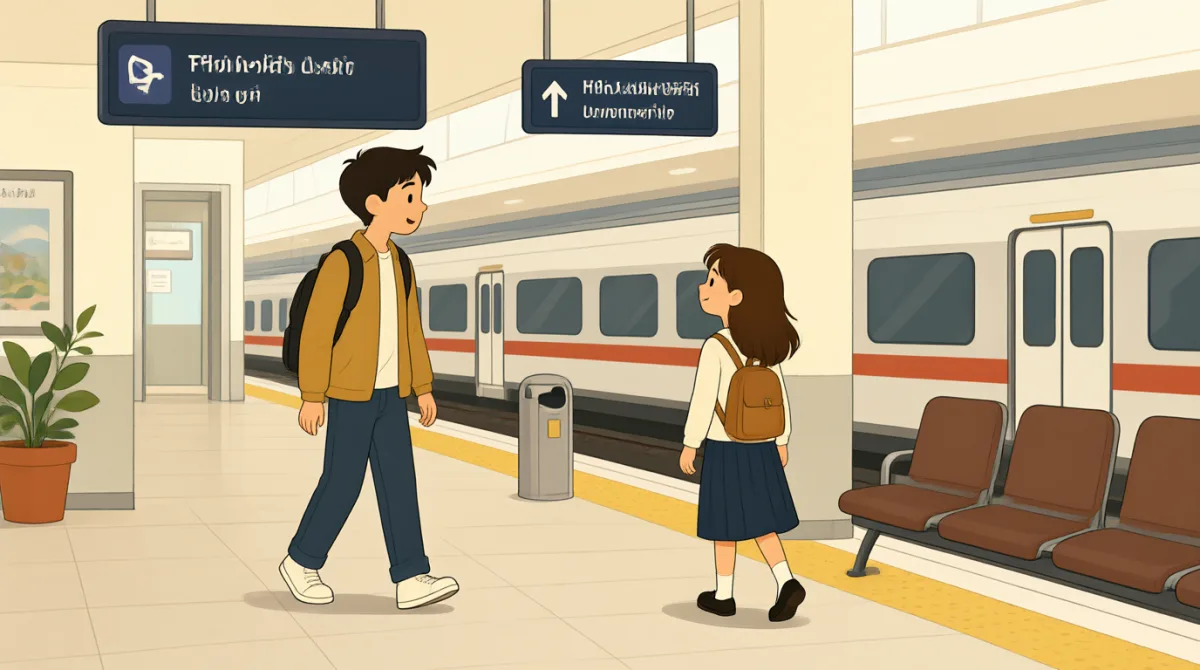

Jack, where do I go for the next train?
傑克,我要去哪裡坐下一班地鐵?

Follow the blue signs to Line 2.
跟著藍色的指示牌去2號線。
Do I need to go upstairs?
我需要上樓嗎?
Yes. Take the stairs up, then turn left.
對。上樓梯,然後左轉。
Is the train to the city center?
這趟車是去市中心的嗎?
Yes. Check the sign before you get on.
是的。上車前看一下指示牌。
Thanks. I think I can find it now.
謝謝。我想我現在能找到了。
No problem. The signs are easy to follow.
不客氣。指示牌很好認。
詞彙8
- next train下一班列車
This means the train you need to take after your current train. Use it when asking which train to take next.
指的是你現在乘坐的這趟車之後需要換乘的列車。詢問接下來該坐哪趟車時,可以用這個說法。
- blue signs藍色指示牌
These are the blue signs that show the way to Line 2. You can follow signs to find a train or place.
這些藍色指示牌會指引你前往2號線。你可以跟著指示牌去找列車或目的地。
- Line 22號線
This is the name of a subway route. Use “Line” and a number to talk about a subway route.
這是地鐵線路的名稱。說地鐵線路時,可以用“Line”加上數字。
- upstairs樓上
This means to a higher floor. You can ask if you need to go upstairs to reach a train.
意思是到更高的一層。想確認是否需要上樓才能到達列車時,可以這樣問。
- turn left左轉
This means to go in the direction on your left. Use it when giving or following directions.
意思是朝左邊走。指路或聽別人指路時都可以用這個說法。
- city center市中心
This means the central part of a city. You can use it to ask where a train is going.
指城市的中心區域。詢問列車開往哪裡時,可以用這個說法。
- get on上車
This means to enter a train or bus. Check the sign before you get on the train.
意思是進入列車或公交車。上車前要先看看指示牌。
- No problem.不客氣。
This is a friendly way to say that helping was not difficult. You can say it after someone thanks you.
這是友好的回應,表示幫忙不費事。別人向你道謝後,你可以這樣說。
關鍵句8
- 1
Jack, where do I go for the next train?
傑克,我要去哪裡坐下一班車?
Use this to ask where to go to catch another train. You can change “the next train” to another place or service.
用這句話詢問去哪裡乘坐另一班列車。你也可以把“the next train”換成其他地點或交通服務。
- 2
Follow the blue signs to Line 2.
跟著藍色指示牌去2號線。
This gives a simple direction. You can replace “the blue signs” and “Line 2” with other signs or routes.
這句話是在簡單地指路。你可以把“the blue signs”和“Line 2”換成其他指示牌或線路。
- 3
Do I need to go upstairs?
我需要上樓嗎?
Use this to check if you need to go to a higher floor. Replace “upstairs” with another direction, such as “downstairs.”
用這句話確認是否需要去更高的一層。你可以把“upstairs”換成其他方向,比如“downstairs”。
- 4
Yes. Take the stairs up, then turn left.
對。上樓梯,然後左轉。
This gives two clear steps for finding a place. Use “then” to show what to do next.
這句話用兩個清楚的步驟告訴別人怎麼找地方。用“then”表示接下來要做什麼。
- 5
Is the train to the city center?
這趟車是去市中心的嗎?
Use this to check where a train is going. You can replace “the city center” with another destination.
用這句話確認列車開往哪裡。你可以把“the city center”換成其他目的地。
- 6
Check the sign before you get on.
上車前看一下指示牌。
This is useful advice before boarding a train or bus. You can replace “the sign” with other information you need to check.
這是乘坐列車或公交車前很有用的提醒。你可以把“the sign”換成需要檢視的其他資訊。
- 7
I think I can find it now.
我想我現在能找到了。
Use this to say that you understand how to find a place. Replace “it” with the place or thing you are looking for.
用這句話表示你知道怎麼找到某個地方。你可以把“it”換成你要找的地方或東西。
- 8
The signs are easy to follow.
指示牌很好認。
This means the signs make it simple to find the right way. You can use “easy to follow” to describe clear directions or instructions.
意思是指示牌讓人很容易找到正確的方向。你可以用“easy to follow”來形容清楚的指路說明或操作指示。