Changing Trains
ट्रेन बदलना
At the transfer station, Emma asks Jack where to go. They follow the signs to the next train.
ट्रेन बदलने वाले स्टेशन पर एमा जैक से पूछती है कि उसे कहाँ जाना है। वे अगले ट्रेन तक पहुँचने के लिए संकेतों का पालन करते हैं।
संवाद8
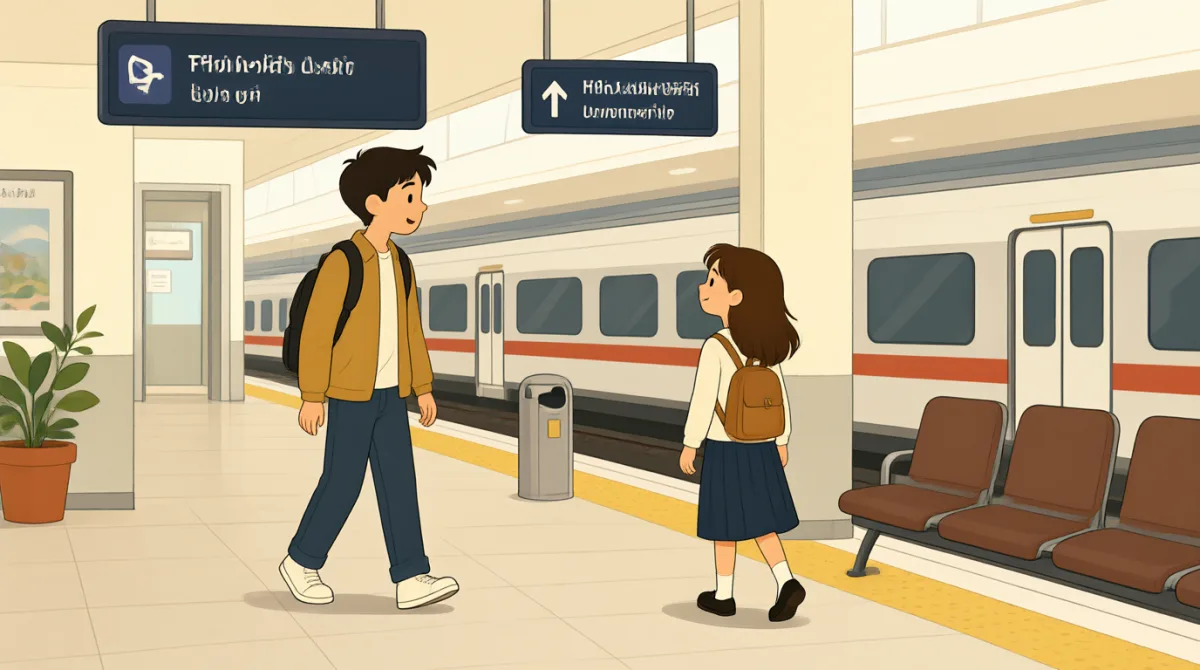

Jack, where do I go for the next train?
जैक, अगली ट्रेन के लिए मुझे कहाँ जाना है?

Follow the blue signs to Line 2.
नीले संकेतों का पालन करते हुए लाइन 2 पर जाओ।
Do I need to go upstairs?
क्या मुझे ऊपर जाना है?
Yes. Take the stairs up, then turn left.
हाँ। सीढ़ियों से ऊपर जाओ, फिर बाएँ मुड़ो।
Is the train to the city center?
क्या यह ट्रेन शहर के केंद्र तक जाती है?
Yes. Check the sign before you get on.
हाँ। ट्रेन में चढ़ने से पहले संकेत देख लेना।
Thanks. I think I can find it now.
धन्यवाद। लगता है अब मैं इसे ढूँढ़ लूँगी।
No problem. The signs are easy to follow.
कोई बात नहीं। संकेतों का पालन करना आसान है।
शब्दावली8
- next trainअगली ट्रेन
This means the train you need to take after your current train. Use it when asking which train to take next.
इसका मतलब है वह ट्रेन जिसमें आपको अपनी मौजूदा ट्रेन के बाद सवार होना है। अगली ट्रेन के बारे में पूछते समय इस वाक्यांश का इस्तेमाल करें।
- blue signsनीले संकेत
These are the blue signs that show the way to Line 2. You can follow signs to find a train or place.
ये नीले संकेत लाइन 2 तक जाने का रास्ता दिखाते हैं। किसी ट्रेन या जगह तक पहुँचने के लिए आप संकेतों का पालन कर सकते हैं।
- Line 2लाइन 2
This is the name of a subway route. Use “Line” and a number to talk about a subway route.
यह मेट्रो के एक मार्ग का नाम है। मेट्रो के मार्ग की बात करने के लिए “Line” और उसके बाद एक संख्या का इस्तेमाल करें।
- upstairsऊपर
This means to a higher floor. You can ask if you need to go upstairs to reach a train.
इसका मतलब है किसी ऊपरी मंज़िल पर जाना। ट्रेन तक पहुँचने के लिए ऊपर जाना है या नहीं, यह पूछने के लिए आप इस शब्द का इस्तेमाल कर सकते हैं।
- turn leftबाएँ मुड़ना
This means to go in the direction on your left. Use it when giving or following directions.
इसका मतलब है बाईं ओर की दिशा में जाना। रास्ता बताने या समझने के लिए इसका इस्तेमाल करें।
- city centerशहर का केंद्र
This means the central part of a city. You can use it to ask where a train is going.
इसका मतलब है शहर का बीच वाला इलाका। ट्रेन कहाँ जा रही है, यह पूछते समय आप इस वाक्यांश का इस्तेमाल कर सकते हैं।
- get onसवार होना
This means to enter a train or bus. Check the sign before you get on the train.
इसका मतलब है ट्रेन या बस में चढ़ना। ट्रेन में चढ़ने से पहले संकेत देख लें।
- No problem.कोई बात नहीं।
This is a friendly way to say that helping was not difficult. You can say it after someone thanks you.
यह दोस्ताना ढंग से कहने का तरीका है कि मदद करने में कोई परेशानी नहीं हुई। जब कोई आपको धन्यवाद कहे, तब आप यह कह सकते हैं।
मुख्य वाक्य8
- 1
Jack, where do I go for the next train?
जैक, अगली ट्रेन के लिए मुझे कहाँ जाना है?
Use this to ask where to go to catch another train. You can change “the next train” to another place or service.
दूसरी ट्रेन पकड़ने के लिए कहाँ जाना है, यह पूछने के लिए इस वाक्य का इस्तेमाल करें। आप “the next train” की जगह किसी दूसरी जगह या सेवा का नाम रख सकते हैं।
- 2
Follow the blue signs to Line 2.
नीले संकेतों का पालन करते हुए लाइन 2 पर जाओ।
This gives a simple direction. You can replace “the blue signs” and “Line 2” with other signs or routes.
यह रास्ता बताने का एक आसान तरीका है। आप “the blue signs” और “Line 2” की जगह दूसरे संकेतों या मार्गों के नाम रख सकते हैं।
- 3
Do I need to go upstairs?
क्या मुझे ऊपर जाना है?
Use this to check if you need to go to a higher floor. Replace “upstairs” with another direction, such as “downstairs.”
ऊपरी मंज़िल पर जाना ज़रूरी है या नहीं, यह पूछने के लिए इस वाक्य का इस्तेमाल करें। “upstairs” की जगह “downstairs” जैसे किसी दूसरी दिशा का इस्तेमाल कर सकते हैं।
- 4
Yes. Take the stairs up, then turn left.
हाँ। सीढ़ियों से ऊपर जाओ, फिर बाएँ मुड़ो।
This gives two clear steps for finding a place. Use “then” to show what to do next.
किसी जगह तक पहुँचने के लिए यह दो स्पष्ट कदम बताता है। आगे क्या करना है, यह दिखाने के लिए “then” का इस्तेमाल करें।
- 5
Is the train to the city center?
क्या यह ट्रेन शहर के केंद्र तक जाती है?
Use this to check where a train is going. You can replace “the city center” with another destination.
ट्रेन कहाँ जा रही है, यह पूछने के लिए इस वाक्य का इस्तेमाल करें। आप “the city center” की जगह किसी दूसरी मंज़िल का नाम रख सकते हैं।
- 6
Check the sign before you get on.
ट्रेन में चढ़ने से पहले संकेत देख लेना।
This is useful advice before boarding a train or bus. You can replace “the sign” with other information you need to check.
ट्रेन या बस में चढ़ने से पहले यह सलाह काम आती है। “the sign” की जगह आप वह दूसरी जानकारी रख सकते हैं जिसे आपको जाँचना है।
- 7
I think I can find it now.
लगता है अब मैं इसे ढूँढ़ लूँगी।
Use this to say that you understand how to find a place. Replace “it” with the place or thing you are looking for.
किसी जगह को ढूँढ़ने का तरीका समझ आने पर यह कहने के लिए इस वाक्य का इस्तेमाल करें। “it” की जगह उस जगह या चीज़ का नाम रखें जिसे आप ढूँढ़ रहे हैं।
- 8
The signs are easy to follow.
संकेतों का पालन करना आसान है।
This means the signs make it simple to find the right way. You can use “easy to follow” to describe clear directions or instructions.
इसका मतलब है कि संकेतों से सही रास्ता ढूँढ़ना आसान हो जाता है। स्पष्ट दिशाओं या निर्देशों का वर्णन करने के लिए “easy to follow” का इस्तेमाल कर सकते हैं।