Changing Trains
换乘列车
At the transfer station, Emma asks Jack where to go. They follow the signs to the next train.
到达换乘站后,Emma问Jack该往哪里走。他们跟着指示牌去坐下一班列车。
对话8
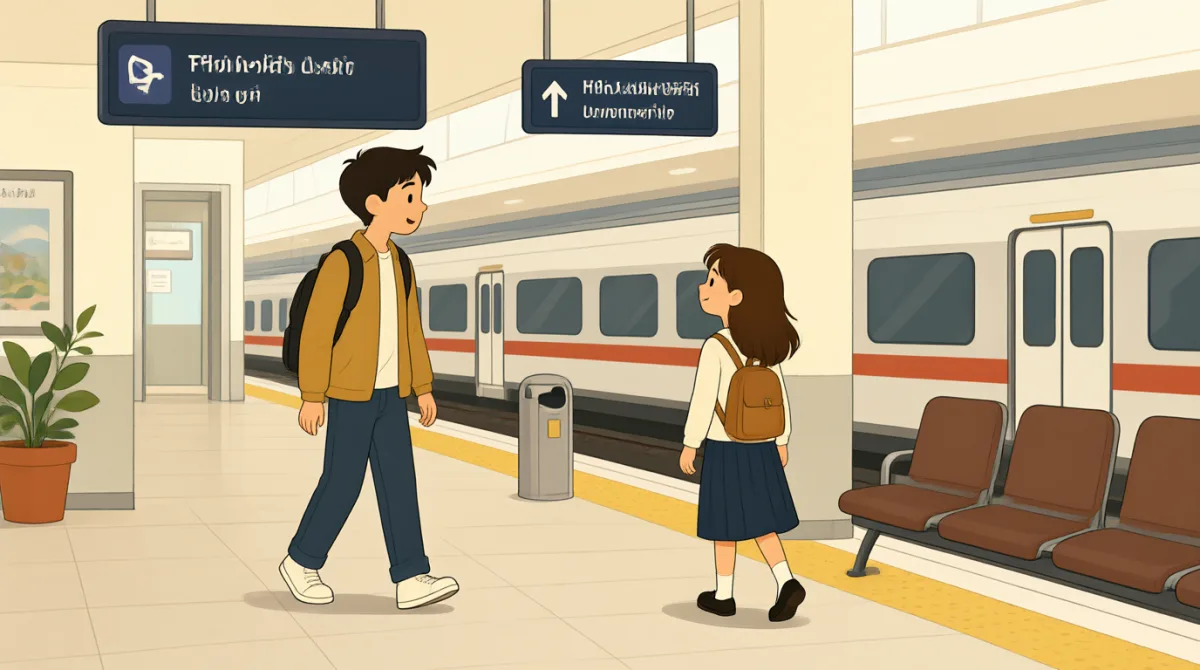

Jack, where do I go for the next train?
杰克,我要去哪里坐下一班地铁?

Follow the blue signs to Line 2.
跟着蓝色的指示牌去2号线。
Do I need to go upstairs?
我需要上楼吗?
Yes. Take the stairs up, then turn left.
对。上楼梯,然后左转。
Is the train to the city center?
这趟车是去市中心的吗?
Yes. Check the sign before you get on.
是的。上车前看一下指示牌。
Thanks. I think I can find it now.
谢谢。我想我现在能找到了。
No problem. The signs are easy to follow.
不客气。指示牌很好认。
词汇8
- next train下一班列车
This means the train you need to take after your current train. Use it when asking which train to take next.
指的是你现在乘坐的这趟车之后需要换乘的列车。询问接下来该坐哪趟车时,可以用这个说法。
- blue signs蓝色指示牌
These are the blue signs that show the way to Line 2. You can follow signs to find a train or place.
这些蓝色指示牌会指引你前往2号线。你可以跟着指示牌去找列车或目的地。
- Line 22号线
This is the name of a subway route. Use “Line” and a number to talk about a subway route.
这是地铁线路的名称。说地铁线路时,可以用“Line”加上数字。
- upstairs楼上
This means to a higher floor. You can ask if you need to go upstairs to reach a train.
意思是到更高的一层。想确认是否需要上楼才能到达列车时,可以这样问。
- turn left左转
This means to go in the direction on your left. Use it when giving or following directions.
意思是朝左边走。指路或听别人指路时都可以用这个说法。
- city center市中心
This means the central part of a city. You can use it to ask where a train is going.
指城市的中心区域。询问列车开往哪里时,可以用这个说法。
- get on上车
This means to enter a train or bus. Check the sign before you get on the train.
意思是进入列车或公交车。上车前要先看看指示牌。
- No problem.不客气。
This is a friendly way to say that helping was not difficult. You can say it after someone thanks you.
这是友好的回应,表示帮忙不费事。别人向你道谢后,你可以这样说。
重点句子8
- 1
Jack, where do I go for the next train?
杰克,我要去哪里坐下一班车?
Use this to ask where to go to catch another train. You can change “the next train” to another place or service.
用这句话询问去哪里乘坐另一班列车。你也可以把“the next train”换成其他地点或交通服务。
- 2
Follow the blue signs to Line 2.
跟着蓝色指示牌去2号线。
This gives a simple direction. You can replace “the blue signs” and “Line 2” with other signs or routes.
这句话是在简单地指路。你可以把“the blue signs”和“Line 2”换成其他指示牌或线路。
- 3
Do I need to go upstairs?
我需要上楼吗?
Use this to check if you need to go to a higher floor. Replace “upstairs” with another direction, such as “downstairs.”
用这句话确认是否需要去更高的一层。你可以把“upstairs”换成其他方向,比如“downstairs”。
- 4
Yes. Take the stairs up, then turn left.
对。上楼梯,然后左转。
This gives two clear steps for finding a place. Use “then” to show what to do next.
这句话用两个清楚的步骤告诉别人怎么找地方。用“then”表示接下来要做什么。
- 5
Is the train to the city center?
这趟车是去市中心的吗?
Use this to check where a train is going. You can replace “the city center” with another destination.
用这句话确认列车开往哪里。你可以把“the city center”换成其他目的地。
- 6
Check the sign before you get on.
上车前看一下指示牌。
This is useful advice before boarding a train or bus. You can replace “the sign” with other information you need to check.
这是乘坐列车或公交车前很有用的提醒。你可以把“the sign”换成需要查看的其他信息。
- 7
I think I can find it now.
我想我现在能找到了。
Use this to say that you understand how to find a place. Replace “it” with the place or thing you are looking for.
用这句话表示你知道怎么找到某个地方。你可以把“it”换成你要找的地方或东西。
- 8
The signs are easy to follow.
指示牌很好认。
This means the signs make it simple to find the right way. You can use “easy to follow” to describe clear directions or instructions.
意思是指示牌让人很容易找到正确的方向。你可以用“easy to follow”来形容清楚的指路说明或操作指示。