Spill on a Shared Table
กาแฟหกบนโต๊ะที่ใช้ร่วมกัน
You spill coffee on a table in a cafe, near other patrons. You need to quickly assess the situation, apologize to those nearby, and ask for cleaning supplies.
คุณทำกาแฟหกบนโต๊ะในคาเฟ่ ใกล้กับลูกค้าคนอื่น ๆ คุณต้องรีบดูสถานการณ์ ขอโทษคนที่อยู่ใกล้ ๆ และขออุปกรณ์สำหรับทำความสะอาด
บทสนทนา7
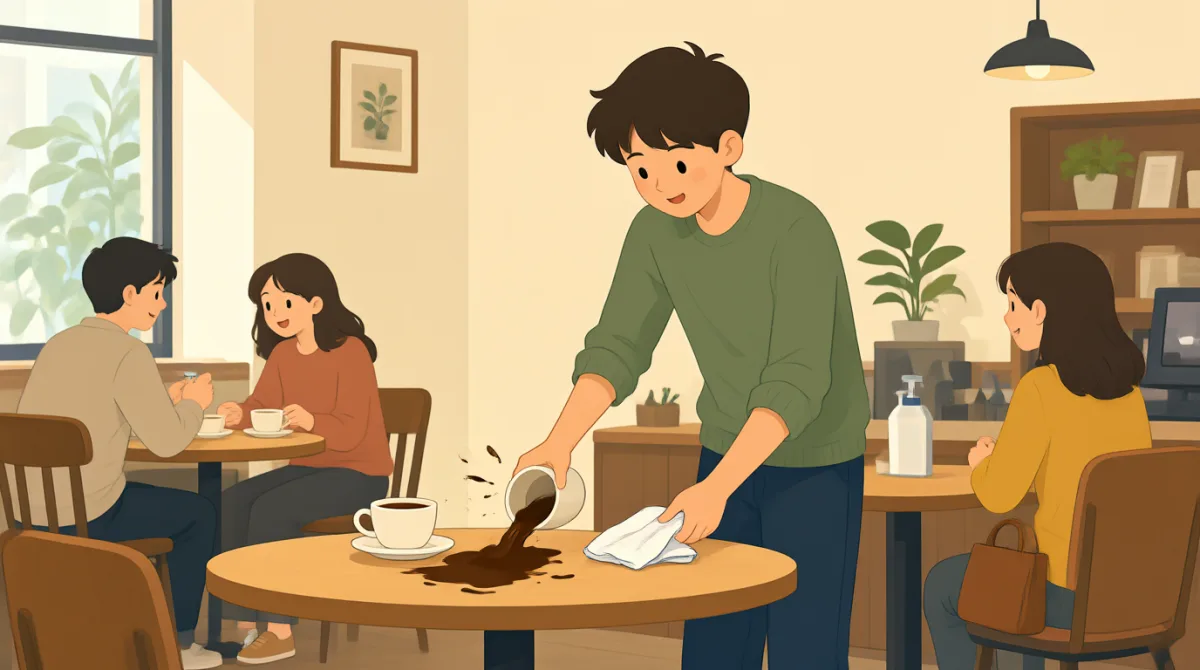

Oh no! I am so sorry! I've spilled my coffee.
แย่แล้ว! ขอโทษจริง ๆ ครับ ผมทำกาแฟหก

Are you okay? Don't worry, it happens. Is any of it on you?
คุณเป็นอะไรไหมคะ? ไม่เป็นไรนะ เรื่องแบบนี้เกิดขึ้นได้ค่ะ หกโดนตัวคุณบ้างไหมคะ?
I'm fine, thankfully it just went on the table. But it's quite a mess. Does anyone know where I can get some paper towels or a cloth?
ผมไม่เป็นไรครับ โชคดีที่หกลงบนโต๊ะอย่างเดียว แต่เลอะเทอะมากเลย มีใครรู้ไหมครับว่าผมหากระดาษเช็ดมือหรือผ้ามาเช็ดได้ที่ไหน?
I'll go grab a staff member for you. They usually have cleaning supplies behind the counter.
เดี๋ยวฉันไปตามพนักงานมาให้นะคะ ปกติเขาจะเก็บอุปกรณ์ทำความสะอาดไว้หลังเคาน์เตอร์ค่ะ
Oh, thank you, that would be a great help!
อ๋อ ขอบคุณมากครับ ช่วยได้มากเลย!
No problem at all. Just watch your step while I'm gone, it's a bit slippery there.
ไม่เป็นไรเลยค่ะ ระหว่างที่ฉันไม่อยู่ ระวังตอนเดินด้วยนะคะ ตรงนั้นลื่นนิดหน่อยค่ะ
Will do. Thanks again for your help.
ได้ครับ ขอบคุณอีกครั้งที่ช่วยนะครับ
คำศัพท์7
- spilledทำหก
Past tense of 'spill', meaning to accidentally pour liquid out of a container, like coffee. Use it when describing an accident: 'I spilled my drink.'
'spilled' เป็นรูปอดีตของ 'spill' หมายถึงทำของเหลวในภาชนะหกโดยไม่ได้ตั้งใจ เช่น กาแฟ ใช้เล่าเหตุการณ์ที่เกิดขึ้นโดยไม่ตั้งใจ เช่น 'I spilled my drink.' (ฉันทำเครื่องดื่มหก)
- sorryขอโทษ
An expression of apology. Say 'I'm sorry' when you make a mistake or cause inconvenience to others.
คำที่ใช้กล่าวขอโทษ เมื่อทำผิดพลาดหรือทำให้คนอื่นไม่สะดวก ให้พูดว่า 'I'm sorry' (ขอโทษนะ/ครับ) เช่น เมื่อคุณทำผิดหรือทำให้คนอื่นเดือดร้อน
- messความเลอะเทอะ
A dirty or disordered situation. In accidents, it describes something like spilled coffee making things untidy: 'What a mess!'
สภาพที่สกปรกหรือไม่เป็นระเบียบ เมื่อเกิดอุบัติเหตุ คำนี้ใช้บรรยายสิ่งที่เลอะเทอะ เช่น กาแฟหกจนเปื้อนไปหมด: 'What a mess!' (เลอะเทอะไปหมดเลย!)
- paper towelsกระดาษเช็ดมือ
Absorbent paper sheets used for cleaning up spills. Common in cafes or homes: 'Can I have some paper towels?'
กระดาษซับน้ำที่ใช้เช็ดทำความสะอาดของเหลวที่หก มักมีในคาเฟ่หรือบ้าน เช่น 'Can I have some paper towels?' (ขอกระดาษเช็ดมือหน่อยได้ไหม?)
- clothผ้า
A piece of fabric used for wiping or cleaning. Alternative to paper towels: 'Do you have a clean cloth?'
ผืนผ้าที่ใช้เช็ดหรือทำความสะอาด ใช้แทนกระดาษเช็ดมือได้ เช่น 'Do you have a clean cloth?' (มีผ้าสะอาดไหม?)
- slipperyลื่น
Something wet and smooth that can cause you to slip and fall. Warn others: 'The floor is slippery after the spill.'
พื้นผิวที่เปียกและเรียบจนทำให้คนลื่นล้มได้ ใช้เตือนคนอื่นได้ เช่น 'The floor is slippery after the spill.' (พื้นลื่นหลังจากมีของหก)
- staff memberพนักงาน
An employee working at a place like a cafe. Polite way to refer to workers: 'Ask a staff member for help.'
คนที่ทำงานในสถานที่อย่างคาเฟ่ เป็นวิธีเรียกคนทำงานอย่างสุภาพ เช่น 'Ask a staff member for help.' (ขอความช่วยเหลือจากพนักงาน)
ประโยคสำคัญ7
- 1
Oh no! I am so sorry! I've spilled my coffee.
แย่แล้ว! ขอโทษจริง ๆ ครับ ผมทำกาแฟหก
This shows immediate reaction to an accident. 'Oh no!' expresses surprise or regret. 'I've spilled' uses present perfect tense for a recent action. Use it to apologize quickly after spilling something.
ประโยคนี้แสดงปฏิกิริยาทันทีเมื่อเกิดอุบัติเหตุ 'Oh no!' ใช้แสดงความตกใจหรือเสียใจ ส่วน 'I've spilled' ใช้ present perfect กับเหตุการณ์ที่เพิ่งเกิดขึ้น ใช้ประโยคนี้เพื่อรีบขอโทษหลังทำของหก
- 2
Are you okay? Don't worry, it happens.
คุณเป็นอะไรไหมคะ? ไม่เป็นไรนะ เรื่องแบบนี้เกิดขึ้นได้ค่ะ
A kind response to someone's accident. 'Are you okay?' checks for injury. 'Don't worry, it happens' reassures them it's common. Use this to be helpful and calm others down.
เป็นคำตอบที่แสดงความห่วงใยเมื่อมีคนประสบอุบัติเหตุ 'Are you okay?' ใช้ถามว่าเขาบาดเจ็บหรือเปล่า ส่วน 'Don't worry, it happens' ช่วยให้เขาสบายใจว่าเรื่องแบบนี้เกิดขึ้นได้ ใช้พูดเพื่อช่วยเหลือและทำให้อีกฝ่ายใจเย็นลง
- 3
I'm fine, thankfully it just went on the table.
ผมไม่เป็นไรครับ โชคดีที่หกลงบนโต๊ะอย่างเดียว
Explains the situation without harm. 'Thankfully' means luckily. 'It just went on the table' uses 'just' for location only. Useful for updating others on minor accidents.
ประโยคนี้อธิบายสถานการณ์ว่าไม่มีใครได้รับบาดเจ็บ 'Thankfully' หมายถึงโชคดีที่... ส่วน 'It just went on the table' ใช้ 'just' เพื่อเน้นว่าหกลงตรงโต๊ะเท่านั้น ใช้บอกให้คนอื่นรู้ว่าอุบัติเหตุเล็กน้อยเป็นอย่างไร
- 4
Does anyone know where I can get some paper towels or a cloth?
มีใครรู้ไหมครับว่าผมหากระดาษเช็ดมือหรือผ้ามาเช็ดได้ที่ไหน?
A polite request for help. 'Does anyone know' asks the group. 'Where I can get' is a question about location for items. Use in public places to seek cleaning supplies.
เป็นการขอความช่วยเหลืออย่างสุภาพ 'Does anyone know' ใช้ถามคนในกลุ่ม ส่วน 'Where I can get' ใช้ถามว่าหาของได้ที่ไหน ใช้ในที่สาธารณะเมื่อต้องการหาอุปกรณ์ทำความสะอาด
- 5
I'll go grab a staff member for you.
เดี๋ยวฉันไปตามพนักงานมาให้นะคะ
Offers practical help. 'I'll go grab' means 'I'll quickly get'. Informal and friendly. Use when volunteering to fetch assistance in a cafe or similar setting.
เป็นการเสนอตัวช่วยอย่างเป็นรูปธรรม 'I'll go grab' หมายถึงจะรีบไปตามหรือไปเอามาให้ เป็นสำนวนกันเองและเป็นมิตร ใช้เมื่ออาสาไปตามคนมาช่วยในคาเฟ่หรือสถานที่คล้ายกัน
- 6
Oh, thank you, that would be a great help!
อ๋อ ขอบคุณมากครับ ช่วยได้มากเลย!
Expresses gratitude. 'That would be' is conditional for future help. 'Great help' emphasizes appreciation. Say this when someone offers aid after your mistake.
ใช้แสดงความขอบคุณ 'That would be' เป็นรูปเงื่อนไขที่พูดถึงความช่วยเหลือที่จะได้รับ ส่วน 'Great help' เน้นว่าซาบซึ้งใจแค่ไหน พูดประโยคนี้เมื่อมีคนเสนอตัวช่วยหลังจากคุณทำพลาด
- 7
No problem at all. Just watch your step while I'm gone, it's a bit slippery there.
ไม่เป็นไรเลยค่ะ ระหว่างที่ฉันไม่อยู่ ระวังตอนเดินด้วยนะคะ ตรงนั้นลื่นนิดหน่อยค่ะ
Reassures and gives advice. 'No problem at all' means you're welcome. 'Watch your step' warns of danger. Use to be considerate and point out risks like wet floors.
ประโยคนี้ช่วยให้อีกฝ่ายสบายใจและเตือนให้ระวัง 'No problem at all' หมายถึงยินดีช่วยหรือไม่เป็นไร ส่วน 'Watch your step' ใช้เตือนให้ระวังอันตราย พูดเพื่อแสดงความใส่ใจและชี้ให้เห็นความเสี่ยง เช่น พื้นเปียก