Spill on a Shared Table
انسكاب القهوة على طاولة مشتركة
You spill coffee on a table in a cafe, near other patrons. You need to quickly assess the situation, apologize to those nearby, and ask for cleaning supplies.
تسكب القهوة على طاولة في مقهى بالقرب من رواد آخرين. عليك أن تقيّم الموقف بسرعة، وتعتذر لمن حولك، وتطلب أدوات للتنظيف.
حوار7
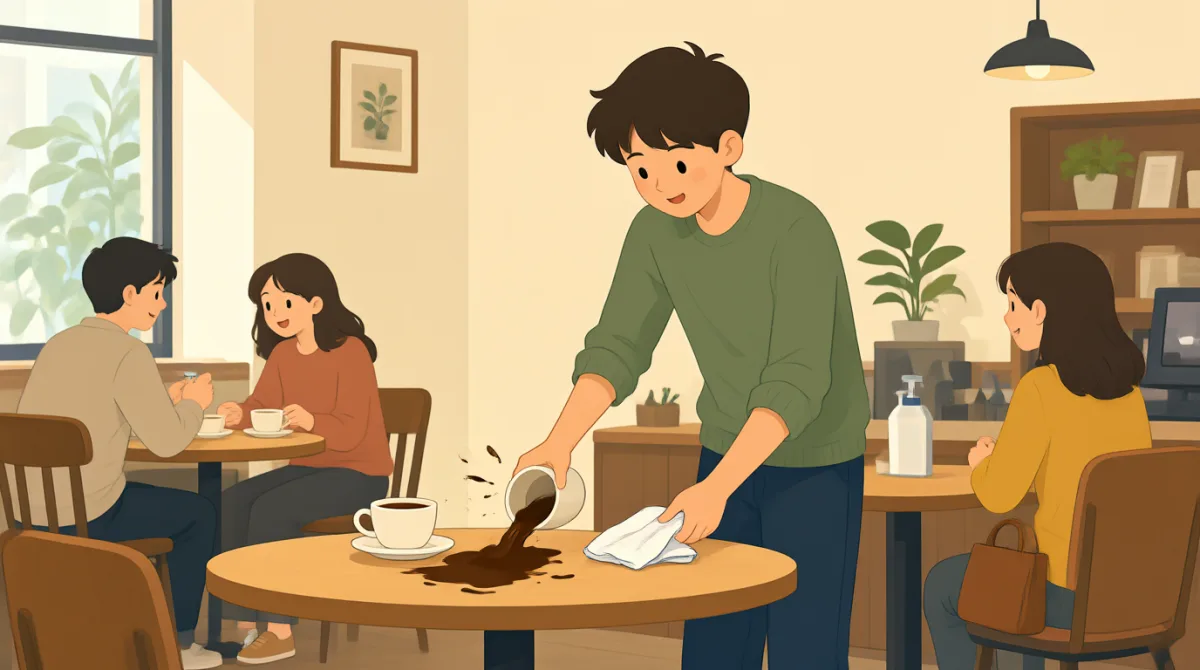

Oh no! I am so sorry! I've spilled my coffee.
أوه لا! أنا آسف جدًا! لقد سكبت قهوتي.

Are you okay? Don't worry, it happens. Is any of it on you?
هل أنت بخير؟ لا تقلق، فهذا يحدث. هل انسكب شيء منها عليك؟
I'm fine, thankfully it just went on the table. But it's quite a mess. Does anyone know where I can get some paper towels or a cloth?
أنا بخير، لحسن الحظ انسكبت على الطاولة فقط. لكن المكان أصبح فوضويًا جدًا. هل يعرف أحد أين يمكنني الحصول على بعض المناشف الورقية أو قطعة قماش؟
I'll go grab a staff member for you. They usually have cleaning supplies behind the counter.
سأذهب لإحضار أحد الموظفين من أجلك. عادةً ما تكون أدوات التنظيف لديهم خلف المنضدة.
Oh, thank you, that would be a great help!
أوه، شكرًا لك، سيكون ذلك عونًا كبيرًا!
No problem at all. Just watch your step while I'm gone, it's a bit slippery there.
لا شكر على واجب. فقط انتبه لخطواتك إلى أن أعود، فالمكان زلق قليلًا هناك.
Will do. Thanks again for your help.
سأفعل. شكرًا مرة أخرى على مساعدتك.
المفردات7
- spilledسكب
Past tense of 'spill', meaning to accidentally pour liquid out of a container, like coffee. Use it when describing an accident: 'I spilled my drink.'
الماضي من 'spill'، ويعني أن تسكب سائلًا من وعاء عن طريق الخطأ، مثل القهوة. استخدمه عند وصف حادث: 'I spilled my drink.' (سكبت مشروبي.)
- sorryآسف
An expression of apology. Say 'I'm sorry' when you make a mistake or cause inconvenience to others.
كلمة للتعبير عن الاعتذار. قل 'I'm sorry' (أنا آسف) عندما ترتكب خطأ أو تسبب إزعاجًا للآخرين.
- messفوضى
A dirty or disordered situation. In accidents, it describes something like spilled coffee making things untidy: 'What a mess!'
حالة من الاتساخ أو عدم الترتيب. في الحوادث، تصف شيئًا مثل القهوة المسكوبة التي تجعل المكان غير مرتب: 'What a mess!' (يا لها من فوضى!)
- paper towelsمناشف ورقية
Absorbent paper sheets used for cleaning up spills. Common in cafes or homes: 'Can I have some paper towels?'
أوراق ماصّة تُستخدم لتنظيف السوائل المسكوبة. تتوفر عادةً في المقاهي أو المنازل: 'Can I have some paper towels?' (هل يمكنني الحصول على بعض المناشف الورقية؟)
- clothقطعة قماش
A piece of fabric used for wiping or cleaning. Alternative to paper towels: 'Do you have a clean cloth?'
قطعة من النسيج تُستخدم للمسح أو التنظيف، وهي بديل للمناشف الورقية: 'Do you have a clean cloth?' (هل لديكم قطعة قماش نظيفة؟)
- slipperyزلق
Something wet and smooth that can cause you to slip and fall. Warn others: 'The floor is slippery after the spill.'
يصف شيئًا رطبًا وناعمًا قد يجعلك تنزلق وتسقط. نبّه الآخرين قائلًا: 'The floor is slippery after the spill.' (الأرضية زلقة بعد انسكاب السائل.)
- staff memberأحد الموظفين
An employee working at a place like a cafe. Polite way to refer to workers: 'Ask a staff member for help.'
شخص يعمل في مكان مثل المقهى. وهي طريقة مهذبة للإشارة إلى العاملين: 'Ask a staff member for help.' (اطلب المساعدة من أحد الموظفين.)
الجمل الأساسية7
- 1
Oh no! I am so sorry! I've spilled my coffee.
أوه لا! أنا آسف جدًا! لقد سكبت قهوتي.
This shows immediate reaction to an accident. 'Oh no!' expresses surprise or regret. 'I've spilled' uses present perfect tense for a recent action. Use it to apologize quickly after spilling something.
تُظهر هذه العبارة رد الفعل الفوري على حادث. تعبّر 'Oh no!' عن المفاجأة أو الأسف. أما 'I've spilled' فتستخدم زمن المضارع التام للحديث عن فعل حدث للتو. استخدمها للاعتذار سريعًا بعد سكب شيء.
- 2
Are you okay? Don't worry, it happens.
هل أنت بخير؟ لا تقلق، فهذا يحدث.
A kind response to someone's accident. 'Are you okay?' checks for injury. 'Don't worry, it happens' reassures them it's common. Use this to be helpful and calm others down.
هذا رد لطيف على حادث تعرض له شخص ما. يسأل 'Are you okay?' عما إذا كان الشخص قد أصيب. وتطمئنه 'Don't worry, it happens' بأن هذا أمر شائع. استخدم هذه العبارة لتكون متعاونًا وتساعد الآخرين على الهدوء.
- 3
I'm fine, thankfully it just went on the table.
أنا بخير، ولحسن الحظ انسكبت على الطاولة فقط.
Explains the situation without harm. 'Thankfully' means luckily. 'It just went on the table' uses 'just' for location only. Useful for updating others on minor accidents.
توضح العبارة الموقف من دون وقوع أذى. تعني 'Thankfully' (لحسن الحظ). وتستخدم 'just' في 'It just went on the table' للدلالة على أن السائل وصل إلى الطاولة لا غير. تفيد هذه العبارة في إطلاع الآخرين على تفاصيل الحوادث البسيطة.
- 4
Does anyone know where I can get some paper towels or a cloth?
هل يعرف أحد أين يمكنني الحصول على بعض المناشف الورقية أو قطعة قماش؟
A polite request for help. 'Does anyone know' asks the group. 'Where I can get' is a question about location for items. Use in public places to seek cleaning supplies.
هذا طلب مهذب للمساعدة. تسأل 'Does anyone know' المجموعة، أما 'Where I can get' فتسأل عن مكان الحصول على أشياء. استخدم هذه العبارة في الأماكن العامة لطلب أدوات التنظيف.
- 5
I'll go grab a staff member for you.
سأذهب لإحضار أحد الموظفين من أجلك.
Offers practical help. 'I'll go grab' means 'I'll quickly get'. Informal and friendly. Use when volunteering to fetch assistance in a cafe or similar setting.
تعرض العبارة مساعدة عملية. تعني 'I'll go grab' (سأذهب لأحضر بسرعة). وهي عبارة غير رسمية وودودة. استخدمها عندما تعرض إحضار المساعدة في مقهى أو مكان مشابه.
- 6
Oh, thank you, that would be a great help!
أوه، شكرًا لك، سيكون ذلك عونًا كبيرًا!
Expresses gratitude. 'That would be' is conditional for future help. 'Great help' emphasizes appreciation. Say this when someone offers aid after your mistake.
تعبّر العبارة عن الامتنان. تأتي 'That would be' بصيغة شرطية للحديث عن مساعدة مستقبلية، وتؤكد 'Great help' مدى التقدير. قلها عندما يعرض عليك شخص المساعدة بعد خطأ ارتكبته.
- 7
No problem at all. Just watch your step while I'm gone, it's a bit slippery there.
لا شكر على واجب. انتبه لخطواتك إلى أن أعود، فالمكان زلق قليلًا هناك.
Reassures and gives advice. 'No problem at all' means you're welcome. 'Watch your step' warns of danger. Use to be considerate and point out risks like wet floors.
تطمئن العبارة الشخص وتقدم له نصيحة. تعني 'No problem at all' (لا شكر على واجب)، وتحذّر 'Watch your step' من خطر ما. استخدمها لإظهار الاهتمام والتنبيه إلى مخاطر مثل الأرضيات المبللة.