Dealing with a Large Spill
รับมือกาแฟหกปริมาณมาก
A large amount of coffee is spilled on the floor, posing a slip hazard. You need to quickly alert staff and perhaps help cordon off the area.
กาแฟหกลงบนพื้นเป็นปริมาณมาก ทำให้พื้นลื่นและเสี่ยงต่อการหกล้ม คุณต้องรีบแจ้งพนักงาน และอาจช่วยกั้นบริเวณไว้
บทสนทนา7
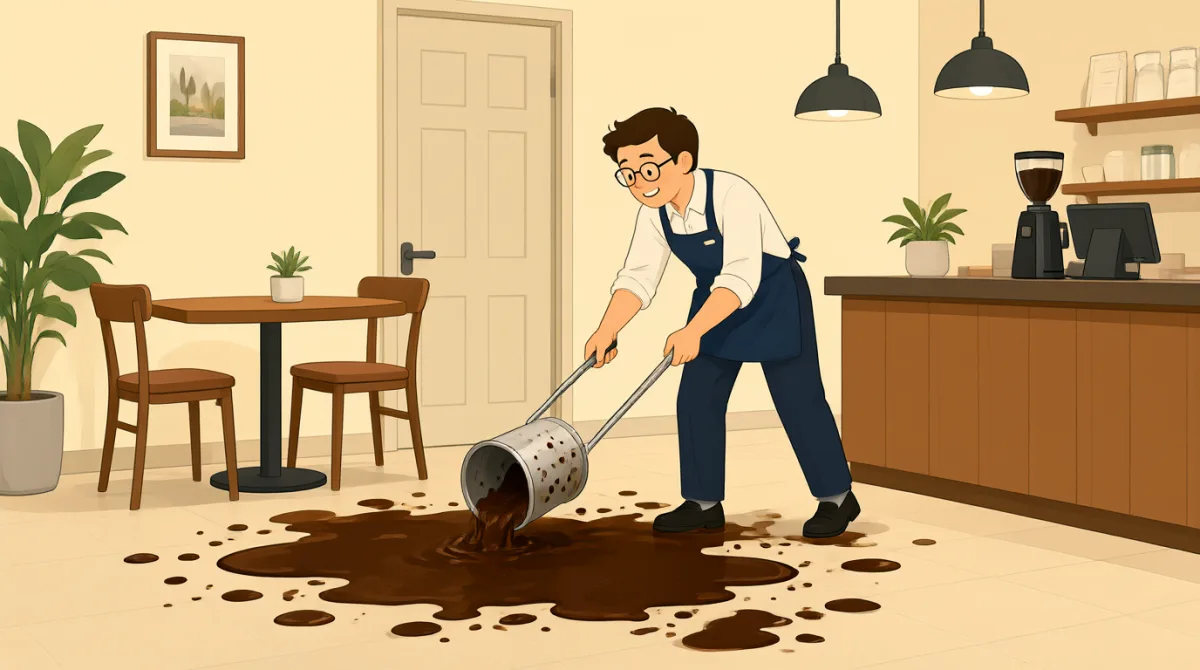

Oh no! I've spilled my whole coffee. It's everywhere!
แย่แล้ว! ฉันทำกาแฟหกหมดแก้วเลย หกไปทั่วเลย!

Whoa, that's a big one. Are you okay, Emma?
โห หกเยอะเลยนะ เอ็มมา เธอเป็นอะไรไหม?
Yeah, I'm fine, just a bit startled. But this is a huge mess, and it's really slippery.
ฉันไม่เป็นไร แค่ตกใจนิดหน่อย แต่เลอะเทอะมากเลย แถมพื้นก็ลื่นมากด้วย
You're right. We should probably get someone from staff to help clean this up immediately. It's a slip hazard.
จริงด้วย เราน่าจะไปตามพนักงานมาช่วยทำความสะอาดด่วนเลย พื้นลื่นเสี่ยงหกล้มนะ
I’ll go find someone. Can you stand here for a moment and maybe guard it so no one slips?
ฉันจะไปตามคนมานะ เธอยืนตรงนี้สักครู่ แล้วช่วยเฝ้าไว้ไม่ให้ใครลื่นล้มได้ไหม?
No problem. I'll make sure no one walks into it. Hurry back!
ได้เลย ฉันจะคอยดูไม่ให้ใครเดินเข้าไป รีบกลับมานะ!
Will do! Thanks for your help, David.
ได้เลย! ขอบใจที่ช่วยนะ เดวิด
คำศัพท์8
- spilledหก
Past tense of 'spill', meaning to accidentally pour liquid out of a container, like coffee on the floor. Use it when describing an accident with drinks.
'spilled' เป็นรูปอดีตของ 'spill' หมายถึงทำของเหลวหกออกจากภาชนะโดยไม่ตั้งใจ เช่น ทำกาแฟหกลงพื้น ใช้คำนี้เมื่อพูดถึงอุบัติเหตุที่เกิดกับเครื่องดื่ม
- startledตกใจ
Feeling suddenly surprised or shocked, often by an unexpected event. It's useful for expressing emotions after a small accident.
'startled' หมายถึงรู้สึกประหลาดใจหรือตกใจขึ้นมาทันที มักเกิดจากเหตุการณ์ที่ไม่คาดคิด ใช้บอกความรู้สึกหลังเกิดอุบัติเหตุเล็ก ๆ ได้
- slipperyลื่น
Describes a surface that is wet or smooth, making it easy to slip and fall. Common in situations involving spills to warn others.
'slippery' ใช้บรรยายพื้นผิวที่เปียกหรือเรียบจนทำให้ลื่นล้มได้ มักใช้เตือนคนอื่นเมื่อมีของหก
- messความเลอะเทอะ
A dirty or disordered situation, like spilled coffee creating a big mess. Use it to describe chaos from accidents.
'mess' หมายถึงสภาพที่สกปรกหรือไม่เป็นระเบียบ เช่น กาแฟหกจนเลอะเทอะมาก ใช้บรรยายความวุ่นวายที่เกิดจากอุบัติเหตุได้
- slip hazardจุดเสี่ยงลื่นล้ม
A danger where someone might slip and fall, often due to wet floors. It's a practical term for safety warnings in public places.
'slip hazard' หมายถึงอันตรายที่อาจทำให้ใครบางคนลื่นล้ม มักเกิดจากพื้นเปียก เป็นคำที่ใช้เตือนเรื่องความปลอดภัยในที่สาธารณะได้
- staffพนักงาน
The employees or workers in a place like a cafe. Use it when you need to ask for help from workers.
'staff' หมายถึงพนักงานหรือคนทำงานในสถานที่หนึ่ง เช่น คาเฟ่ ใช้คำนี้เมื่อต้องการขอความช่วยเหลือจากพนักงาน
- guardเฝ้าระวัง
To watch or protect something to prevent accidents. In this context, it means standing by the spill to keep people away.
'guard' หมายถึงคอยดูหรือป้องกันบางสิ่งเพื่อไม่ให้เกิดอุบัติเหตุ ในสถานการณ์นี้คือการยืนเฝ้าบริเวณที่กาแฟหกเพื่อกันคนไม่ให้เข้าไป
- hurry backรีบกลับมา
A phrase meaning to return quickly. It's polite and urgent, used when asking someone to come back soon after leaving.
'hurry back' เป็นวลีที่หมายถึงกลับมาอย่างรวดเร็ว ใช้ขอให้อีกคนรีบกลับมา โดยสื่อถึงความเร่งด่วนแต่ยังฟังดูสุภาพ
ประโยคสำคัญ8
- 1
Oh no! I've spilled my whole coffee. It's everywhere!
แย่แล้ว! ฉันทำกาแฟหกหมดแก้วเลย หกไปทั่วเลย!
This expresses surprise and regret after an accident. 'Oh no!' is an exclamation for bad situations, and 'I've spilled' uses present perfect for recent actions. Useful for apologizing or reacting to spills.
ประโยคนี้แสดงความตกใจและเสียดายหลังเกิดอุบัติเหตุ 'Oh no!' เป็นคำอุทานเมื่อเจอเรื่องไม่ดี ส่วน 'I've spilled' ใช้ present perfect เพื่อพูดถึงสิ่งที่เพิ่งทำไป ใช้พูดขอโทษหรือแสดงปฏิกิริยาเมื่อทำของหกได้
- 2
Whoa, that's a big one. Are you okay?
โห หกเยอะเลยนะ เธอเป็นอะไรไหม?
'Whoa' shows surprise, and 'that's a big one' means a large amount spilled. 'Are you okay?' checks if someone is hurt. Use this to show concern kindly after someone else's accident.
'Whoa' แสดงความตกใจ ส่วน 'that's a big one' หมายถึงมีของหกปริมาณมาก และ 'Are you okay?' ใช้ถามว่าอีกฝ่ายบาดเจ็บหรือเปล่า ใช้แสดงความห่วงใยอย่างอ่อนโยนเมื่อเกิดอุบัติเหตุได้
- 3
Yeah, I'm fine, just a bit startled.
ฉันไม่เป็นไร แค่ตกใจนิดหน่อย
This reassures others you're not hurt but surprised. 'Just a bit' softens the emotion. It's a natural response to show you're okay in minor incidents.
ประโยคนี้ช่วยให้อีกฝ่ายสบายใจว่าเราไม่ได้บาดเจ็บ แค่ตกใจ 'Just a bit' ช่วยลดความหนักของความรู้สึก เป็นคำตอบที่ฟังเป็นธรรมชาติเมื่อเกิดเหตุเล็ก ๆ น้อย ๆ
- 4
We should probably get someone from staff to help clean this up immediately.
เราน่าจะไปตามพนักงานมาช่วยทำความสะอาดด่วนเลย
Suggests action using 'should probably' for polite advice, and 'immediately' adds urgency. Useful for handling hazards by involving help quickly.
ประโยคนี้เสนอให้ลงมือทำด้วย 'should probably' ซึ่งทำให้คำแนะนำฟังสุภาพ ส่วน 'immediately' เน้นความเร่งด่วน ใช้เมื่อเจออันตรายและควรรีบขอความช่วยเหลือ
- 5
It's a slip hazard.
พื้นลื่นเสี่ยงหกล้มนะ
A short warning about danger. 'Slip hazard' is a key safety term. Use it to explain why a spill is problematic and needs attention.
นี่เป็นคำเตือนสั้น ๆ เกี่ยวกับอันตราย 'Slip hazard' เป็นคำสำคัญเกี่ยวกับความปลอดภัย ใช้อธิบายได้ว่าทำไมบริเวณที่มีของหกจึงเป็นปัญหาและต้องรีบจัดการ
- 6
Can you stand here for a moment and maybe guard it so no one slips?
เธอยืนตรงนี้สักครู่ แล้วช่วยเฝ้าไว้ไม่ให้ใครลื่นล้มได้ไหม?
This politely asks for help with 'can you' and 'maybe' to soften the request. 'So no one slips' explains the purpose. Great for coordinating help in accidents.
ประโยคนี้ขอความช่วยเหลืออย่างสุภาพด้วย 'can you' และใช้ 'maybe' เพื่อให้คำขอฟังนุ่มนวลขึ้น ส่วน 'so no one slips' บอกจุดประสงค์ ใช้แบ่งหน้าที่ช่วยกันเมื่อเกิดอุบัติเหตุได้ดี
- 7
No problem. I'll make sure no one walks into it. Hurry back!
ได้เลย ฉันจะคอยดูไม่ให้ใครเดินเข้าไป รีบกลับมานะ!
'No problem' agrees to help casually. 'I'll make sure' promises action, and 'hurry back' urges quick return. Use this to respond positively and supportively.
'No problem' เป็นการตอบรับช่วยเหลือแบบเป็นกันเอง 'I'll make sure' เป็นการรับปากว่าจะจัดการให้ ส่วน 'hurry back' เป็นการเร่งให้อีกฝ่ายกลับมาเร็ว ๆ ใช้ตอบรับอย่างเต็มใจและให้กำลังใจได้
- 8
Will do! Thanks for your help.
ได้เลย! ขอบใจที่ช่วยนะ
'Will do' means 'okay, I will' informally. It's a quick way to agree and thank someone. Useful for ending conversations politely after receiving assistance.
'Will do' หมายถึง 'ได้เลย ฉันจะทำ' เป็นการตอบรับแบบไม่เป็นทางการและกระชับ ใช้ตอบตกลงพร้อมขอบคุณอีกฝ่ายได้ เหมาะสำหรับปิดบทสนทนาอย่างสุภาพหลังได้รับความช่วยเหลือ