Spill on a Shared Table
साझी मेज़ पर कॉफ़ी गिर जाना
You spill coffee on a table in a cafe, near other patrons. You need to quickly assess the situation, apologize to those nearby, and ask for cleaning supplies.
आप कैफ़े में दूसरे ग्राहकों के पास एक मेज़ पर कॉफ़ी गिरा देते हैं। आपको तुरंत स्थिति का जायज़ा लेना है, पास बैठे लोगों से माफ़ी माँगनी है और सफ़ाई का सामान माँगना है।
संवाद7
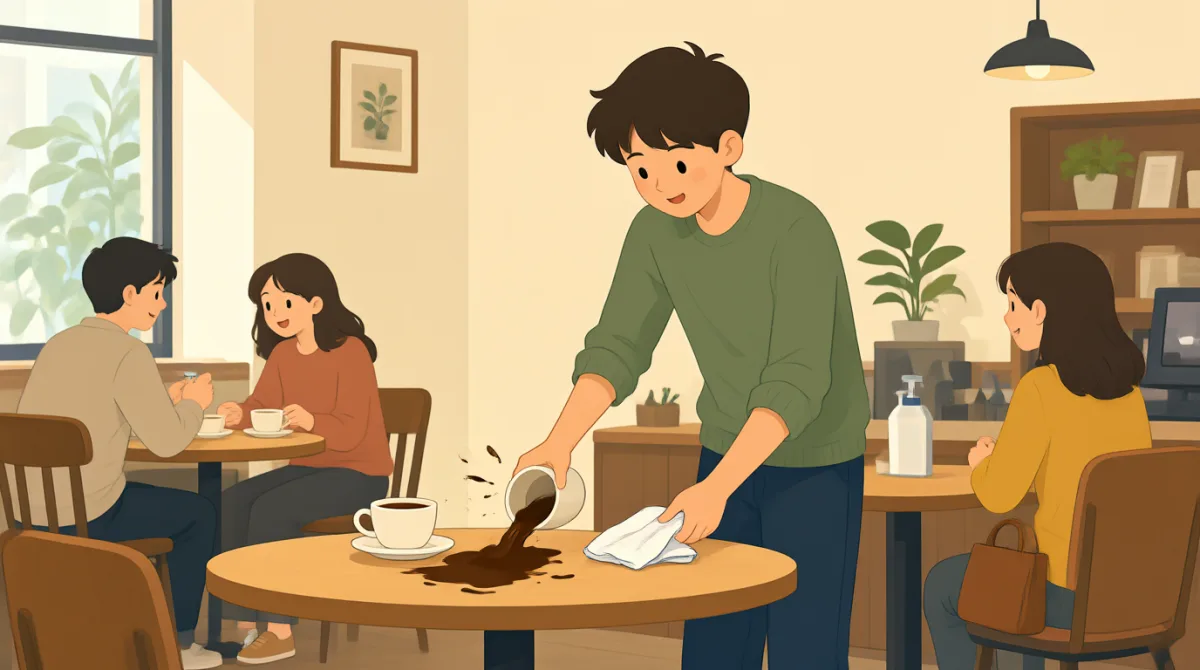

Oh no! I am so sorry! I've spilled my coffee.
अरे नहीं! मुझे बहुत माफ़ कीजिए! मेरी कॉफ़ी गिर गई।

Are you okay? Don't worry, it happens. Is any of it on you?
आप ठीक हैं? चिंता मत कीजिए, ऐसा हो जाता है। क्या कॉफ़ी आप पर तो नहीं गिरी?
I'm fine, thankfully it just went on the table. But it's quite a mess. Does anyone know where I can get some paper towels or a cloth?
मैं ठीक हूँ, शुक्र है कि कॉफ़ी बस मेज़ पर ही गिरी। लेकिन काफ़ी गंदगी हो गई है। क्या किसी को पता है कि मुझे पेपर टॉवल या कोई कपड़ा कहाँ मिल सकता है?
I'll go grab a staff member for you. They usually have cleaning supplies behind the counter.
मैं आपके लिए किसी कर्मचारी को बुला लाती हूँ। उनके पास आम तौर पर काउंटर के पीछे सफ़ाई का सामान होता है।
Oh, thank you, that would be a great help!
ओह, शुक्रिया! इससे बहुत मदद मिलेगी!
No problem at all. Just watch your step while I'm gone, it's a bit slippery there.
कोई बात नहीं। मेरे लौटने तक ज़रा संभलकर चलिएगा, वहाँ थोड़ी फिसलन है।
Will do. Thanks again for your help.
जी, ध्यान रखूँगा। आपकी मदद के लिए फिर से शुक्रिया।
शब्दावली7
- spilledगिरा दिया
Past tense of 'spill', meaning to accidentally pour liquid out of a container, like coffee. Use it when describing an accident: 'I spilled my drink.'
'Spilled' का मतलब है 'spill' का भूतकाल—किसी बर्तन से गलती से तरल पदार्थ गिरा देना, जैसे कॉफ़ी। किसी दुर्घटना के बारे में बताते समय इसका इस्तेमाल करें: 'I spilled my drink.' (मैंने अपना पेय गिरा दिया।)
- sorryमाफ़ी
An expression of apology. Say 'I'm sorry' when you make a mistake or cause inconvenience to others.
माफ़ी माँगने के लिए इस्तेमाल किया जाने वाला शब्द। जब आपसे कोई गलती हो जाए या दूसरों को परेशानी हो, तो 'I'm sorry' कहें। (मुझे माफ़ कीजिए।)
- messगंदगी
A dirty or disordered situation. In accidents, it describes something like spilled coffee making things untidy: 'What a mess!'
गंदी या अस्त-व्यस्त स्थिति। दुर्घटना के बाद कॉफ़ी गिरने से जो गंदगी फैलती है, उसके लिए यह शब्द इस्तेमाल होता है: 'What a mess!' (कितनी गंदगी हो गई!)
- paper towelsपेपर टॉवल
Absorbent paper sheets used for cleaning up spills. Common in cafes or homes: 'Can I have some paper towels?'
गिरी हुई चीज़ें साफ़ करने के लिए इस्तेमाल होने वाले सोखने वाले कागज़ के टुकड़े। ये कैफ़े और घरों में आम तौर पर मिलते हैं: 'Can I have some paper towels?' (क्या मुझे कुछ पेपर टॉवल मिल सकते हैं?)
- clothकपड़ा
A piece of fabric used for wiping or cleaning. Alternative to paper towels: 'Do you have a clean cloth?'
पोंछने या सफ़ाई करने के लिए इस्तेमाल होने वाला कपड़े का टुकड़ा। यह पेपर टॉवल का विकल्प है: 'Do you have a clean cloth?' (क्या आपके पास साफ़ कपड़ा है?)
- slipperyफिसलन भरा
Something wet and smooth that can cause you to slip and fall. Warn others: 'The floor is slippery after the spill.'
गीली और चिकनी सतह, जिस पर पैर फिसल सकता है और आप गिर सकते हैं। दूसरों को सावधान करने के लिए कहें: 'The floor is slippery after the spill.' (कुछ गिरने के बाद फ़र्श पर फिसलन है।)
- staff memberकर्मचारी
An employee working at a place like a cafe. Polite way to refer to workers: 'Ask a staff member for help.'
कैफ़े जैसी जगह पर काम करने वाला व्यक्ति। वहाँ काम करने वालों के बारे में विनम्रता से कहने के लिए यह शब्द इस्तेमाल करें: 'Ask a staff member for help.' (मदद के लिए किसी कर्मचारी से पूछिए।)
मुख्य वाक्य7
- 1
Oh no! I am so sorry! I've spilled my coffee.
अरे नहीं! मुझे बहुत माफ़ कीजिए! मेरी कॉफ़ी गिर गई।
This shows immediate reaction to an accident. 'Oh no!' expresses surprise or regret. 'I've spilled' uses present perfect tense for a recent action. Use it to apologize quickly after spilling something.
यह किसी दुर्घटना पर तुरंत दी गई प्रतिक्रिया दिखाता है। 'Oh no!' हैरानी या अफ़सोस जताता है। 'I've spilled' में वर्तमान पूर्ण काल का इस्तेमाल हाल ही में हुई घटना के लिए किया गया है। कुछ गिर जाने के तुरंत बाद माफ़ी माँगने के लिए यह वाक्य कहें।
- 2
Are you okay? Don't worry, it happens.
आप ठीक हैं? चिंता मत कीजिए, ऐसा हो जाता है।
A kind response to someone's accident. 'Are you okay?' checks for injury. 'Don't worry, it happens' reassures them it's common. Use this to be helpful and calm others down.
यह किसी की दुर्घटना पर दयालुता से दिया गया जवाब है। 'Are you okay?' पूछकर पता करते हैं कि किसी को चोट तो नहीं लगी। 'Don't worry, it happens' उन्हें भरोसा दिलाता है कि ऐसा होना आम बात है। मददगार बनने और दूसरे व्यक्ति को शांत करने के लिए यह कहें।
- 3
I'm fine, thankfully it just went on the table.
मैं ठीक हूँ, शुक्र है कि कॉफ़ी बस मेज़ पर ही गिरी।
Explains the situation without harm. 'Thankfully' means luckily. 'It just went on the table' uses 'just' for location only. Useful for updating others on minor accidents.
इससे पता चलता है कि किसी को चोट नहीं लगी। 'Thankfully' का मतलब है 'शुक्र है'। 'It just went on the table' में 'just' बताता है कि कॉफ़ी केवल मेज़ पर गिरी। छोटी-मोटी दुर्घटना की जानकारी देने के लिए यह वाक्य काम आता है।
- 4
Does anyone know where I can get some paper towels or a cloth?
क्या किसी को पता है कि मुझे पेपर टॉवल या कोई कपड़ा कहाँ मिल सकता है?
A polite request for help. 'Does anyone know' asks the group. 'Where I can get' is a question about location for items. Use in public places to seek cleaning supplies.
यह मदद माँगने का एक विनम्र तरीका है। 'Does anyone know' समूह में मौजूद लोगों से पूछता है। 'Where I can get' चीज़ें मिलने की जगह के बारे में पूछता है। सार्वजनिक जगहों पर सफ़ाई का सामान माँगने के लिए इसका इस्तेमाल करें।
- 5
I'll go grab a staff member for you.
मैं आपके लिए किसी कर्मचारी को बुला लाती हूँ।
Offers practical help. 'I'll go grab' means 'I'll quickly get'. Informal and friendly. Use when volunteering to fetch assistance in a cafe or similar setting.
इस वाक्य में व्यावहारिक मदद की पेशकश की जाती है। 'I'll go grab' का मतलब है 'मैं जल्दी से जाकर ले आती हूँ'। यह अनौपचारिक और दोस्ताना है। कैफ़े या ऐसी ही जगह पर किसी से मदद लेने जाने की पेशकश करते समय इसका इस्तेमाल करें।
- 6
Oh, thank you, that would be a great help!
ओह, शुक्रिया! इससे बहुत मदद मिलेगी!
Expresses gratitude. 'That would be' is conditional for future help. 'Great help' emphasizes appreciation. Say this when someone offers aid after your mistake.
यह आभार जताता है। 'That would be' भविष्य में मिलने वाली मदद के बारे में कहने का एक तरीका है। 'Great help' से पता चलता है कि आप कितने आभारी हैं। अपनी गलती के बाद जब कोई मदद की पेशकश करे, तो यह कहें।
- 7
No problem at all. Just watch your step while I'm gone, it's a bit slippery there.
कोई बात नहीं। मेरे लौटने तक ज़रा संभलकर चलिएगा, वहाँ थोड़ी फिसलन है।
Reassures and gives advice. 'No problem at all' means you're welcome. 'Watch your step' warns of danger. Use to be considerate and point out risks like wet floors.
इसमें सामने वाले को भरोसा दिलाने के साथ सावधान भी किया जाता है। 'No problem at all' का मतलब है 'कोई बात नहीं'। 'Watch your step' कहकर किसी खतरे से सावधान किया जाता है। दूसरों का ध्यान रखने और गीले फ़र्श जैसी चीज़ों के जोखिम बताने के लिए इसका इस्तेमाल करें।