Offering Help to Someone Else
เสนอความช่วยเหลือผู้อื่น
You witness someone else spilling coffee. You want to offer practical help, such as getting napkins or alerting staff, without being intrusive.
คุณเห็นคนอื่นทำกาแฟหก จึงอยากเสนอความช่วยเหลือที่เป็นรูปธรรม เช่น หาทิชชูให้หรือแจ้งพนักงาน โดยไม่เข้าไปก้าวก่าย
บทสนทนา8
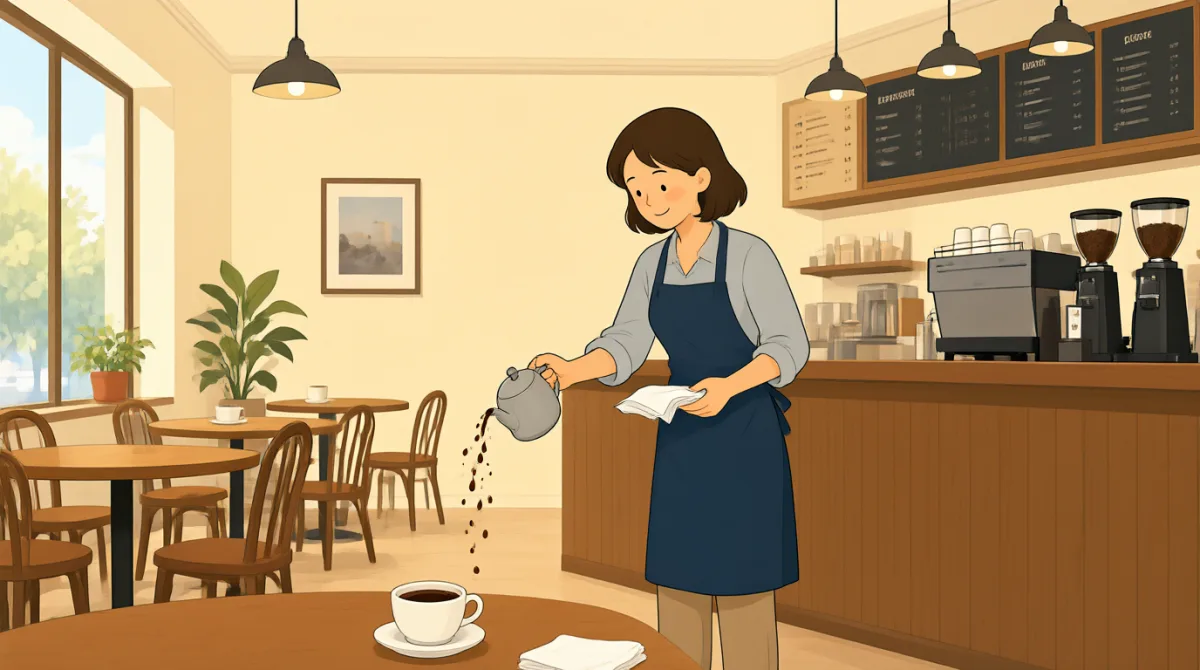

Oh, no! Are you okay? Looks like you've spilled your coffee!
อุ๊ย! เป็นอะไรไหม ดูเหมือนคุณทำกาแฟหกนะ!

Ugh, yeah, completely soaked it. My hand just slipped. What a mess!
เฮ้อ ใช่ เปียกไปหมดเลย มือฉันลื่นน่ะ เลอะเทอะไปหมด!
Don't worry about it. Happens to the best of us. Do you need a hand with anything? I could grab some napkins, or maybe alert the staff if you want?
ไม่ต้องกังวลนะ เรื่องแบบนี้เกิดขึ้นได้กับทุกคน ต้องการให้ช่วยอะไรไหม ฉันไปหยิบทิชชูมาให้ก็ได้ หรือจะให้ช่วยแจ้งพนักงานไหม?
That would be so helpful, thank you! If you could just point me to where the napkins are, I can probably manage. Don't want to bother the staff too much.
ช่วยได้มากเลย ขอบคุณนะ! แค่บอกฉันว่าทิชชูอยู่ตรงไหนก็พอ เดี๋ยวฉันจัดการเองได้ ไม่อยากรบกวนพนักงานมากน่ะ
No bother at all. They're usually by the counter, right next to the sugar station. I'll go fetch them for you. Don't move, I'll be right back.
ไม่รบกวนเลย ปกติทิชชูอยู่แถวเคาน์เตอร์ ข้าง ๆ จุดวางน้ำตาล เดี๋ยวฉันไปเอามาให้นะ อย่าเพิ่งไปไหนล่ะ เดี๋ยวกลับมา
Oh, you don't have to! I can go.
อุ๊ย ไม่ต้องก็ได้! ฉันไปเองได้
It's no trouble, really. You stay put and deal with the immediate spill. I'll be quick.
ไม่ลำบากเลย จริง ๆ เธออยู่ตรงนี้แล้วจัดการกาแฟที่หกก่อนนะ ฉันไปแป๊บเดียว
Okay, thank you so much! That's really kind of you.
โอเค ขอบคุณมากนะ! ใจดีจังเลย
คำศัพท์10
- spilledทำหก
Past tense of 'spill', meaning to accidentally pour liquid out of a container, like coffee on the floor or clothes. Use it to describe accidents: 'I spilled my drink.'
เป็นรูปอดีตของ 'spill' หมายถึงทำของเหลวหกออกจากภาชนะโดยไม่ตั้งใจ เช่น กาแฟหกลงพื้นหรือโดนเสื้อผ้า ใช้พูดถึงอุบัติเหตุ เช่น 'I spilled my drink.' (ฉันทำเครื่องดื่มหก)
- soakedเปียกชุ่ม
Covered or filled with liquid, often completely wet. In this context, it describes clothes or items after spilling: 'My shirt is soaked with water.' It's useful for everyday accidents.
หมายถึงมีของเหลวเปียกอยู่ทั่วหรือซึมเข้าไป มักใช้เมื่อเปียกมาก ในบริบทนี้ใช้บรรยายเสื้อผ้าหรือสิ่งของที่เปียกหลังทำของเหลวหก เช่น 'My shirt is soaked with water.' (เสื้อฉันเปียกชุ่มไปด้วยน้ำ) เป็นคำที่มีประโยชน์เวลาพูดถึงอุบัติเหตุในชีวิตประจำวัน
- slippedลื่น
Past tense of 'slip', meaning to slide or lose control accidentally. Common in accidents: 'The cup slipped from my hand.' Helps explain why something fell.
เป็นรูปอดีตของ 'slip' หมายถึงเลื่อนหรือเสียการควบคุมโดยไม่ตั้งใจ มักใช้พูดถึงอุบัติเหตุ เช่น 'The cup slipped from my hand.' (แก้วหลุดลื่นจากมือฉัน) ใช้อธิบายได้ว่าทำไมบางอย่างถึงตก
- messความเลอะเทอะ
A dirty or disordered situation, often from an accident. Use it to express frustration: 'What a mess!' It's casual and common in informal English.
หมายถึงสภาพที่สกปรกหรือไม่เป็นระเบียบ ซึ่งมักเกิดจากอุบัติเหตุ ใช้แสดงความหงุดหงิดได้ เช่น 'What a mess!' (เลอะเทอะไปหมดเลย!) เป็นคำพูดกันเองที่ใช้บ่อยในภาษาอังกฤษไม่เป็นทางการ
- grabหยิบ
To quickly take or get something. Informal and practical: 'Grab some napkins' means to fetch them fast. Good for offering quick help in daily life.
หมายถึงหยิบหรือไปเอาบางอย่างอย่างรวดเร็ว เป็นคำไม่เป็นทางการและใช้ได้จริงในชีวิตประจำวัน 'Grab some napkins' หมายถึงไปหยิบทิชชูมาให้เร็ว ๆ เหมาะสำหรับเสนอความช่วยเหลืออย่างรวดเร็ว
- alertแจ้ง
To warn or inform someone about a problem. Here, 'alert the staff' means to tell workers about the spill. Useful in public places like cafes.
หมายถึงเตือนหรือบอกใครสักคนเกี่ยวกับปัญหา ในที่นี้ 'alert the staff' หมายถึงแจ้งพนักงานเรื่องกาแฟหก เป็นคำที่มีประโยชน์ในสถานที่สาธารณะ เช่น ร้านกาแฟ
- botherรบกวน
To cause trouble or inconvenience. 'No bother' means it's not a problem at all. Polite way to reassure someone when helping: 'It's no bother to help you.'
หมายถึงทำให้ใครลำบากหรือไม่สะดวก 'No bother' หมายถึงไม่เป็นปัญหาเลย เป็นคำสุภาพที่ใช้ปลอบใจอีกฝ่ายเวลาช่วยเหลือ เช่น 'It's no bother to help you.' (ช่วยคุณไม่ลำบากเลย)
- fetchไปเอามาให้
To go and bring back something. Similar to 'get', but implies going to retrieve: 'I'll fetch the napkins.' Kind and helpful in offering assistance.
หมายถึงไปหยิบบางอย่างแล้วนำกลับมา คล้ายกับ 'get' แต่เน้นว่าต้องไปเอาของกลับมา เช่น 'I'll fetch the napkins.' (ฉันจะไปเอาทิชชูมาให้) เป็นคำที่ฟังดูมีน้ำใจเมื่อเสนอความช่วยเหลือ
- stay putอยู่กับที่
An idiom meaning to remain in place, don't move. Casual advice: 'Stay put and I'll help.' Useful for keeping someone safe during cleanup.
เป็นสำนวนที่หมายถึงอยู่ตรงนั้นและอย่าขยับ เป็นคำแนะนำแบบกันเอง เช่น 'Stay put and I'll help.' (อยู่ตรงนี้นะ เดี๋ยวฉันช่วย) มีประโยชน์เมื่อต้องการให้อีกฝ่ายปลอดภัยระหว่างจัดการทำความสะอาด
- kindใจดี
Nice or helpful in a gentle way. 'That's really kind of you' expresses gratitude for someone's help. Common in polite responses to favors.
หมายถึงมีน้ำใจหรือช่วยเหลือผู้อื่นอย่างอ่อนโยน 'That's really kind of you' ใช้ขอบคุณใครสักคนที่ช่วยเหลือ มักใช้ตอบรับความช่วยเหลืออย่างสุภาพ
ประโยคสำคัญ7
- 1
Oh, no! Are you okay? Looks like you've spilled your coffee!
อุ๊ย! เป็นอะไรไหม ดูเหมือนคุณทำกาแฟหกนะ!
This is a concerned reaction to an accident. 'Oh, no!' shows surprise and worry. 'Are you okay?' checks for injury first. Useful for starting a helpful conversation; the present perfect 'you've spilled' describes a recent action.
ประโยคนี้ใช้แสดงความเป็นห่วงเมื่อเกิดอุบัติเหตุ 'Oh, no!' แสดงความตกใจและกังวล ส่วน 'Are you okay?' ใช้ถามก่อนว่าอีกฝ่ายบาดเจ็บไหม เหมาะสำหรับเริ่มบทสนทนาเพื่อเสนอความช่วยเหลือ ส่วน present perfect ใน 'you've spilled' ใช้พูดถึงเหตุการณ์ที่เพิ่งเกิดขึ้น
- 2
Don't worry about it. Happens to the best of us.
ไม่ต้องกังวลนะ เรื่องแบบนี้เกิดขึ้นได้กับทุกคน
Reassures someone after a mistake. 'Don't worry about it' means no need to feel bad. 'Happens to the best of us' is an idiom saying accidents happen to everyone, even good people. Great for comforting friends casually.
ใช้ปลอบใจใครสักคนหลังจากทำพลาด 'Don't worry about it' หมายถึงไม่ต้องรู้สึกแย่กับเรื่องนั้น ส่วน 'Happens to the best of us' เป็นสำนวนที่บอกว่าอุบัติเหตุเกิดขึ้นได้กับทุกคน แม้แต่คนที่รอบคอบที่สุด เหมาะสำหรับปลอบเพื่อนแบบเป็นกันเอง
- 3
Do you need a hand with anything? I could grab some napkins, or maybe alert the staff if you want?
ต้องการให้ช่วยอะไรไหม ฉันไปหยิบทิชชูมาให้ก็ได้ หรือจะให้ช่วยแจ้งพนักงานไหม?
Offers help politely. 'Need a hand' is an idiom for assistance. The conditional 'I could' suggests options without pressure. Useful pattern for volunteering help in situations like spills; shows specific actions.
ใช้เสนอความช่วยเหลืออย่างสุภาพ 'Need a hand' เป็นสำนวนที่หมายถึงต้องการความช่วยเหลือ ส่วน 'I could' เป็นรูปเงื่อนไขที่ช่วยเสนอทางเลือกโดยไม่กดดัน เหมาะสำหรับเสนอความช่วยเหลือในสถานการณ์อย่างการทำของหก และยังระบุชัดเจนด้วยว่าจะช่วยอะไรได้บ้าง
- 4
That would be so helpful, thank you!
ช่วยได้มากเลย ขอบคุณนะ!
Accepts an offer gratefully. 'That would be' is conditional for future help. Adds 'so' for emphasis on helpfulness. Essential for polite responses when someone assists you; builds positive interactions.
ใช้ตอบรับข้อเสนออย่างซาบซึ้ง 'That would be' เป็นรูปเงื่อนไขที่พูดถึงความช่วยเหลือในอนาคต และเติม 'so' เพื่อเน้นว่าความช่วยเหลือนั้นมีประโยชน์มาก เป็นวลีสำคัญสำหรับตอบอย่างสุภาพเมื่อมีคนช่วยเหลือ และช่วยสร้างปฏิสัมพันธ์ที่ดี
- 5
No bother at all. They're usually by the counter, right next to the sugar station.
ไม่รบกวนเลย ปกติทิชชูอยู่แถวเคาน์เตอร์ ข้าง ๆ จุดวางน้ำตาล
Downplays the effort of helping. 'No bother at all' reassures it's easy. Gives directions with 'by' and 'next to' for location. Practical for guiding someone in a cafe; uses simple prepositions for everyday navigation.
ใช้บอกว่าการช่วยเหลือไม่ได้ลำบากอะไร 'No bother at all' ช่วยให้อีกฝ่ายสบายใจว่าไม่เป็นปัญหา ส่วน 'by' และ 'next to' ใช้บอกตำแหน่ง เหมาะสำหรับบอกทางในร้านกาแฟ โดยใช้คำบุพบทง่าย ๆ ที่พบได้ในชีวิตประจำวัน
- 6
You stay put and deal with the immediate spill. I'll be quick.
เธออยู่ตรงนี้แล้วจัดการกาแฟที่หกก่อนนะ ฉันไปแป๊บเดียว
Instructs someone to stay still while offering to act. 'Stay put' is an idiom for not moving. 'Immediate' means right now. 'I'll be quick' promises speed. Useful for managing accidents safely; imperative form for directions.
ใช้บอกให้อีกฝ่ายอยู่กับที่ขณะที่เราอาสาจัดการให้ 'Stay put' เป็นสำนวนที่หมายถึงอย่าขยับ ส่วน 'immediate' หมายถึงทันที และ 'I'll be quick' เป็นการรับปากว่าจะรีบ เหมาะสำหรับจัดการอุบัติเหตุอย่างปลอดภัย โดยใช้รูปประโยคคำสั่งเพื่อบอกให้อีกฝ่ายทำอะไร
- 7
Okay, thank you so much! That's really kind of you.
โอเค ขอบคุณมากนะ! ใจดีจังเลย
Shows appreciation. 'Thank you so much' emphasizes gratitude. 'That's really kind of you' compliments the helper. Perfect ending phrase for accepting favors; 'so much' and 'really' intensify politeness in English.
ใช้แสดงความซาบซึ้ง 'Thank you so much' เน้นย้ำความขอบคุณ ส่วน 'That's really kind of you' เป็นคำชมคนที่ช่วยเหลือ เหมาะสำหรับใช้ปิดท้ายเมื่อตอบรับความช่วยเหลือ โดย 'so much' และ 'really' ช่วยเพิ่มน้ำหนักให้คำพูดสุภาพในภาษาอังกฤษ