Accidental Spill & Apology
กาแฟหกโดยไม่ตั้งใจและการขอโทษ
You accidentally bump into someone and spill coffee on their coat. You need to apologize sincerely and offer to help.
คุณเผลอชนใครคนหนึ่งจนกาแฟหกใส่เสื้อโค้ตของเขา คุณต้องขอโทษอย่างจริงใจและเสนอตัวช่วย
บทสนทนา10
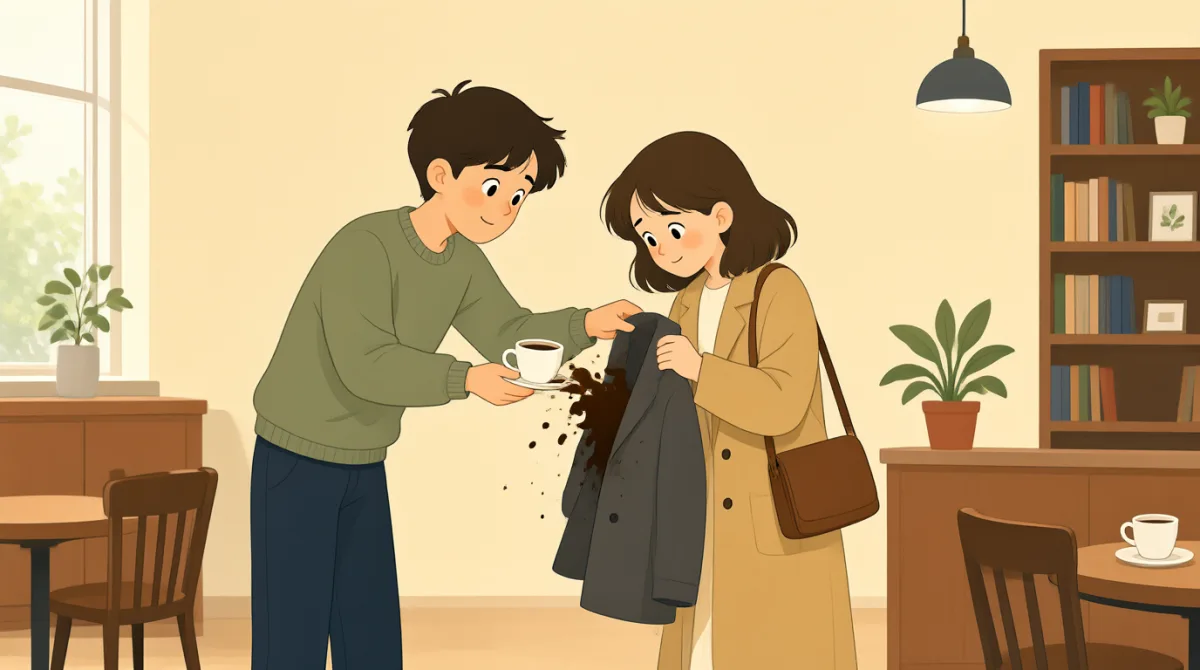

Oh no! I am so, so sorry! I didn't see you there. I've spilled coffee all over your coat!
แย่แล้ว! ผมขอโทษจริง ๆ นะครับ ผมไม่เห็นคุณตรงนั้น กาแฟหกใส่เสื้อโค้ตคุณเต็มเลย!

Oh, that's alright. Accidents happen. It's just a bit of coffee.
ไม่เป็นไรค่ะ อุบัติเหตุเกิดขึ้นได้ แค่กาแฟนิดหน่อยเอง
No, it's not alright! Let me help you. Do you have any tissues? Or I can get you some paper towels.
ไม่ครับ ผมไม่สบายใจเลย ให้ผมช่วยนะครับ คุณมีกระดาษทิชชูไหมครับ หรือให้ผมไปเอากระดาษเช็ดมือมาให้ก็ได้
I think I have some in my bag. Yes, here they are.
คิดว่ามีอยู่ในกระเป๋าค่ะ ใช่ อยู่นี่ไงคะ
Let me blot it for you. Does it feel hot? I hope it didn't burn you.
ให้ผมซับให้นะครับ รู้สึกร้อนไหมครับ หวังว่าจะไม่ลวกคุณนะครับ
No, it's not hot, just warm. Thank you. Don't worry too much about it.
ไม่ร้อนค่ะ แค่อุ่น ๆ ขอบคุณนะคะ ไม่ต้องกังวลมากหรอกค่ะ
I still feel terrible. Is there anything else I can do? Can I buy you another coffee?
ผมยังรู้สึกแย่มากอยู่เลยครับ มีอะไรให้ผมช่วยอีกไหมครับ ให้ผมซื้อกาแฟแก้วใหม่ให้ไหมครับ
That's very kind of you, but it's really not necessary. I'll be fine. Just be a bit more careful next time, okay?
ใจดีจังเลยค่ะ แต่ไม่จำเป็นจริง ๆ ฉันไม่เป็นไรค่ะ คราวหน้าระวังให้มากกว่านี้หน่อยนะคะ ตกลงไหม
I absolutely will. Again, I'm so sorry for the inconvenience.
ผมจะระวังแน่นอนครับ ขอโทษอีกครั้งที่ทำให้คุณลำบากนะครับ
It's fine, really. No harm done. Have a good day!
ไม่เป็นไรจริง ๆ ค่ะ ไม่มีอะไรเสียหาย ขอให้เป็นวันที่ดีนะคะ!
คำศัพท์7
- spillทำหก
To spill means to accidentally pour out a liquid, like coffee, onto something or someone. Use it when describing an accident with drinks.
spill หมายถึงทำของเหลวอย่างกาแฟหกใส่สิ่งของหรือคนโดยไม่ตั้งใจ ใช้พูดถึงอุบัติเหตุที่เกิดกับเครื่องดื่มได้ค่ะ
- sorryขอโทษ
Sorry is used to apologize for a mistake or accident. It's a common way to express regret, like 'I'm so sorry' for something you did wrong.
ใช้ sorry เพื่อขอโทษเมื่อทำผิดพลาดหรือเกิดอุบัติเหตุ เป็นคำพูดทั่วไปที่ใช้แสดงความเสียใจ เช่น 'I'm so sorry' (ฉันขอโทษจริง ๆ) เมื่อเราทำสิ่งที่ไม่ดีลงไปค่ะ
- accidentอุบัติเหตุ
An accident is an unexpected event that causes damage or trouble, but not on purpose. It's often used to excuse small mistakes, like spilling something.
accident คือเหตุการณ์ที่เกิดขึ้นโดยไม่คาดคิดและทำให้เกิดความเสียหายหรือความยุ่งยาก แต่ไม่ได้เกิดขึ้นโดยตั้งใจ มักใช้พูดถึงความผิดพลาดเล็ก ๆ น้อย ๆ เช่น ทำของหกค่ะ
- tissuesกระดาษทิชชู
Tissues are soft paper sheets used for cleaning, wiping, or blowing your nose. In this context, they help clean up spills.
tissues คือกระดาษเนื้อนุ่มที่ใช้ทำความสะอาด เช็ดสิ่งต่าง ๆ หรือสั่งน้ำมูก ในสถานการณ์นี้ใช้ช่วยเช็ดของที่หกได้ค่ะ
- blotซับ
To blot means to gently press something absorbent, like a tissue, onto a wet spot to soak up liquid without rubbing it in.
blot หมายถึงใช้วัสดุซับน้ำ เช่น กระดาษทิชชู กดเบา ๆ ลงบนรอยเปียกเพื่อดูดซับของเหลวโดยไม่ถูให้ซึมเข้าไปค่ะ
- inconvenienceความยุ่งยาก
Inconvenience means causing trouble or extra work for someone. Apologizing for it shows politeness after an accident.
inconvenience หมายถึงการทำให้ใครบางคนเดือดร้อนหรือมีงานเพิ่ม การขอโทษที่ทำให้เกิดความยุ่งยากเป็นการแสดงความสุภาพหลังเกิดอุบัติเหตุค่ะ
- harmอันตราย
Harm means damage or injury. Saying 'no harm done' means nothing bad happened from the accident.
harm หมายถึงความเสียหายหรือการบาดเจ็บ สำนวน 'no harm done' หมายความว่าอุบัติเหตุนั้นไม่ได้ทำให้เกิดเรื่องร้ายแรงอะไรค่ะ
ประโยคสำคัญ8
- 1
Oh no! I am so, so sorry!
แย่แล้ว! ผมขอโทษจริง ๆ นะครับ!
This sentence shows strong apology using 'so, so sorry' for emphasis. It's useful right after an accident to express deep regret immediately.
ประโยคนี้ใช้ 'so, so sorry' เพื่อเน้นว่าขอโทษอย่างมาก เหมาะจะพูดทันทีหลังเกิดอุบัติเหตุเพื่อแสดงความเสียใจอย่างจริงใจค่ะ
- 2
Accidents happen.
อุบัติเหตุเกิดขึ้นได้
This is a common idiom meaning unexpected things occur and it's okay. Use it to comfort someone who apologizes, showing forgiveness.
นี่เป็นสำนวนที่ใช้กันทั่วไป หมายถึงเรื่องไม่คาดคิดเกิดขึ้นได้และไม่เป็นไร ใช้ปลอบคนที่กำลังขอโทษเพื่อแสดงว่าเราให้อภัยค่ะ
- 3
That's alright.
ไม่เป็นไรค่ะ
'That's alright' means it's not a problem. It's a polite way to accept an apology and downplay the issue, common in casual conversations.
'That's alright' หมายถึงไม่ใช่ปัญหา เป็นวิธีสุภาพในการรับคำขอโทษและทำให้เรื่องดูไม่ร้ายแรง มักใช้ในการสนทนาทั่วไปค่ะ
- 4
Let me help you.
ให้ผมช่วยนะครับ
This offers assistance politely. The structure 'Let me + verb' is useful for volunteering help in everyday situations like cleaning up.
ประโยคนี้เป็นการเสนอตัวช่วยอย่างสุภาพ โครงสร้าง 'Let me + verb' ใช้เสนอตัวช่วยในสถานการณ์ทั่วไปได้ เช่น ตอนช่วยทำความสะอาดค่ะ
- 5
I hope it didn't burn you.
หวังว่าจะไม่ลวกคุณนะครับ
This expresses concern for safety after a spill. Use 'I hope + past tense' to show worry about possible negative effects.
ประโยคนี้แสดงความห่วงใยเรื่องความปลอดภัยหลังของหก ใช้ 'I hope + past tense' เพื่อบอกว่ากังวลว่าอาจเกิดผลเสียขึ้นค่ะ
- 6
Don't worry too much about it.
ไม่ต้องกังวลเรื่องนั้นมากนะคะ
This reassures someone to stop feeling bad. It's helpful for calming friends after minor accidents, using 'too much' for emphasis.
ประโยคนี้ช่วยปลอบอีกฝ่ายไม่ให้รู้สึกแย่ ใช้พูดให้คนสบายใจขึ้นหลังเกิดอุบัติเหตุเล็ก ๆ ได้ โดย 'too much' ใช้เน้นว่าไม่ต้องกังวลมากเกินไปค่ะ
- 7
Is there anything else I can do?
มีอะไรให้ผมช่วยอีกไหมครับ
This question offers more help. It's a polite way to check if the other person needs additional assistance, good for showing kindness.
คำถามนี้เป็นการเสนอตัวช่วยเพิ่มเติม เป็นวิธีสุภาพในการถามว่าอีกฝ่ายต้องการความช่วยเหลืออะไรอีกไหม และแสดงถึงความมีน้ำใจค่ะ
- 8
No harm done.
ไม่มีอะไรเสียหายค่ะ
This phrase means no damage or problem resulted. Use it at the end to fully forgive and end the conversation positively.
สำนวนนี้หมายความว่าไม่มีความเสียหายหรือปัญหาเกิดขึ้น ใช้พูดปิดท้ายเพื่อแสดงว่าให้อภัยแล้วและจบบทสนทนาด้วยดีค่ะ