Accidental Spill & Apology
意外打翻與致歉
You accidentally bump into someone and spill coffee on their coat. You need to apologize sincerely and offer to help.
你不小心撞到別人,咖啡灑到了他們的外套上。你需要真誠地道歉並表示願意提供幫助。
對話10
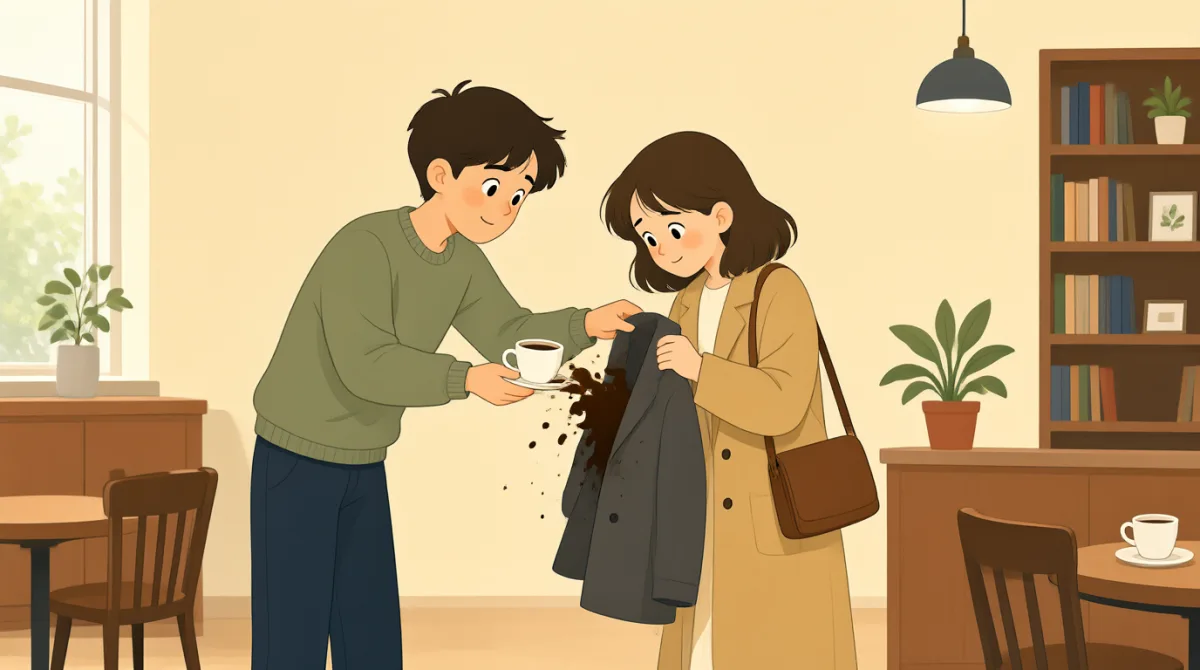

Oh no! I am so, so sorry! I didn't see you there. I've spilled coffee all over your coat!
哦不!我太抱歉了!我沒看到你。我把咖啡灑了你一身外套!

Oh, that's alright. Accidents happen. It's just a bit of coffee.
哦,沒關係。意外難免。只是一點咖啡而已。
No, it's not alright! Let me help you. Do you have any tissues? Or I can get you some paper towels.
不,這可不行!我來幫你。你有沒有紙巾?或者我可以給你拿些紙巾。
I think I have some in my bag. Yes, here they are.
我想我包裡有一些。是的,在這裡。
Let me blot it for you. Does it feel hot? I hope it didn't burn you.
我幫你擦一下。燙嗎?希望沒燙到你。
No, it's not hot, just warm. Thank you. Don't worry too much about it.
不,不燙,只是溫的。謝謝你。別太擔心了。
I still feel terrible. Is there anything else I can do? Can I buy you another coffee?
我還是覺得很抱歉。我還能做些什麼嗎?我可以再給你買杯咖啡嗎?
That's very kind of you, but it's really not necessary. I'll be fine. Just be a bit more careful next time, okay?
你真是太好了,但真的沒必要。我沒事。下次小心點就行了,好嗎?
I absolutely will. Again, I'm so sorry for the inconvenience.
我一定會小心。再次為給你帶來的不便深感抱歉。
It's fine, really. No harm done. Have a good day!
沒關係,真的。沒造成什麼傷害。祝你有個美好的一天!
詞彙7
- spill灑出
To spill means to accidentally pour out a liquid, like coffee, onto something or someone. Use it when describing an accident with drinks.
“spill”指不小心把咖啡之類的液體灑到某物或某人身上。描述飲料灑出來的意外時可以用這個詞。
- sorry抱歉
Sorry is used to apologize for a mistake or accident. It's a common way to express regret, like 'I'm so sorry' for something you did wrong.
“sorry”用來為錯誤或意外道歉,是表達歉意的常用說法。比如,做錯事後可以說“I'm so sorry”(我真的非常抱歉)。
- accident意外
An accident is an unexpected event that causes damage or trouble, but not on purpose. It's often used to excuse small mistakes, like spilling something.
“accident”指意料之外、會造成損失或麻煩的事情,但並非故意發生的。這個詞常用來解釋一些小失誤,比如不小心灑了東西。
- tissues紙巾
Tissues are soft paper sheets used for cleaning, wiping, or blowing your nose. In this context, they help clean up spills.
“tissues”指柔軟的紙巾,可以用來清潔、擦拭或擤鼻涕。在這裡,紙巾是用來清理灑出來的咖啡的。
- blot吸乾
To blot means to gently press something absorbent, like a tissue, onto a wet spot to soak up liquid without rubbing it in.
“blot”指用紙巾之類的吸水材料輕輕按壓溼處,把液體吸起來,而不是來回擦,以免把液體蹭開。
- inconvenience麻煩
Inconvenience means causing trouble or extra work for someone. Apologizing for it shows politeness after an accident.
“inconvenience”指給別人添麻煩或增加額外的事情。意外發生後為此道歉,能體現禮貌。
- harm傷害
Harm means damage or injury. Saying 'no harm done' means nothing bad happened from the accident.
“harm”指損害或受傷。“no harm done”表示這場意外沒有造成什麼不好的後果。
關鍵句8
- 1
Oh no! I am so, so sorry!
哦不!我真的、真的很抱歉!
This sentence shows strong apology using 'so, so sorry' for emphasis. It's useful right after an accident to express deep regret immediately.
這句話用“so, so sorry”來加強語氣,表達誠懇的歉意。意外剛發生時,可以馬上用這句話表達深深的歉意。
- 2
Accidents happen.
意外難免。
This is a common idiom meaning unexpected things occur and it's okay. Use it to comfort someone who apologizes, showing forgiveness.
這是一個常見說法,意思是意想不到的事情難免會發生,沒關係。別人道歉時,可以用它安慰對方,表示自己不介意。
- 3
That's alright.
沒關係。
'That's alright' means it's not a problem. It's a polite way to accept an apology and downplay the issue, common in casual conversations.
“That's alright”表示這不是什麼問題。它是接受道歉、淡化事情嚴重程度的一種禮貌說法,在日常對話中很常見。
- 4
Let me help you.
我來幫你。
This offers assistance politely. The structure 'Let me + verb' is useful for volunteering help in everyday situations like cleaning up.
這句話是在禮貌地提出幫忙。“Let me + 動詞”這個結構很實用,可以用來主動提出幫忙處理日常情況,比如清理灑出來的東西。
- 5
I hope it didn't burn you.
希望沒燙到你。
This expresses concern for safety after a spill. Use 'I hope + past tense' to show worry about possible negative effects.
這句話是在咖啡灑出來後關心對方有沒有受傷。用“I hope + 過去時”可以表達對可能發生的不良後果的擔心。
- 6
Don't worry too much about it.
別太擔心了。
This reassures someone to stop feeling bad. It's helpful for calming friends after minor accidents, using 'too much' for emphasis.
這句話是在安慰對方,讓對方別再覺得過意不去。朋友遇到小意外時,可以用它來讓對方放寬心;“too much”在這裡起到加強語氣的作用。
- 7
Is there anything else I can do?
我還能做些什麼嗎?
This question offers more help. It's a polite way to check if the other person needs additional assistance, good for showing kindness.
這句話是在詢問對方是否還需要幫助。它是一種禮貌的表達方式,能體現關心和善意。
- 8
No harm done.
沒造成什麼傷害。
This phrase means no damage or problem resulted. Use it at the end to fully forgive and end the conversation positively.
這個說法表示沒有造成損害或麻煩。對話快結束時可以用它表示自己完全不介意,讓交流愉快地收尾。