Receiving Confirmation & Receipt
ยืนยันการยืมและใบเสร็จ
The librarian confirms the checkout, informs the patron of the due dates, and provides a printed or digital receipt for the borrowed items.
บรรณารักษ์ยืนยันการยืม แจ้งวันกำหนดคืน และออกใบเสร็จแบบพิมพ์หรือดิจิทัลสำหรับหนังสือที่ยืมไป
บทสนทนา9
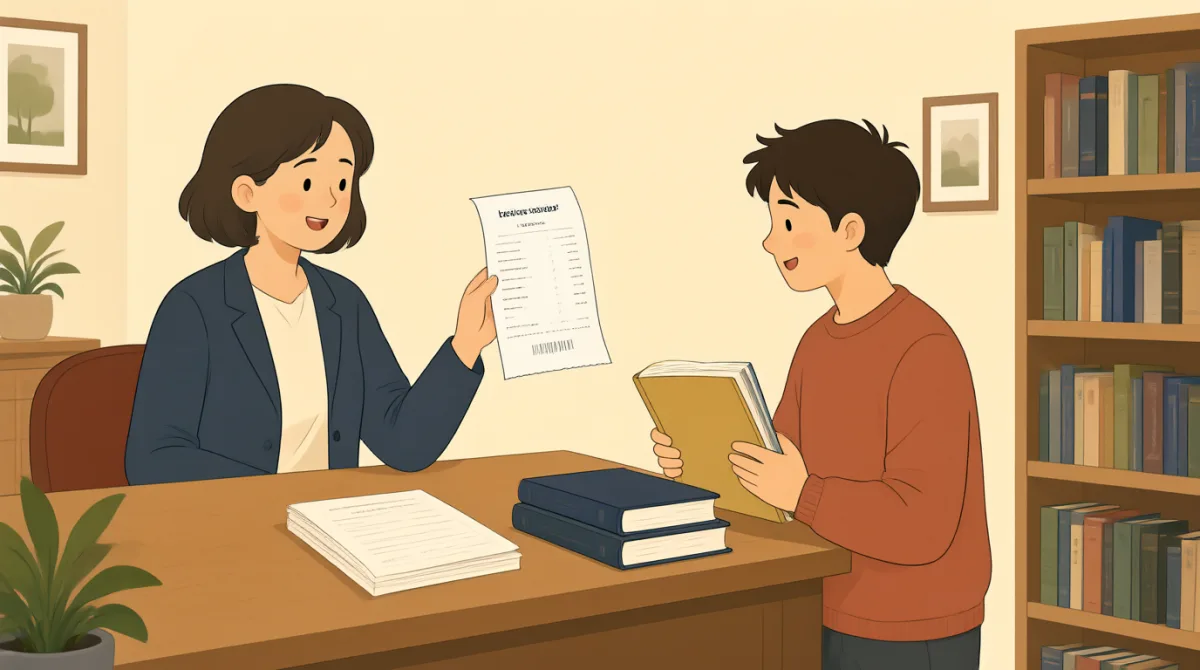

Okay, all three books are checked out. They are due back on May 15th.
เรียบร้อย หนังสือทั้งสามเล่มยืมออกไปแล้ว กำหนดคืนวันที่ 15 พฤษภาคมนะคะ

May 15th, got it. Will I get a physical receipt?
วันที่ 15 พฤษภาคม เข้าใจแล้วครับ ผมจะได้ใบเสร็จแบบกระดาษไหมครับ
Yes, it's printing out now. It lists the due dates for each item.
ได้ค่ะ ตอนนี้กำลังพิมพ์ออกมา ในใบจะแสดงวันกำหนดคืนของแต่ละเล่มค่ะ
Great, thank you. Is there an option for an email receipt as well?
ดีเลยครับ ขอบคุณครับ มีใบเสร็จส่งทางอีเมลด้วยไหมครับ
We can send you one if you'd like. Just confirm your email address for me.
ส่งให้ได้ค่ะ ถ้าต้องการ รบกวนยืนยันที่อยู่อีเมลให้หน่อยนะคะ
Sure, it's [email protected]. That would be very convenient.
ได้ครับ [email protected] ครับ แบบนั้นสะดวกมากเลยครับ
Alright, I've sent the digital receipt to that address. You'll also get a reminder email a few days before the due date.
เรียบร้อยค่ะ ฉันส่งใบเสร็จดิจิทัลไปยังอีเมลนั้นแล้ว คุณจะได้รับอีเมลแจ้งเตือนล่วงหน้าสองสามวันก่อนถึงกำหนดคืนด้วยค่ะ
That's perfect. Thanks for all your help!
ดีมากเลยครับ ขอบคุณที่ช่วยเหลือทุกอย่างนะครับ
You're welcome. Enjoy your books!
ยินดีค่ะ ขอให้สนุกกับการอ่านหนังสือนะคะ
คำศัพท์7
- checked outยืมออกไปแล้ว
This phrase means to borrow books or items from a library officially. It's commonly used in library situations to confirm that items are now yours to take home temporarily.
วลี "checked out" หมายถึงการยืมหนังสือหรือสิ่งของจากห้องสมุดอย่างเป็นทางการ มักใช้เพื่อยืนยันว่าผู้ยืมนำสิ่งของกลับบ้านไปใช้ชั่วคราวได้แล้ว
- due backกำหนดคืน
This means the date by which you must return the borrowed items. It's a practical phrase for understanding library rules and avoiding fines.
"due back" หมายถึงวันที่ต้องนำสิ่งของที่ยืมไปมาคืน เป็นวลีที่ใช้พูดถึงกฎของห้องสมุดและช่วยให้ไม่ต้องเสียค่าปรับ
- receiptใบเสร็จ
A document that proves a transaction, like borrowing books. In libraries, it shows what you borrowed and when it's due.
"receipt" คือเอกสารที่ใช้เป็นหลักฐานยืนยันการทำรายการ เช่น การยืมหนังสือ ใบเสร็จจากห้องสมุดจะแสดงว่าคุณยืมอะไรไปและต้องคืนเมื่อไร
- printing outกำลังพิมพ์ออกมา
This refers to a document being produced by a printer right now. It's useful for describing processes in offices or services like libraries.
"printing out" หมายถึงเอกสารกำลังถูกพิมพ์ออกมาจากเครื่องพิมพ์ ใช้บอกสิ่งที่กำลังเกิดขึ้นในสำนักงานหรือบริการต่าง ๆ เช่น ห้องสมุดได้
- due datesวันกำหนดคืน
The specific dates when borrowed items must be returned. Knowing this helps you plan your reading and stay organized.
"due dates" หมายถึงวันที่แน่นอนที่ต้องคืนสิ่งของที่ยืมไป การรู้วันเหล่านี้ช่วยให้คุณวางแผนอ่านหนังสือและจัดการได้เป็นระเบียบ
- digital receiptใบเสร็จดิจิทัล
An electronic version of a receipt sent by email or app, instead of paper. It's convenient in modern services for easy access and eco-friendliness.
"digital receipt" คือใบเสร็จในรูปแบบอิเล็กทรอนิกส์ที่ส่งทางอีเมลหรือแอป แทนใบเสร็จกระดาษ สะดวกต่อการค้นดูและช่วยลดการใช้กระดาษ
- reminderการแจ้งเตือน
A message sent to help you remember something, like a due date. Libraries often use this to prevent late returns.
"reminder" คือข้อความที่ส่งมาเพื่อช่วยให้คุณไม่ลืมบางอย่าง เช่น วันกำหนดคืน ห้องสมุดมักส่งข้อความนี้เพื่อป้องกันการคืนหนังสือล่าช้า
ประโยคสำคัญ8
- 1
Okay, all three books are checked out.
เรียบร้อย หนังสือทั้งสามเล่มยืมออกไปแล้ว
This sentence confirms that the borrowing process is complete. It's useful for service interactions; use it to acknowledge success. Note the simple present tense for stating facts.
ประโยคนี้ใช้ยืนยันว่าขั้นตอนการยืมเสร็จเรียบร้อยแล้ว เหมาะกับการพูดคุยขอรับบริการเพื่อแจ้งว่าทำรายการสำเร็จ สังเกตว่าใช้รูปปัจจุบันธรรมดาเพื่อบอกข้อเท็จจริง
- 2
They are due back on May 15th.
กำหนดคืนวันที่ 15 พฤษภาคม
This informs about the return date. It's practical for library checkouts; 'due back' is a key phrase. Use future dates with 'on' for specifics, and 'they' for plural items.
ประโยคนี้แจ้งวันคืนหนังสือ ใช้ได้จริงในสถานการณ์ยืมหนังสือ โดย "due back" เป็นวลีสำคัญ เมื่อต้องระบุวันที่ในอนาคตให้ใช้ "on" และใช้ "they" กับสิ่งของหลายชิ้น
- 3
Will I get a physical receipt?
ผมจะได้ใบเสร็จแบบกระดาษไหมครับ
This is a polite question asking for a paper document. Useful when confirming options in services; it uses future 'will' for requests and 'physical' to specify type.
นี่คือคำถามสุภาพเพื่อขอเอกสารฉบับกระดาษ เหมาะสำหรับสอบถามตัวเลือกในบริการต่าง ๆ ใช้ "will" กล่าวถึงสิ่งที่จะได้รับ และใช้ "physical" เพื่อระบุว่าเป็นแบบจับต้องได้
- 4
Yes, it's printing out now.
ได้ค่ะ ตอนนี้กำลังพิมพ์ออกมา
This responds affirmatively and describes an ongoing action. Great for real-time updates; 'printing out' is present continuous tense, showing something happening now.
ประโยคนี้ตอบรับและบอกถึงสิ่งที่กำลังเกิดขึ้น เหมาะสำหรับแจ้งความคืบหน้าแบบทันที "printing out" เป็นรูป present continuous ใช้บอกว่าบางสิ่งกำลังเกิดขึ้นในตอนนี้
- 5
Is there an option for an email receipt as well?
มีใบเสร็จส่งทางอีเมลด้วยไหมครับ
This politely inquires about additional choices. Helpful for modern services; 'as well' means 'also,' and questions like this use 'is there' for availability.
ประโยคนี้ใช้ถามอย่างสุภาพว่ามีตัวเลือกเพิ่มเติมหรือไม่ เหมาะกับบริการสมัยใหม่ "as well" หมายถึง "ด้วย" และคำถามลักษณะนี้ใช้ "is there" เพื่อถามว่ามีสิ่งนั้นให้เลือกหรือไม่
- 6
Just confirm your email address for me.
รบกวนยืนยันที่อยู่อีเมลให้หน่อยนะคะ
This requests verification politely. Use in customer service to ensure accuracy; 'just' softens the request, and imperative form 'confirm' gives a gentle instruction.
ประโยคนี้ใช้ขอให้ยืนยันข้อมูลอย่างสุภาพ ใช้ในงานบริการลูกค้าเพื่อให้แน่ใจว่าข้อมูลถูกต้อง "just" ช่วยให้คำขอฟังนุ่มนวลขึ้น ส่วนคำกริยารูปคำสั่ง "confirm" ใช้บอกให้ทำบางอย่างอย่างสุภาพ
- 7
You'll also get a reminder email a few days before the due date.
คุณจะได้รับอีเมลแจ้งเตือนล่วงหน้าสองสามวันก่อนถึงกำหนดคืนด้วย
This explains future benefits. Practical for informing users; 'you'll' is short for 'you will,' future tense, and 'a few days before' shows timing relative to an event.
ประโยคนี้อธิบายสิ่งที่จะเกิดขึ้นในอนาคต เหมาะสำหรับแจ้งข้อมูลแก่ผู้ใช้ "you'll" เป็นรูปย่อของ "you will" ซึ่งใช้กล่าวถึงอนาคต ส่วน "a few days before" ระบุช่วงเวลาก่อนเหตุการณ์
- 8
You're welcome. Enjoy your books!
ยินดีค่ะ ขอให้สนุกกับการอ่านหนังสือนะคะ
This is a standard polite response to thanks, with a friendly wish. Use at the end of helpful interactions; 'you're welcome' is idiomatic for responding to gratitude.
นี่เป็นคำตอบสุภาพมาตรฐานเมื่อมีคนกล่าวขอบคุณ พร้อมคำอวยพรที่เป็นมิตร ใช้ปิดท้ายบทสนทนาเมื่อให้ความช่วยเหลือ โดย "you're welcome" เป็นสำนวนที่ใช้ตอบรับคำขอบคุณ