Passing a Shared Dish (Main Course)
ส่งจานอาหารจานหลักให้กัน
A shared main course dish, such as a large platter of pasta or a roasted chicken, needs to be passed to someone further down the table.
อาหารจานหลักสำหรับแบ่งกันกิน เช่น พาสต้าจานใหญ่หรือไก่อบทั้งตัว ต้องส่งต่อให้คนที่นั่งอยู่ถัดไปตามโต๊ะ
บทสนทนา5
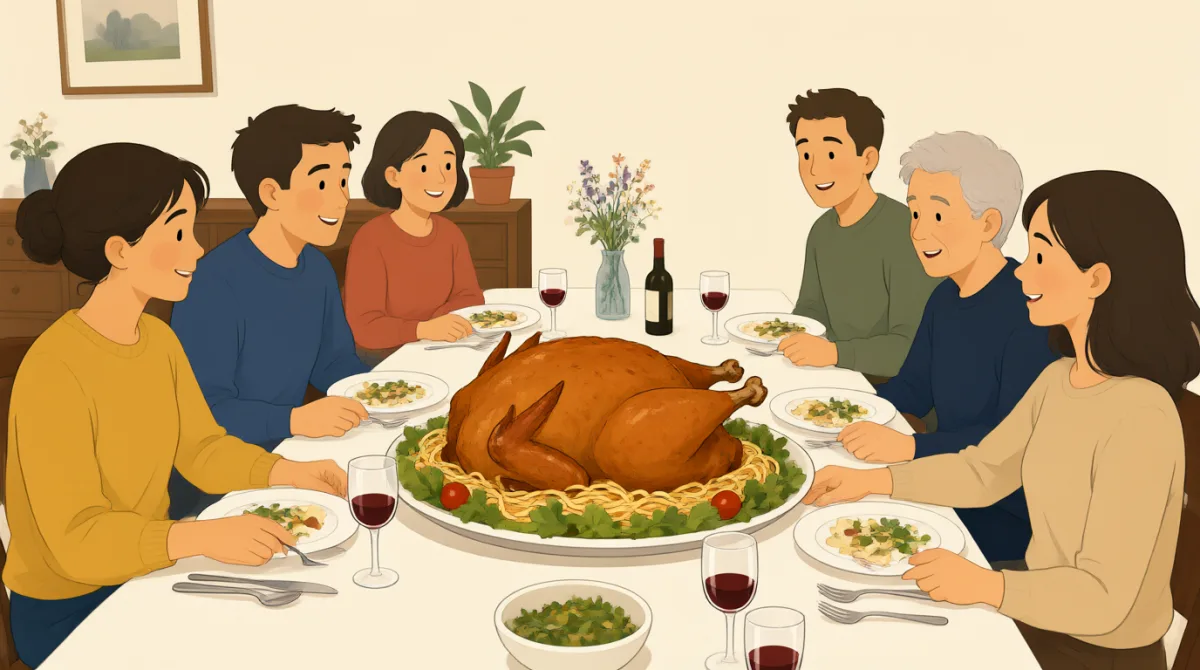

Excuse me, David, could you please pass the roasted chicken? It looks delicious!
ขอโทษนะ เดวิด ช่วยส่งไก่อบมาให้หน่อยได้ไหม ดูน่าอร่อยจัง!

Certainly, Emma. Here you go. Be careful, it's a bit heavy.
ได้เลย เอ็มมา นี่จ้ะ ระวังนะ มันหนักนิดหน่อย
Thanks so much, David! I appreciate it.
ขอบคุณมากนะ เดวิด ซึ้งใจจริง ๆ
No problem at all. Do you need anything else?
ไม่เป็นไรเลย ต้องการอะไรอีกไหม?
Not right now, thanks. This is perfect.
ตอนนี้ยังไม่ต้อง ขอบคุณนะ แค่นี้ก็พอดีเลย
คำศัพท์6
- excuse meขอโทษนะ / ขอรบกวนหน่อย
A polite way to get someone's attention, especially when asking for something at the table. Use it to start a request without being rude.
คำสุภาพที่ใช้เรียกความสนใจของใครสักคน โดยเฉพาะเวลาขออะไรบางอย่างที่โต๊ะอาหาร ใช้ขึ้นต้นคำขอเพื่อไม่ให้ฟังดูเสียมารยาท
- passส่งต่อ
To hand something from one person to another, like passing a dish at dinner. It's common in shared meals to say 'pass the salt' or 'pass the chicken'.
ส่งของจากคนหนึ่งไปให้อีกคนหนึ่ง เช่น ส่งจานอาหารที่โต๊ะ มื้ออาหารที่แบ่งกันกินมักพูดว่า 'pass the salt' หรือ 'pass the chicken' (ช่วยส่งเกลือหรือไก่มาให้หน่อย)
- deliciousอร่อย
Means something tastes very good. Use it to compliment food, like 'This cake is delicious!' to show appreciation.
หมายถึงอาหารมีรสชาติดีมาก ใช้ชมอาหารได้ เช่น 'This cake is delicious!' (เค้กนี้อร่อยมาก!) เพื่อแสดงว่าชอบอาหารนั้น
- certainlyได้เลย / แน่นอน
A polite way to say 'yes' or 'of course' when agreeing to help. It's formal and shows willingness, like responding to a request.
คำสุภาพที่ใช้ตอบตกลงหรือบอกว่าแน่นอนเมื่อตกลงช่วยเหลือ ฟังดูเป็นทางการและแสดงความเต็มใจ เช่น ใช้ตอบรับคำขอ
- appreciateซาบซึ้ง / ขอบคุณ
To feel grateful for something someone does for you. Say 'I appreciate it' after receiving help to express thanks sincerely.
รู้สึกขอบคุณกับสิ่งที่ใครสักคนทำให้ พูดว่า 'I appreciate it' (ขอบคุณมากนะ) หลังได้รับความช่วยเหลือ เพื่อแสดงความขอบคุณอย่างจริงใจ
- no problemไม่เป็นไร
A casual way to say 'you're welcome' or 'it's okay'. Use it after helping someone to show it was easy and no trouble.
คำพูดสบาย ๆ ที่ใช้ตอบว่าไม่เป็นไรหรือยินดี ใช้หลังช่วยใครสักคนเพื่อบอกว่าไม่ได้ลำบากอะไร
ประโยคสำคัญ5
- 1
Excuse me, David, could you please pass the roasted chicken?
ขอโทษนะ เดวิด ช่วยส่งไก่อบมาให้หน่อยได้ไหม?
This is a polite request using 'could you please' for formality. It's useful for asking someone to pass food at a meal. The structure is: Excuse me + name + could you please + verb + object? Practice this to be courteous at dinner tables.
นี่คือการขอร้องอย่างสุภาพ โดยใช้ 'could you please' เพื่อให้ฟังสุภาพ เหมาะสำหรับขอให้ใครส่งอาหารให้ที่โต๊ะ โครงสร้างคือ Excuse me + ชื่อ + could you please + คำกริยา + สิ่งของ? ฝึกใช้เพื่อพูดจาสุภาพที่โต๊ะอาหาร
- 2
It looks delicious!
ดูน่าอร่อยจัง!
A simple compliment on food's appearance, implying it tastes good. Use it to show enthusiasm during meals. 'Looks' describes appearance, and 'delicious' adds positive feeling – great for starting conversations at the table.
เป็นคำชมรูปลักษณ์ของอาหารแบบง่าย ๆ และยังสื่อเป็นนัยว่ารสชาติน่าจะดี ใช้แสดงความตื่นเต้นระหว่างมื้ออาหาร 'Looks' ใช้บรรยายรูปลักษณ์ ส่วน 'delicious' เพิ่มความรู้สึกเชิงบวก เหมาะสำหรับเริ่มบทสนทนาที่โต๊ะอาหาร
- 3
Certainly, Emma. Here you go.
ได้เลย เอ็มมา นี่จ้ะ
Responds positively to a request with 'certainly' for agreement, and 'here you go' means handing over the item. Useful when helping others; it's polite and efficient. Grammar note: 'Here you go' is an idiomatic expression for giving something.
ตอบรับคำขอในแง่บวกด้วย 'certainly' เพื่อบอกว่าตกลง ส่วน 'here you go' หมายถึงยื่นของให้ เหมาะเวลาช่วยเหลือคนอื่น เป็นคำพูดสุภาพและกระชับ ข้อสังเกตทางไวยากรณ์: 'Here you go' เป็นสำนวนที่ใช้ตอนยื่นของให้ใคร
- 4
Thanks so much, David! I appreciate it.
ขอบคุณมากนะ เดวิด! ซึ้งใจจริง ๆ
Expresses strong gratitude after receiving help. 'Thanks so much' is emphatic thanks, and 'I appreciate it' adds sincerity. Use this pattern after favors to build good manners. It's common in Western table etiquette.
ใช้แสดงความขอบคุณอย่างมากหลังได้รับความช่วยเหลือ 'Thanks so much' เป็นคำขอบคุณที่เน้นย้ำ ส่วน 'I appreciate it' ช่วยเพิ่มความจริงใจ ใช้รูปแบบนี้หลังมีคนช่วยเหลือเพื่อแสดงมารยาทที่ดี เป็นคำพูดที่พบได้บ่อยตามมารยาทการกินอาหารแบบตะวันตก
- 5
No problem at all. Do you need anything else?
ไม่เป็นไรเลย ต้องการอะไรอีกไหม?
Dismisses thanks casually and offers more help. 'No problem at all' means it's easy, and the question shows thoughtfulness. Useful for continuing polite interactions at meals; practice offering assistance to others.
ตอบรับคำขอบคุณแบบสบาย ๆ พร้อมเสนอความช่วยเหลือเพิ่มเติม 'No problem at all' หมายความว่าไม่ลำบากเลย ส่วนคำถามก็แสดงความใส่ใจ เหมาะสำหรับพูดคุยอย่างสุภาพต่อระหว่างมื้ออาหาร ลองฝึกเสนอความช่วยเหลือให้คนอื่นดูนะ