Passing a Shared Dish (Main Course)
साझा मुख्य पकवान आगे बढ़ाना
A shared main course dish, such as a large platter of pasta or a roasted chicken, needs to be passed to someone further down the table.
पास्ता की बड़ी प्लेट या भुना हुआ चिकन जैसे साझा मुख्य पकवान को मेज़ पर आगे बैठे किसी व्यक्ति तक पहुँचाना होता है।
संवाद5
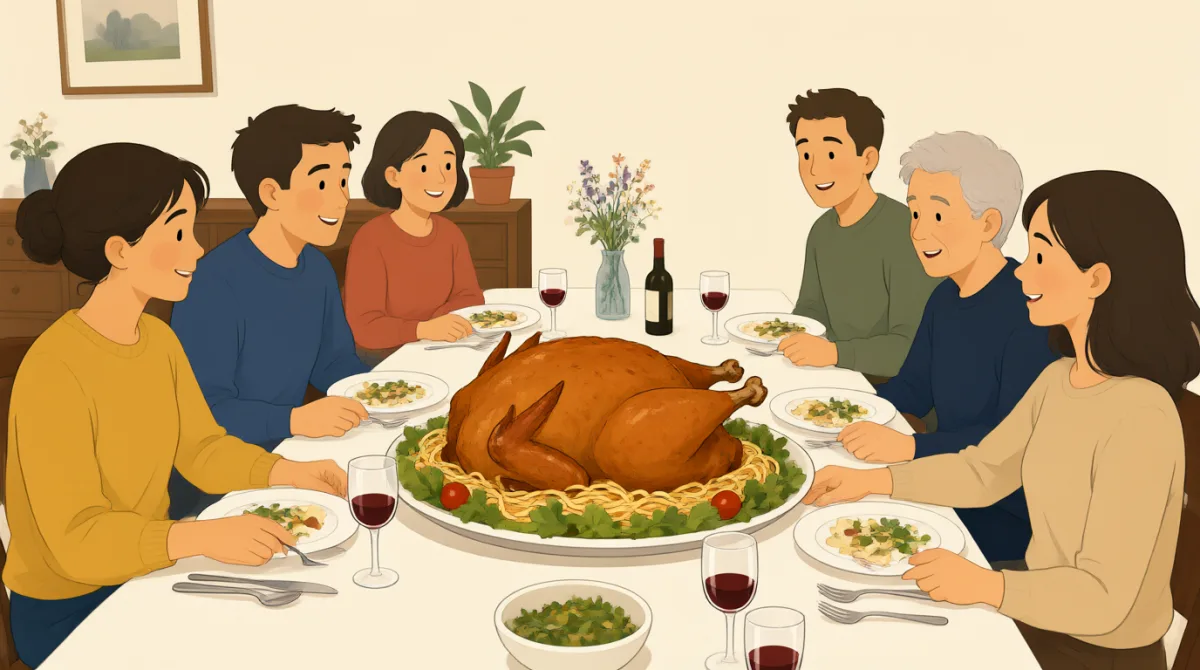

Excuse me, David, could you please pass the roasted chicken? It looks delicious!
सुनिए, डेविड, क्या आप भुना हुआ चिकन आगे बढ़ा देंगे? यह बहुत लज़ीज़ लग रहा है!

Certainly, Emma. Here you go. Be careful, it's a bit heavy.
ज़रूर, एमा। लीजिए। ध्यान से, यह थोड़ा भारी है।
Thanks so much, David! I appreciate it.
बहुत-बहुत शुक्रिया, डेविड! मैं सचमुच आभारी हूँ।
No problem at all. Do you need anything else?
कोई बात नहीं। क्या आपको और कुछ चाहिए?
Not right now, thanks. This is perfect.
अभी नहीं, शुक्रिया। यह बिल्कुल ठीक है।
शब्दावली6
- excuse meसुनिए
A polite way to get someone's attention, especially when asking for something at the table. Use it to start a request without being rude.
किसी का ध्यान विनम्रता से खींचने का तरीका, खासकर मेज़ पर कुछ माँगते समय। बिना रूखे लगे अनुरोध शुरू करने के लिए इसका इस्तेमाल करें।
- passआगे बढ़ाना; पास करना
To hand something from one person to another, like passing a dish at dinner. It's common in shared meals to say 'pass the salt' or 'pass the chicken'.
किसी चीज़ को एक व्यक्ति से दूसरे व्यक्ति को देना, जैसे खाने की मेज़ पर कोई पकवान आगे बढ़ाना। साथ बैठकर खाने के दौरान आम तौर पर 'pass the salt' या 'pass the chicken' कहा जाता है।
- deliciousलज़ीज़
Means something tastes very good. Use it to compliment food, like 'This cake is delicious!' to show appreciation.
इसका मतलब है कि किसी चीज़ का स्वाद बहुत अच्छा है। खाने की तारीफ़ करने के लिए इसका इस्तेमाल करें, जैसे 'This cake is delicious!' कहकर अपनी पसंद ज़ाहिर करना।
- certainlyज़रूर
A polite way to say 'yes' or 'of course' when agreeing to help. It's formal and shows willingness, like responding to a request.
मदद के लिए सहमति जताते हुए 'हाँ' या 'बिलकुल' कहने का विनम्र तरीका। यह औपचारिक है और अनुरोध का जवाब देते समय मदद करने की तत्परता दिखाता है।
- appreciateआभारी होना; कद्र करना
To feel grateful for something someone does for you. Say 'I appreciate it' after receiving help to express thanks sincerely.
किसी के आपके लिए कुछ करने पर कृतज्ञ महसूस करना। मदद मिलने के बाद दिल से शुक्रिया अदा करने के लिए 'I appreciate it' कहें।
- no problemकोई बात नहीं
A casual way to say 'you're welcome' or 'it's okay'. Use it after helping someone to show it was easy and no trouble.
'आपका स्वागत है' या 'कोई दिक्कत नहीं' कहने का अनौपचारिक तरीका। किसी की मदद करने के बाद यह जताने के लिए कहें कि मदद करना आसान था और कोई परेशानी नहीं हुई।
मुख्य वाक्य5
- 1
Excuse me, David, could you please pass the roasted chicken?
सुनिए, डेविड, क्या आप भुना हुआ चिकन आगे बढ़ा देंगे?
This is a polite request using 'could you please' for formality. It's useful for asking someone to pass food at a meal. The structure is: Excuse me + name + could you please + verb + object? Practice this to be courteous at dinner tables.
यह 'could you please' का इस्तेमाल करके किया गया एक विनम्र अनुरोध है। खाने की मेज़ पर किसी से पकवान आगे बढ़ाने के लिए कहने में यह उपयोगी है। इसका ढाँचा है: Excuse me + नाम + could you please + क्रिया + वस्तु? खाने की मेज़ पर शिष्टता से बात करने के लिए इसका अभ्यास करें।
- 2
It looks delicious!
यह बहुत लज़ीज़ लग रहा है!
A simple compliment on food's appearance, implying it tastes good. Use it to show enthusiasm during meals. 'Looks' describes appearance, and 'delicious' adds positive feeling – great for starting conversations at the table.
यह खाने की शक्ल-सूरत की एक आसान तारीफ़ है, जिससे यह भी संकेत मिलता है कि उसका स्वाद अच्छा होगा। खाने के दौरान अपना उत्साह दिखाने के लिए कहें। 'Looks' किसी चीज़ का दिखना बताता है और 'delicious' तारीफ़ का भाव जोड़ता है—यह मेज़ पर बातचीत शुरू करने का बढ़िया तरीका है।
- 3
Certainly, Emma. Here you go.
ज़रूर, एमा। लीजिए।
Responds positively to a request with 'certainly' for agreement, and 'here you go' means handing over the item. Useful when helping others; it's polite and efficient. Grammar note: 'Here you go' is an idiomatic expression for giving something.
'Certainly' से अनुरोध पर सहमति जताई जाती है और 'here you go' का मतलब है कि कोई चीज़ देते हुए उसे सामने वाले को थमाया जा रहा है। दूसरों की मदद करते समय यह विनम्र और आसान जवाब है। व्याकरण की बात: 'Here you go' किसी को चीज़ देते समय बोला जाने वाला मुहावरेदार वाक्यांश है।
- 4
Thanks so much, David! I appreciate it.
बहुत-बहुत शुक्रिया, डेविड! मैं सचमुच आभारी हूँ।
Expresses strong gratitude after receiving help. 'Thanks so much' is emphatic thanks, and 'I appreciate it' adds sincerity. Use this pattern after favors to build good manners. It's common in Western table etiquette.
मदद मिलने के बाद दिल से आभार जताने का तरीका। 'Thanks so much' ज़ोर देकर शुक्रिया कहता है और 'I appreciate it' बात को और सच्चा बनाता है। किसी की मदद के बाद अच्छे शिष्टाचार दिखाने के लिए इस ढाँचे का इस्तेमाल करें। पश्चिमी खान-पान के तौर-तरीकों में यह आम है।
- 5
No problem at all. Do you need anything else?
कोई बात नहीं। क्या आपको और कुछ चाहिए?
Dismisses thanks casually and offers more help. 'No problem at all' means it's easy, and the question shows thoughtfulness. Useful for continuing polite interactions at meals; practice offering assistance to others.
यह सहज ढंग से शुक्रिया स्वीकार करता है और आगे मदद की पेशकश भी करता है। 'No problem at all' का मतलब है कि मदद करना आसान था, और सवाल से परवाह ज़ाहिर होती है। खाने के दौरान विनम्र बातचीत जारी रखने के लिए यह उपयोगी है; दूसरों को मदद की पेशकश करने का अभ्यास करें।