Specifying a Specific Amount of Gas
ระบุจำนวนเงินค่าน้ำมันที่ต้องการ
The driver tells the attendant the exact monetary amount of gas they wish to purchase, for example, '$30 of regular'.
คนขับแจ้งพนักงานว่าต้องการซื้อน้ำมันเป็นเงินเท่าไร เช่น “น้ำมันธรรมดา 30 ดอลลาร์”
บทสนทนา7
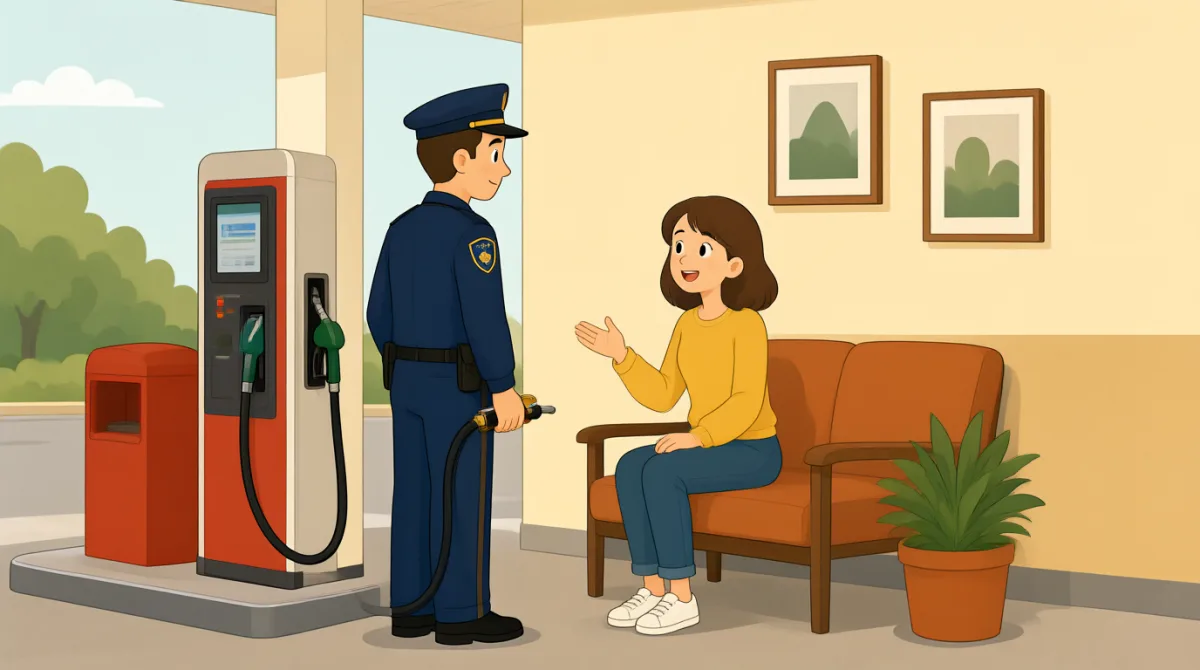

Hi there. Could I get $30 of regular, please?
สวัสดีครับ ขอเติมน้ำมันธรรมดา 30 ดอลลาร์ครับ

No problem! Which pump are you at?
ได้เลยค่ะ รถอยู่ที่หัวจ่ายหมายเลขอะไรคะ
I'm at pump number 4.
ผมอยู่ที่หัวจ่ายหมายเลข 4 ครับ
Alright, 30 dollars of regular on pump 4. Will that be cash or card?
ได้ค่ะ น้ำมันธรรมดา 30 ดอลลาร์ ที่หัวจ่ายหมายเลข 4 จะจ่ายเงินสดหรือบัตรคะ
Card, please.
บัตรครับ
You can go ahead and pump it now. The card reader is right there at the pump.
เติมได้เลยครับ เครื่องอ่านบัตรอยู่ตรงหัวจ่ายนั่นครับ
Great, thanks!
เยี่ยมเลย ขอบคุณครับ
คำศัพท์5
- regularน้ำมันธรรมดา
Refers to the standard type of unleaded gasoline, which is the most common and cheapest option at gas stations in the US.
หมายถึงน้ำมันเบนซินไร้สารตะกั่วเกรดมาตรฐาน ซึ่งเป็นตัวเลือกที่พบได้บ่อยและราคาถูกที่สุดตามสถานีบริการน้ำมันในสหรัฐฯ
- pumpหัวจ่ายน้ำมัน
A device at a gas station where you insert the nozzle to fill your car with fuel; often numbered for identification.
อุปกรณ์ที่สถานีบริการน้ำมันซึ่งใช้เติมน้ำมันให้รถ โดยมักมีหมายเลขกำกับไว้เพื่อให้ระบุตำแหน่งได้
- cashเงินสด
Physical money, like bills and coins, used as a payment method at stores or gas stations.
เงินที่เป็นธนบัตรหรือเหรียญ ใช้ชำระเงินตามร้านค้าหรือสถานีบริการน้ำมัน
- cardบัตร
Short for credit or debit card, a plastic payment method swiped or inserted to pay without using cash.
คำเรียกสั้น ๆ ของบัตรเครดิตหรือบัตรเดบิต ซึ่งเป็นวิธีชำระเงินด้วยบัตรพลาสติกโดยรูดหรือเสียบบัตรแทนการใช้เงินสด
- card readerเครื่องอ่านบัตร
A small electronic device at the pump where you insert or swipe your card to pay for gas directly.
อุปกรณ์อิเล็กทรอนิกส์ขนาดเล็กที่หัวจ่ายน้ำมัน ใช้เสียบหรือรูดบัตรเพื่อจ่ายค่าน้ำมันโดยตรง
ประโยคสำคัญ5
- 1
Could I get $30 of regular, please?
ขอเติมน้ำมันธรรมดา 30 ดอลลาร์ครับ
This is a polite request to buy a specific amount of gas by dollar value; use it when you want to pay a fixed amount instead of filling the tank. The structure 'Could I get [amount] of [type], please?' is common in service situations.
ประโยคนี้ใช้ขอซื้อน้ำมันอย่างสุภาพ โดยระบุจำนวนเงินที่ต้องการจ่าย เหมาะเมื่อคุณต้องการเติมเป็นเงินจำนวนหนึ่งแทนการเติมน้ำมันให้เต็มถัง โครงสร้าง 'Could I get [amount] of [type], please?' ใช้กันทั่วไปเมื่อติดต่อขอรับบริการ
- 2
Which pump are you at?
คุณอยู่ที่หัวจ่ายหมายเลขอะไรคะ
A question to identify the customer's location at the station; useful for attendants to authorize the correct pump. 'Which [place] are you at?' is a simple way to ask for location in busy service settings.
ใช้ถามว่าลูกค้าอยู่ตรงจุดไหนในสถานีบริการ พนักงานจะได้เปิดใช้งานหัวจ่ายที่ถูกต้อง โครงสร้าง 'Which [place] are you at?' เป็นวิธีง่าย ๆ ในการถามตำแหน่งเมื่ออยู่ในสถานที่ให้บริการที่คนพลุกพล่าน
- 3
I'm at pump number 4.
ผมอยู่ที่หัวจ่ายหมายเลข 4 ครับ
States your position clearly; helpful in any scenario where you need to specify a numbered location, like at a parking lot or checkout. Use present continuous 'I'm at' for current location.
ใช้บอกตำแหน่งของคุณให้ชัดเจน มีประโยชน์ในสถานการณ์ที่ต้องระบุจุดที่มีหมายเลข เช่น ลานจอดรถหรือจุดชำระเงิน ใช้รูปปัจจุบันต่อเนื่อง 'I'm at' เพื่อบอกตำแหน่งในขณะนี้
- 4
Will that be cash or card?
จะจ่ายเงินสดหรือบัตรคะ
A standard question for payment method in retail; it's useful for service workers to confirm how to process payment. The structure 'Will that be [option1] or [option2]?' offers choices politely.
เป็นคำถามมาตรฐานในร้านค้าเพื่อถามวิธีชำระเงิน พนักงานใช้เพื่อยืนยันว่าจะรับชำระเงินแบบใด โครงสร้าง 'Will that be [option1] or [option2]?' ใช้เสนอทางเลือกอย่างสุภาพ
- 5
You can go ahead and pump it now.
เติมได้เลยครับ
Gives permission to start fueling after payment; 'go ahead and [verb]' means 'feel free to do it now,' which is encouraging and common in instructions. Useful when authorizing actions in services.
เป็นการอนุญาตให้เริ่มเติมน้ำมันหลังชำระเงินแล้ว 'go ahead and [verb]' หมายถึง “ทำได้เลยตอนนี้” ใช้พูดให้กำลังใจหรือบอกขั้นตอนกันทั่วไป เหมาะเมื่ออนุญาตให้ทำบางอย่างระหว่างรับบริการ