Asking for a Receipt
ขอใบเสร็จ
After the transaction is complete, the driver requests a receipt from the attendant.
หลังจากทำรายการเสร็จ คนขับขอใบเสร็จจากพนักงานเติมน้ำมัน
บทสนทนา6
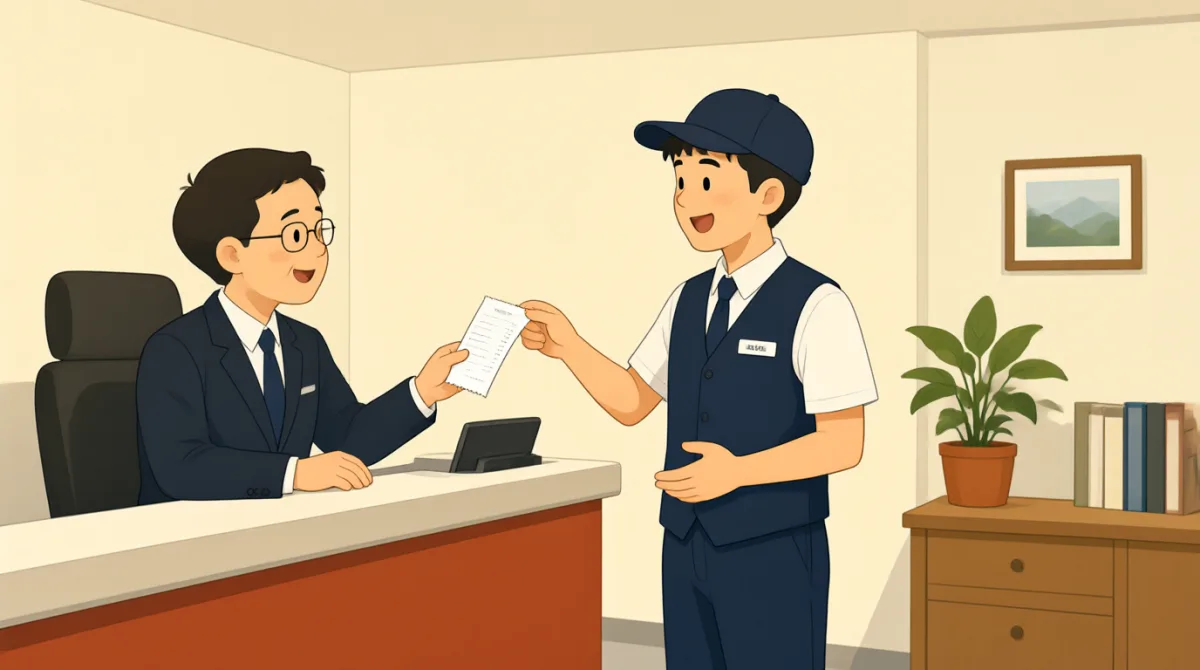

All set. Thanks!
เรียบร้อยแล้วครับ ขอบคุณครับ!

You're welcome. Would you like your receipt inside, or do you need one right now?
ยินดีค่ะ จะรับใบเสร็จข้างใน หรือรับตอนนี้เลยคะ?
Oh, actually, could I get a receipt now, please?
อ๋อ จริงสิ ขอรับใบเสร็จตอนนี้ได้ไหมครับ?
Sure, no problem. Here you go.
ได้ค่ะ ไม่มีปัญหา นี่ค่ะ
Thanks a lot!
ขอบคุณมากครับ!
Have a good day!
ขอให้เป็นวันที่ดีนะคะ!
คำศัพท์7
- receiptใบเสร็จ
A receipt is a piece of paper that shows what you bought and how much you paid. It's useful for keeping records or returns.
ใบเสร็จคือกระดาษที่แสดงว่าคุณซื้ออะไรและจ่ายเงินไปเท่าไร มีประโยชน์สำหรับเก็บไว้เป็นหลักฐานหรือใช้คืนสินค้า
- all setเรียบร้อยแล้ว
All set means everything is ready or finished. Use it when something is complete, like after filling gas.
"All set" หมายถึงทุกอย่างพร้อมหรือเสร็จเรียบร้อยแล้ว ใช้พูดเมื่อทำอะไรเสร็จ เช่น หลังเติมน้ำมัน
- you're welcomeยินดี
You're welcome is a polite response to 'thank you.' It shows you are happy to help.
"You're welcome" เป็นคำตอบสุภาพเมื่อมีคนพูดว่า 'thank you' เพื่อบอกว่าคุณยินดีช่วย
- actuallyจริง ๆ แล้ว
Actually is used to correct or add information gently. It softens a change in what you were going to say.
"Actually" ใช้เพื่อแก้ไขหรือเพิ่มเติมข้อมูลอย่างนุ่มนวล ช่วยให้การเปลี่ยนสิ่งที่กำลังจะพูดฟังดูไม่ห้วน
- sureได้เลย
Sure means yes or okay in a casual way. It's a friendly agreement to a request.
"Sure" หมายถึงตกลงหรือได้เลย เป็นการตอบรับคำขออย่างเป็นกันเองและเป็นมิตร
- no problemไม่มีปัญหา
No problem means it's easy or not difficult. Use it to reassure someone that their request is fine.
"No problem" หมายถึงทำได้ง่าย ๆ หรือไม่ลำบาก ใช้เพื่อให้อีกฝ่ายสบายใจว่าคำขอของเขาไม่เป็นปัญหา
- here you goนี่ค่ะ/ครับ
Here you go is a casual way to hand something over, like giving an item to someone.
"Here you go" เป็นวิธีพูดอย่างเป็นกันเองขณะยื่นของให้ใครสักคน
ประโยคสำคัญ6
- 1
All set. Thanks!
เรียบร้อยแล้วครับ ขอบคุณครับ!
This short sentence means the task is done, and you're expressing thanks. It's useful at the end of a service like filling gas. The period after 'set' makes it two simple statements joined casually.
ประโยคสั้น ๆ นี้หมายความว่าทำธุระเสร็จแล้ว และกำลังกล่าวขอบคุณ เหมาะที่จะใช้เมื่อรับบริการเสร็จ เช่น เติมน้ำมันเสร็จ จุดหลังคำว่า 'set' ทำให้ประโยคนี้เป็นข้อความสั้น ๆ สองประโยคที่เชื่อมกันอย่างเป็นกันเอง
- 2
You're welcome. Would you like your receipt inside, or do you need one right now?
ยินดีค่ะ จะรับใบเสร็จข้างใน หรือรับตอนนี้เลยคะ?
This is a polite response to thanks, followed by an offer with choices using 'or.' It's useful for customer service to give options. The question helps clarify the customer's needs.
ประโยคนี้เป็นคำตอบสุภาพหลังได้รับคำขอบคุณ ตามด้วยการเสนอทางเลือกโดยใช้ 'or' เหมาะกับงานบริการลูกค้าเพื่อให้ลูกค้าเลือก และคำถามนี้ช่วยให้ทราบว่าลูกค้าต้องการแบบไหน
- 3
Oh, actually, could I get a receipt now, please?
อ๋อ จริงสิ ขอรับใบเสร็จตอนนี้ได้ไหมครับ?
This politely requests something with 'could I' for a soft ask, and 'please' adds courtesy. 'Actually' corrects or adjusts the request. Use it when changing your mind in a conversation.
ประโยคนี้เป็นการขออย่างสุภาพ โดยใช้ 'could I' เพื่อให้คำขอฟังดูนุ่มนวล และใช้ 'please' เพื่อเพิ่มความสุภาพ ส่วน 'Actually' ใช้แก้ไขหรือปรับคำขอ ลองใช้เมื่อเปลี่ยนใจระหว่างการสนทนา
- 4
Sure, no problem. Here you go.
ได้ค่ะ ไม่มีปัญหา นี่ค่ะ
This agrees to a request casually and hands over the item. 'Sure' and 'no problem' show easy agreement. It's practical for quick service interactions, using short phrases for efficiency.
ประโยคนี้เป็นการตอบรับคำขออย่างเป็นกันเองพร้อมยื่นของให้ 'Sure' และ 'no problem' แสดงว่าตกลงอย่างไม่ติดขัด เหมาะกับการพูดคุยสั้น ๆ ในงานบริการ เพราะใช้วลีสั้น ๆ ได้รวดเร็ว
- 5
Thanks a lot!
ขอบคุณมากครับ!
This is a strong way to say thank you, more emphatic than just 'thanks.' Use it to show extra appreciation after help. It's informal and common in everyday English.
นี่เป็นวิธีพูดขอบคุณที่หนักแน่นและเน้นย้ำกว่าแค่พูดว่า 'thanks' ใช้เพื่อแสดงความซาบซึ้งเป็นพิเศษหลังจากได้รับความช่วยเหลือ เป็นสำนวนไม่เป็นทางการที่ใช้กันทั่วไปในชีวิตประจำวัน
- 6
Have a good day!
ขอให้เป็นวันที่ดีนะคะ!
This is a friendly goodbye wishing well. It's a common closing in service situations. Use it to end conversations positively; the imperative 'have' suggests a command for good wishes.
ประโยคนี้เป็นคำอำลาอย่างเป็นมิตรที่อวยพรให้อีกฝ่ายพบเจอแต่สิ่งดี ๆ มักใช้ปิดท้ายบทสนทนาในสถานการณ์รับบริการ ใช้เพื่อจบการสนทนาในแง่ดี โดยคำสั่ง 'have' ในที่นี้เป็นการอวยพรให้อีกฝ่ายมีวันที่ดี