Going Through Security Check
ผ่านจุดตรวจความปลอดภัย
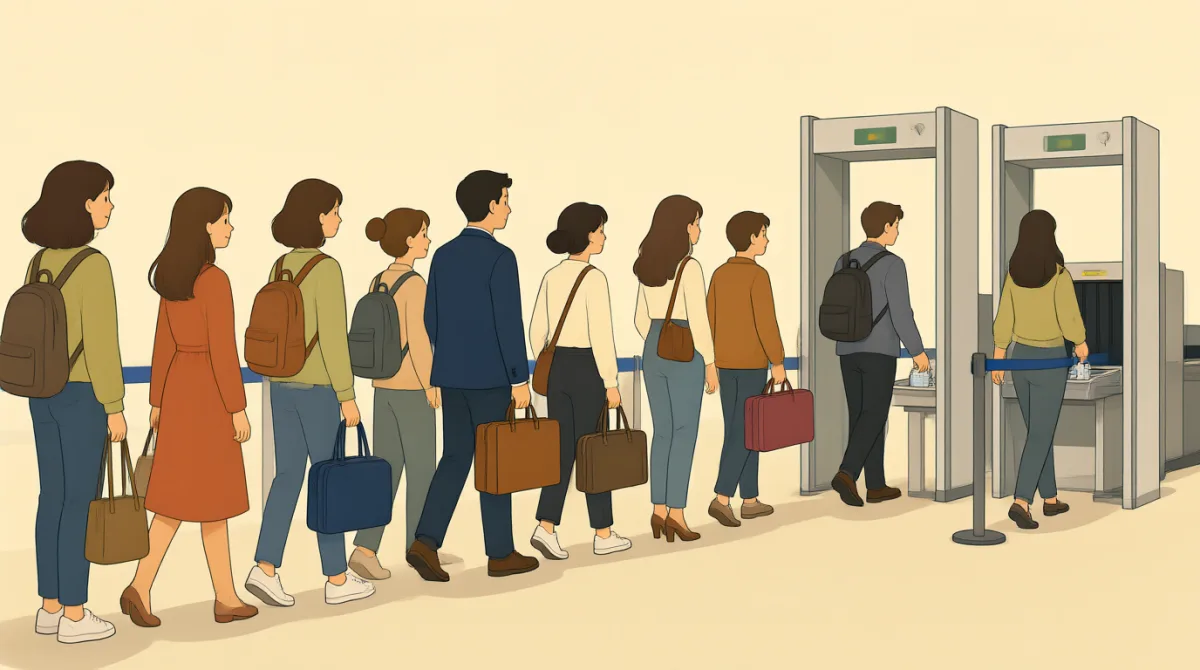
Passengers line up for the security check, placing carry-on items, electronics, and liquids in trays for X-ray screening and walking through metal detectors or body scanners.
ผู้โดยสารเข้าแถวรอตรวจความปลอดภัย โดยวางสัมภาระถือขึ้นเครื่อง อุปกรณ์อิเล็กทรอนิกส์ และของเหลวลงในถาดเพื่อผ่านเครื่องเอ็กซเรย์ แล้วเดินผ่านเครื่องตรวจจับโลหะหรือเครื่องสแกนร่างกาย
บทสนทนา8

Next passenger, please. Do you have any liquids or electronics in your carry-on?
ผู้โดยสารคนต่อไปครับ มีของเหลวหรืออุปกรณ์อิเล็กทรอนิกส์ในสัมภาระถือขึ้นเครื่องไหมครับ

Yes, I have a laptop and a small bottle of hand sanitizer. Should I take them out?
มีค่ะ ฉันมีแล็ปท็อปกับเจลล้างมือขวดเล็ก ต้องเอาออกมาไหมคะ
Yes, please take out your laptop and place it in a separate tray. The hand sanitizer needs to go into a clear, resealable bag along with any other liquids, and it has to be 100ml or less.
ครับ กรุณานำแล็ปท็อปออกมาแล้ววางไว้ในถาดแยกต่างหาก ส่วนเจลล้างมือให้ใส่รวมกับของเหลวอื่น ๆ ในถุงใสที่ปิดเปิดได้ และต้องมีปริมาณไม่เกิน 100 มล. ครับ
Okay, got it. What about my shoes? Do I need to take them off?
เข้าใจแล้วค่ะ แล้วรองเท้าล่ะคะ ต้องถอดไหม
For this lane, yes, please remove your shoes and place them in a tray as well. Empty your pockets into a tray too.
สำหรับช่องตรวจนี้ ต้องถอดรองเท้าครับ แล้ววางไว้ในถาดด้วย กรุณาเทของในกระเป๋าเสื้อหรือกางเกงใส่ถาดด้วยนะครับ
Alright, shoes off, pockets emptied. Anything else?
ได้ค่ะ ถอดรองเท้าแล้ว แล้วก็เอาของออกจากกระเป๋าหมดแล้ว มีอะไรอีกไหมคะ
No, that should be everything. Once you've placed all your items in the trays, you can proceed through the body scanner.
ไม่มีแล้วครับ น่าจะครบหมดแล้ว พอวางของทั้งหมดลงในถาดแล้ว ก็เดินผ่านเครื่องสแกนร่างกายได้เลยครับ
Thanks for your help!
ขอบคุณที่ช่วยนะคะ
คำศัพท์8
- carry-onสัมภาระถือขึ้นเครื่อง
A carry-on is a small bag or luggage you take with you onto the airplane, not checked into the cargo hold. Use it when talking about airport bags.
"carry-on" คือกระเป๋าเดินทางใบเล็กที่นำติดตัวขึ้นเครื่องบิน ไม่ได้โหลดลงใต้ท้องเครื่อง ใช้คำนี้เมื่อพูดถึงกระเป๋าที่นำขึ้นเครื่อง
- liquidsของเหลว
Liquids are things like water, lotion, or sanitizer that are in liquid form. At security, remember the 100ml rule for carry-ons.
"liquids" หมายถึงของที่มีสถานะเป็นของเหลว เช่น น้ำ โลชั่น หรือเจลล้างมือ เวลาผ่านจุดตรวจ อย่าลืมว่าของเหลวในสัมภาระถือขึ้นเครื่องต้องเป็นไปตามกฎปริมาณไม่เกิน 100 มล.
- electronicsอุปกรณ์อิเล็กทรอนิกส์
Electronics are devices like phones, laptops, or chargers that use electricity. You often need to remove them at airport security for screening.
"electronics" คืออุปกรณ์ที่ใช้ไฟฟ้า เช่น โทรศัพท์ แล็ปท็อป หรือที่ชาร์จ ที่จุดตรวจสนามบินมักต้องนำอุปกรณ์เหล่านี้ออกมาตรวจ
- laptopแล็ปท็อป
A laptop is a portable computer you can carry around. It's common to take it out separately during security checks.
"laptop" คือคอมพิวเตอร์แบบพกพาที่นำติดตัวไปไหนมาไหนได้ โดยทั่วไปต้องนำออกมาตรวจแยกต่างหากเมื่อตรวจความปลอดภัย
- hand sanitizerเจลล้างมือ
Hand sanitizer is a liquid gel used to clean your hands without water. In small amounts, it's allowed in carry-ons but must follow liquid rules.
"hand sanitizer" คือเจลเหลวที่ใช้ทำความสะอาดมือโดยไม่ต้องใช้น้ำ พกขึ้นเครื่องได้ในปริมาณเล็กน้อย แต่ต้องทำตามกฎเกี่ยวกับของเหลว
- trayถาด
A tray is a flat container used at security to hold your items for X-ray scanning. Place belongings like shoes or electronics in it.
"tray" คือภาชนะก้นแบนที่ใช้วางสิ่งของเพื่อผ่านเครื่องเอ็กซเรย์ตรงจุดตรวจ ให้วางของใช้ เช่น รองเท้าและอุปกรณ์อิเล็กทรอนิกส์ลงในถาด
- resealable bagถุงปิดเปิดได้
A resealable bag is a plastic bag with a zipper that can be closed and opened multiple times. Use a clear one for liquids at airport security.
"resealable bag" คือถุงพลาสติกที่มีซิป เปิดและปิดซ้ำได้หลายครั้ง ที่จุดตรวจสนามบินควรใช้ถุงใสสำหรับใส่ของเหลว
- body scannerเครื่องสแกนร่างกาย
A body scanner is a machine at security that checks for hidden items on your body using waves, not metal. You walk through it after trays are scanned.
"body scanner" คือเครื่องตรวจที่จุดรักษาความปลอดภัย ใช้คลื่นตรวจหาสิ่งของที่ซ่อนอยู่บนร่างกายโดยไม่ใช้โลหะ หลังจากถาดผ่านการตรวจแล้ว คุณจะเดินผ่านเครื่องนี้
ประโยคสำคัญ7
- 1
Do you have any liquids or electronics in your carry-on?
มีของเหลวหรืออุปกรณ์อิเล็กทรอนิกส์ในสัมภาระถือขึ้นเครื่องไหมครับ
This is a polite question from security to check for restricted items. It's useful for asking about contents in bags. Notice the use of 'any' for questions about existence.
นี่เป็นคำถามสุภาพที่เจ้าหน้าที่รักษาความปลอดภัยใช้ตรวจสอบว่ามีสิ่งของต้องห้ามหรือไม่ ใช้ถามเกี่ยวกับสิ่งของในกระเป๋าได้ สังเกตว่าใช้ 'any' ในคำถามเกี่ยวกับการมีสิ่งใดอยู่หรือไม่
- 2
Should I take them out?
ฉันต้องเอาออกมาไหมคะ
This asks for permission or confirmation on an action. 'Should I' is a common way to seek advice or instructions, helpful in situations needing guidance like at airports.
ประโยคนี้ใช้ถามว่าควรทำสิ่งนั้นหรือไม่ หรือเพื่อขอคำยืนยัน 'Should I' เป็นสำนวนที่ใช้ถามคำแนะนำหรือวิธีปฏิบัติได้บ่อย เหมาะกับสถานการณ์ที่ต้องการคำแนะนำ เช่น ที่สนามบิน
- 3
Yes, please take out your laptop and place it in a separate tray.
ครับ กรุณานำแล็ปท็อปออกมาแล้ววางไว้ในถาดแยกต่างหาก
This gives instructions politely with 'please.' It's useful for following security rules. The imperative 'take out' and 'place' shows command forms in polite requests.
ประโยคนี้เป็นการบอกขั้นตอนอย่างสุภาพด้วยคำว่า 'please' เหมาะสำหรับการทำตามกฎความปลอดภัย คำสั่ง 'take out' และ 'place' ใช้บอกให้ทำสิ่งต่าง ๆ อย่างสุภาพ
- 4
What about my shoes? Do I need to take them off?
แล้วรองเท้าล่ะคะ ต้องถอดไหม
This inquires about additional requirements. 'What about' introduces a new topic, and 'Do I need to' asks if something is necessary, common in procedural conversations.
ประโยคนี้ใช้ถามว่ามีข้อกำหนดเพิ่มเติมหรือไม่ 'What about' ใช้เริ่มพูดถึงเรื่องใหม่ ส่วน 'Do I need to' ใช้ถามว่าจำเป็นต้องทำสิ่งใดหรือไม่ มักใช้ในบทสนทนาเกี่ยวกับขั้นตอนต่าง ๆ
- 5
For this lane, yes, please remove your shoes and place them in a tray as well.
สำหรับช่องตรวจนี้ ต้องถอดรองเท้าครับ แล้ววางไว้ในถาดด้วย
This specifies conditions ('for this lane') and gives steps. 'As well' means 'also,' useful for adding items. Imperatives like 'remove' and 'place' guide actions clearly.
ประโยคนี้ระบุเงื่อนไข ('for this lane') และบอกขั้นตอน 'As well' หมายถึง 'ด้วย' หรือ 'เช่นกัน' ใช้เพิ่มสิ่งที่ต้องทำอีกอย่าง คำสั่งอย่าง 'remove' และ 'place' ช่วยบอกขั้นตอนให้ชัดเจน
- 6
Empty your pockets into a tray too.
เทของในกระเป๋าใส่ถาดด้วยนะครับ
This is a direct instruction to remove items from pockets. 'Empty into' means to put contents out into something. 'Too' adds this to previous actions, practical for quick compliance.
นี่คือคำสั่งให้นำสิ่งของออกจากกระเป๋า 'Empty into' หมายถึงนำของข้างในออกมาใส่ในสิ่งอื่น ส่วน 'too' ใช้เพิ่มขั้นตอนนี้จากสิ่งที่บอกไปก่อนหน้า ทำให้ทำตามได้อย่างรวดเร็ว
- 7
No, that should be everything. Once you've placed all your items in the trays, you can proceed through the body scanner.
ไม่มีแล้วครับ น่าจะครบหมดแล้ว พอวางของทั้งหมดลงในถาดแล้ว ก็เดินผ่านเครื่องสแกนร่างกายได้เลยครับ
This confirms completion and gives next steps. 'Should be' expresses expectation, and 'once you've' uses a time clause for sequence. Useful for wrapping up procedures.
ประโยคนี้ยืนยันว่าทำครบแล้วและบอกขั้นตอนถัดไป 'Should be' ใช้บอกสิ่งที่คาดว่าน่าจะเป็นเช่นนั้น ส่วน 'once you've' ใช้เชื่อมช่วงเวลาของขั้นตอนต่าง ๆ เหมาะสำหรับสรุปขั้นตอนให้เสร็จสิ้น