Finding the Bike Gone
发现自行车不见了
Leo returns to the bike rack and finds his bike is gone. He calls his friend Emma and tells her what happened.
Leo 回到自行车架旁,发现自己的自行车不见了。他打电话给朋友 Emma,告诉她发生了什么事。
对话8
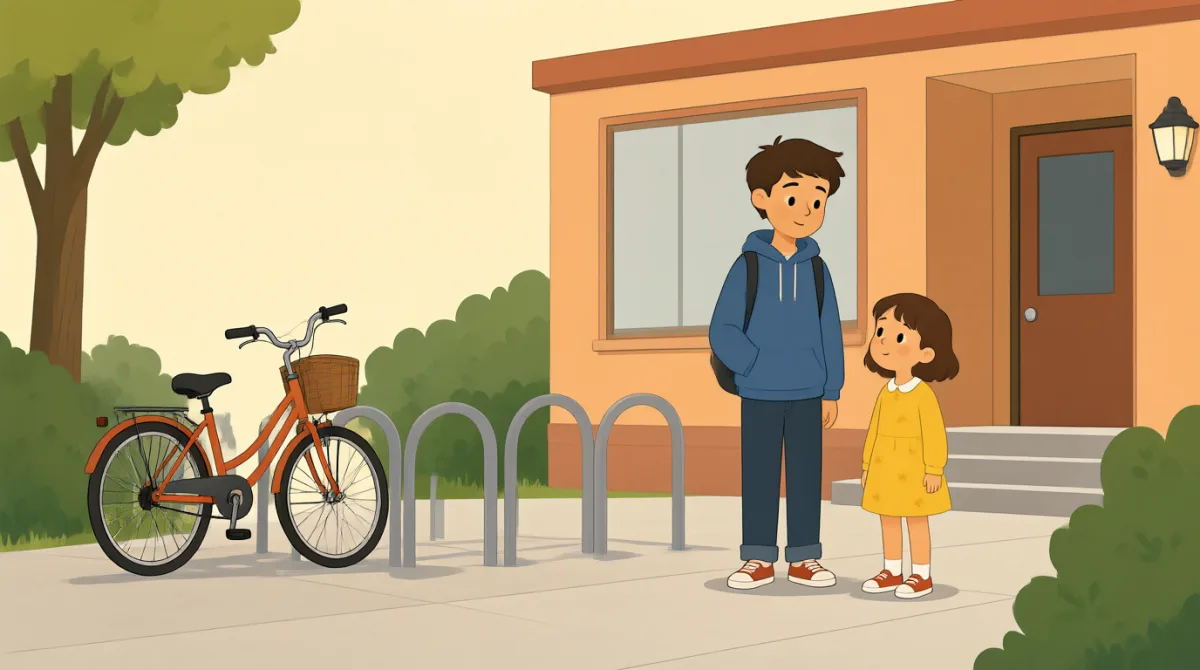

Emma, are you free? I just got back to the bike rack.
Emma,你有空吗?我刚回到自行车架这里。

Sure. What's up? Are you still at the station?
有空。怎么了?你还在车站吗?
Yes, but my bike is gone. I left it here this morning.
是的,但我的自行车不见了。我今天早上把它停在这里了。
Oh no! Did you lock it before you went inside?
糟了!你进去之前锁车了吗?
Yes, I locked it to the rack. The lock is gone too.
锁了,我把车锁在车架上。车锁也不见了。
I'm sorry, Leo. Did you look around the whole rack?
真替你难过,Leo。你把整个车架附近都找过了吗?
I did. I checked both sides, but I can't find it.
找过了。我两边都看了,但还是没找到。
Let's meet there. We can ask people nearby if they saw it.
我们在那儿碰面吧。可以问问附近的人有没有看到它。
词汇6
- What's up?怎么了?
This is a casual way to ask what is happening or why someone is calling. You can use it to start a conversation with a friend.
这是询问发生了什么事,或者对方为什么打电话的一种随意说法。你可以用它来和朋友开启对话。
- gone不见了
Here, “gone” means the bike is no longer where Leo left it. You can say something is gone when it has disappeared or is missing.
这里的 “gone” 指自行车已经不在利奥停放它的地方了。东西消失了或找不到时,可以说它 “gone”。
- left it here把它停在这里了
This means Leo put his bike here and went away. Use “left it” to say where you put something before leaving.
意思是利奥把自行车停在这里后就离开了。你可以用 “left it” 来说明离开前把某样东西放在哪里。
- look around四处找找
This means to search by checking different places nearby. You can use it when you are trying to find something.
意思是在附近不同的地方找一找。你在寻找东西时可以用这个说法。
- checked both sides检查了两边
This means Leo looked at the two sides of the rack. Use “check” to say you looked carefully at a place or thing.
意思是利奥查看了车架的两边。用 “check” 可以表示仔细查看某个地方或物品。
- nearby附近
This means close to the place where you are. You can ask people nearby for help or information.
意思是离你所在的地方很近。你可以向附近的人寻求帮助或打听消息。
重点句子7
- 1
I just got back to the bike rack.
我刚回到自行车架这里。
This tells someone you have returned to a place. Use “I just got back to…” to say you returned a short time ago.
这句话告诉对方你已经回到某个地方。用 “I just got back to…” 来表示你刚刚回来。
- 2
I left it here this morning.
我今天早上把它停在这里了。
This explains where and when Leo last had his bike. You can use “I left it…” to say where you put something.
这句话说明利奥最后一次把自行车停在哪里、是什么时候。你可以用 “I left it…” 来说明把某样东西放在哪里。
- 3
Did you lock it before you went inside?
你进去之前锁车了吗?
This is a simple way to ask whether someone secured something before doing another action. You can change “lock it” to another action, such as “close the door.”
这是询问对方在做另一件事之前有没有把某样东西锁好。你可以把 “lock it” 换成其他动作,比如 “close the door”。
- 4
I locked it to the rack.
我把车锁在车架上了。
This explains how Leo secured his bike. Use “I locked it to…” to describe attaching something with a lock.
这句话说明利奥是怎么把自行车锁好的。你可以用 “I locked it to…” 来描述用锁把某样东西固定在某处。
- 5
Did you look around the whole rack?
你把整个车架附近都找过了吗?
This asks whether someone searched all of a specific area. You can use “Did you look around…?” when helping someone find something.
这是在问对方有没有找遍某个特定区域。帮别人找东西时,可以用 “Did you look around…?”。
- 6
I checked both sides, but I can't find it.
我两边都看了,但还是没找到。
This says what Leo searched and explains that the bike is still missing. Use “I checked…, but I can’t find it” when you have looked for something without success.
这句话说明利奥找过哪些地方,并表示自行车仍然不见了。没找到东西时,可以用 “I checked…, but I can’t find it”。
- 7
We can ask people nearby if they saw it.
我们可以问问附近的人有没有看到它。
This suggests a practical next step and asks whether nearby people noticed the bike. Use “We can ask…” to suggest doing something together.
这句话提出了一个实际的下一步做法,并询问附近的人有没有注意到那辆自行车。你可以用 “We can ask…” 来建议一起做某件事。