Finding the Bike Gone
बाइक गायब मिली
Leo returns to the bike rack and finds his bike is gone. He calls his friend Emma and tells her what happened.
लियो बाइक स्टैंड पर लौटता है और देखता है कि उसकी बाइक गायब है। वह अपनी दोस्त एमा को फोन करके बताता है कि क्या हुआ।
संवाद8
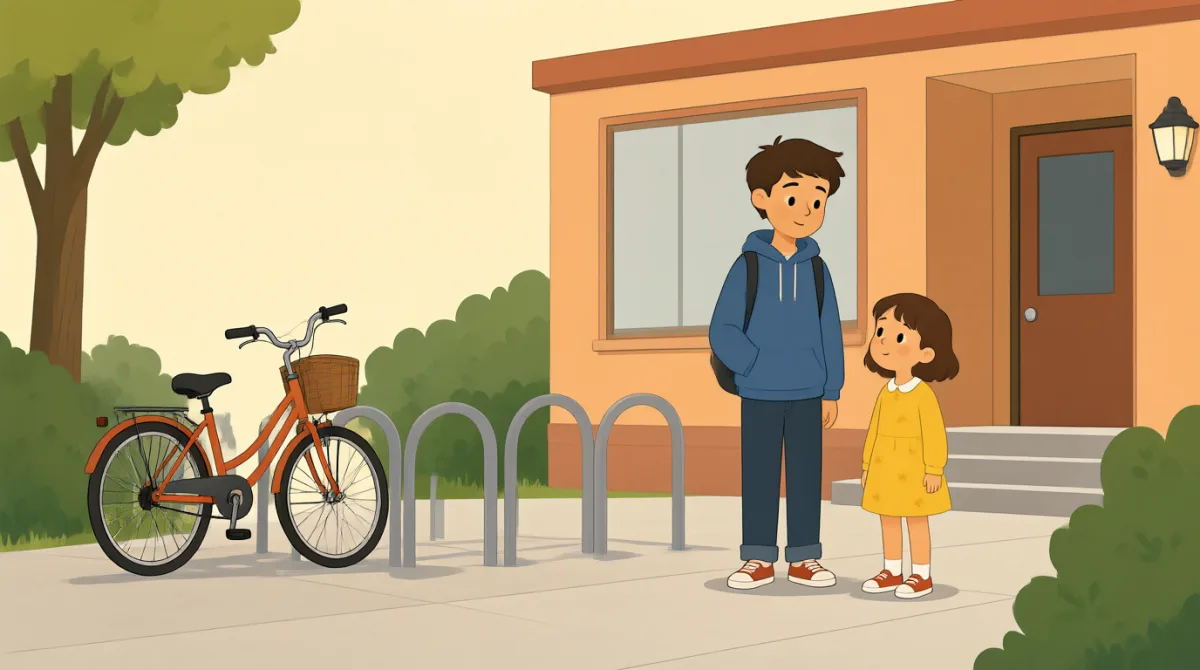

Emma, are you free? I just got back to the bike rack.
एमा, क्या तुम अभी फ्री हो? मैं अभी-अभी बाइक स्टैंड पर लौटा हूँ।

Sure. What's up? Are you still at the station?
हाँ, बोलो? क्या तुम अभी भी स्टेशन पर हो?
Yes, but my bike is gone. I left it here this morning.
हाँ, लेकिन मेरी बाइक गायब है। मैंने इसे आज सुबह यहीं छोड़ा था।
Oh no! Did you lock it before you went inside?
अरे नहीं! अंदर जाने से पहले तुमने इसे लॉक किया था?
Yes, I locked it to the rack. The lock is gone too.
हाँ, मैंने इसे स्टैंड से लॉक किया था। ताला भी गायब है।
I'm sorry, Leo. Did you look around the whole rack?
मुझे अफ़सोस है, लियो। क्या तुमने पूरे स्टैंड के आसपास ढूँढ़ा?
I did. I checked both sides, but I can't find it.
हाँ। मैंने दोनों तरफ़ देखा, लेकिन मुझे यह नहीं मिल रही।
Let's meet there. We can ask people nearby if they saw it.
चलो, वहीं मिलते हैं। हम आस-पास के लोगों से पूछ सकते हैं कि क्या उन्होंने इसे देखा था।
शब्दावली6
- What's up?क्या हुआ? / बोलो?
This is a casual way to ask what is happening or why someone is calling. You can use it to start a conversation with a friend.
“What's up?” किसी से यह पूछने का अनौपचारिक तरीका है कि क्या चल रहा है या उसने फोन क्यों किया। दोस्त से बातचीत शुरू करने के लिए तुम इसका इस्तेमाल कर सकते हो।
- goneगायब
Here, “gone” means the bike is no longer where Leo left it. You can say something is gone when it has disappeared or is missing.
यहाँ “gone” का मतलब है कि बाइक अब उस जगह पर नहीं है जहाँ लियो ने उसे छोड़ा था। जब कोई चीज़ दिखाई न दे या मिल न रही हो, तो तुम कह सकते हो कि वह गायब है।
- left it hereइसे यहीं छोड़ा
This means Leo put his bike here and went away. Use “left it” to say where you put something before leaving.
इसका मतलब है कि लियो ने अपनी बाइक यहाँ रखी और फिर वहाँ से चला गया। कहीं जाने से पहले तुमने कोई चीज़ कहाँ रखी थी, यह बताने के लिए “left it” कहो।
- look aroundआस-पास ढूँढ़ना
This means to search by checking different places nearby. You can use it when you are trying to find something.
इसका मतलब है आसपास की अलग-अलग जगहों पर देखकर तलाश करना। किसी चीज़ को खोजते समय तुम इसका इस्तेमाल कर सकते हो।
- checked both sidesदोनों तरफ़ देखा
This means Leo looked at the two sides of the rack. Use “check” to say you looked carefully at a place or thing.
इसका मतलब है कि लियो ने स्टैंड की दोनों तरफ़ देखा। किसी जगह या चीज़ को ध्यान से देखने के लिए “check” का इस्तेमाल करो।
- nearbyआस-पास
This means close to the place where you are. You can ask people nearby for help or information.
इसका मतलब है उस जगह के पास जहाँ तुम हो। मदद या जानकारी माँगने के लिए तुम आस-पास के लोगों से पूछ सकते हो।
मुख्य वाक्य7
- 1
I just got back to the bike rack.
मैं अभी-अभी बाइक स्टैंड पर लौटा हूँ।
This tells someone you have returned to a place. Use “I just got back to…” to say you returned a short time ago.
इस वाक्य से तुम किसी को बताते हो कि तुम किसी जगह पर लौट आए हो। कुछ ही देर पहले लौटने की बात कहने के लिए “I just got back to…” का इस्तेमाल करो।
- 2
I left it here this morning.
मैंने इसे आज सुबह यहीं छोड़ा था।
This explains where and when Leo last had his bike. You can use “I left it…” to say where you put something.
इससे पता चलता है कि लियो ने अपनी बाइक आख़िरी बार कहाँ और कब देखी थी। तुमने कोई चीज़ कहाँ रखी थी, यह बताने के लिए “I left it…” कह सकते हो।
- 3
Did you lock it before you went inside?
अंदर जाने से पहले तुमने इसे लॉक किया था?
This is a simple way to ask whether someone secured something before doing another action. You can change “lock it” to another action, such as “close the door.”
यह पूछने का आसान तरीका है कि किसी ने दूसरा काम करने से पहले किसी चीज़ को सुरक्षित किया था या नहीं। “lock it” की जगह कोई दूसरी कार्रवाई, जैसे “close the door.”, रख सकते हो।
- 4
I locked it to the rack.
मैंने इसे स्टैंड से लॉक किया था।
This explains how Leo secured his bike. Use “I locked it to…” to describe attaching something with a lock.
इससे पता चलता है कि लियो ने अपनी बाइक को कैसे सुरक्षित किया। किसी चीज़ को ताले से बाँधने की बात बताने के लिए “I locked it to…” का इस्तेमाल करो।
- 5
Did you look around the whole rack?
क्या तुमने पूरे स्टैंड के आसपास ढूँढ़ा?
This asks whether someone searched all of a specific area. You can use “Did you look around…?” when helping someone find something.
यह पूछा जा रहा है कि क्या किसी ने किसी ख़ास जगह के हर हिस्से में तलाश की। किसी को कुछ ढूँढ़ने में मदद करते समय “Did you look around…?” का इस्तेमाल कर सकते हो।
- 6
I checked both sides, but I can't find it.
मैंने दोनों तरफ़ देखा, लेकिन मुझे यह नहीं मिल रही।
This says what Leo searched and explains that the bike is still missing. Use “I checked…, but I can’t find it” when you have looked for something without success.
इससे पता चलता है कि लियो ने कहाँ तलाश की और बाइक अब भी नहीं मिली है। किसी चीज़ को ढूँढ़ने की कोशिश नाकाम रहने पर “I checked…, but I can’t find it” का इस्तेमाल करो।
- 7
We can ask people nearby if they saw it.
हम आस-पास के लोगों से पूछ सकते हैं कि क्या उन्होंने इसे देखा था।
This suggests a practical next step and asks whether nearby people noticed the bike. Use “We can ask…” to suggest doing something together.
यह अगला व्यावहारिक कदम सुझाता है और पूछता है कि क्या आस-पास के लोगों ने बाइक पर ध्यान दिया था। साथ मिलकर कुछ करने का सुझाव देने के लिए “We can ask…” का इस्तेमाल करो।