Finding the Bike Gone
자전거가 사라진 걸 발견하다
Leo returns to the bike rack and finds his bike is gone. He calls his friend Emma and tells her what happened.
레오는 자전거 거치대로 돌아와 자전거가 사라진 것을 발견해요. 친구 에마에게 전화해 무슨 일이 있었는지 말해요.
대화8
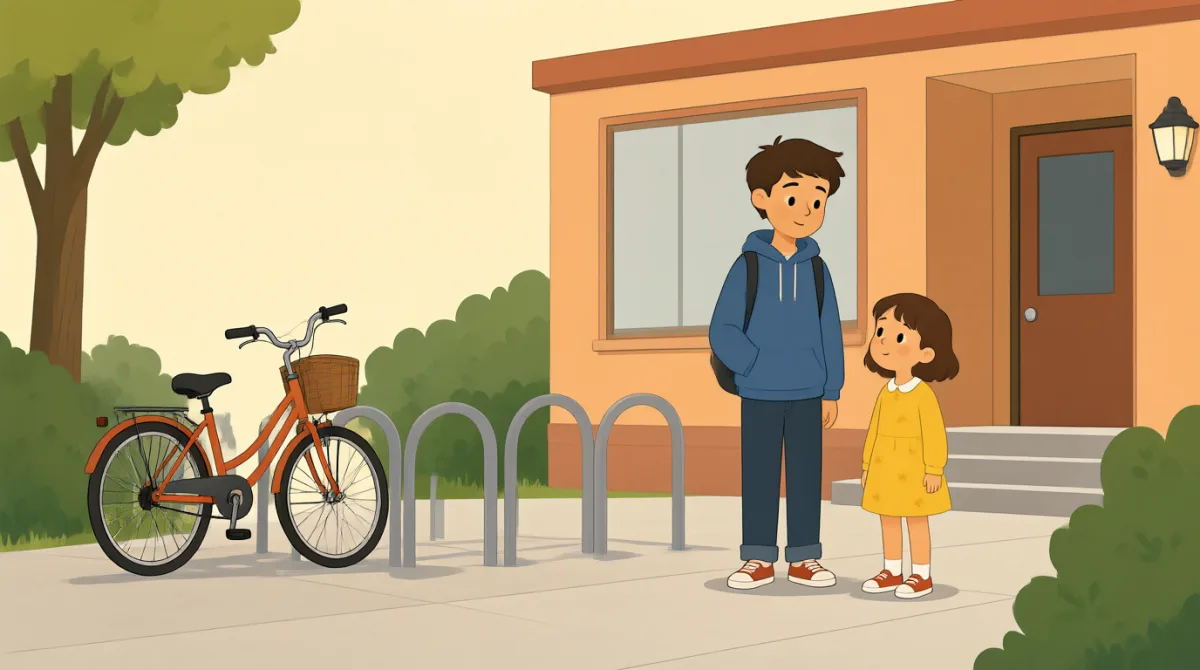

Emma, are you free? I just got back to the bike rack.
에마, 지금 시간 돼? 방금 자전거 거치대에 돌아왔어.

Sure. What's up? Are you still at the station?
응, 무슨 일이야? 아직 역에 있어?
Yes, but my bike is gone. I left it here this morning.
응, 그런데 내 자전거가 없어졌어. 오늘 아침에 여기 두고 갔는데.
Oh no! Did you lock it before you went inside?
어떡해! 안으로 들어가기 전에 자전거 잠갔어?
Yes, I locked it to the rack. The lock is gone too.
응, 거치대에 묶어 놨어. 자물쇠도 없어졌어.
I'm sorry, Leo. Did you look around the whole rack?
안됐다, 레오. 거치대 주변을 다 살펴봤어?
I did. I checked both sides, but I can't find it.
응. 양쪽 다 확인해 봤는데 못 찾겠어.
Let's meet there. We can ask people nearby if they saw it.
거기서 만나자. 근처 사람들한테 자전거를 봤는지 물어볼 수 있어.
어휘6
- What's up?무슨 일이야?
This is a casual way to ask what is happening or why someone is calling. You can use it to start a conversation with a friend.
“What's up?”은 무슨 일인지, 또는 왜 전화했는지 편하게 물어보는 표현이에요. 친구와 대화를 시작할 때 쓸 수 있어요.
- gone사라진, 없어져 버린
Here, “gone” means the bike is no longer where Leo left it. You can say something is gone when it has disappeared or is missing.
여기서 “gone”은 자전거가 레오가 두고 간 자리에 더 이상 없다는 뜻이에요. 무언가가 사라졌거나 없어졌을 때 쓸 수 있어요.
- left it here여기에 두고 갔어
This means Leo put his bike here and went away. Use “left it” to say where you put something before leaving.
레오가 자전거를 여기에 두고 자리를 떠났다는 뜻이에요. 떠나기 전에 무언가를 어디에 두었는지 말할 때 “left it”을 쓸 수 있어요.
- look around주변을 둘러보다
This means to search by checking different places nearby. You can use it when you are trying to find something.
근처의 여러 곳을 살펴보며 찾는다는 뜻이에요. 무언가를 찾고 있을 때 쓸 수 있어요.
- checked both sides양쪽을 다 확인했어
This means Leo looked at the two sides of the rack. Use “check” to say you looked carefully at a place or thing.
레오가 거치대의 양쪽을 살펴봤다는 뜻이에요. 어떤 장소나 물건을 꼼꼼히 살펴봤다고 할 때 “check”를 쓸 수 있어요.
- nearby근처에
This means close to the place where you are. You can ask people nearby for help or information.
지금 있는 곳에서 가까운 곳이라는 뜻이에요. 근처에 있는 사람들에게 도움이나 정보를 부탁할 수 있어요.
핵심 문장7
- 1
I just got back to the bike rack.
방금 자전거 거치대에 돌아왔어.
This tells someone you have returned to a place. Use “I just got back to…” to say you returned a short time ago.
어떤 장소에 돌아왔다고 말하는 문장이에요. 얼마 전에 돌아왔다는 뜻으로 “I just got back to…”라고 할 수 있어요.
- 2
I left it here this morning.
오늘 아침에 여기 두고 갔어.
This explains where and when Leo last had his bike. You can use “I left it…” to say where you put something.
레오가 자전거를 마지막으로 어디에 두었는지, 또 언제 두었는지 설명하는 문장이에요. 무언가를 어디에 두었는지 말할 때 “I left it…”을 쓸 수 있어요.
- 3
Did you lock it before you went inside?
안으로 들어가기 전에 잠갔어?
This is a simple way to ask whether someone secured something before doing another action. You can change “lock it” to another action, such as “close the door.”
다른 행동을 하기 전에 무언가를 안전하게 잠갔는지 묻는 간단한 표현이에요. “lock it”을 “close the door”처럼 다른 행동으로 바꿔 쓸 수 있어요.
- 4
I locked it to the rack.
거치대에 묶어 놨어.
This explains how Leo secured his bike. Use “I locked it to…” to describe attaching something with a lock.
레오가 자전거를 어떻게 잠갔는지 설명하는 문장이에요. 자물쇠로 무언가를 묶어 두었다고 말할 때 “I locked it to…”를 쓸 수 있어요.
- 5
Did you look around the whole rack?
거치대 주변을 다 살펴봤어?
This asks whether someone searched all of a specific area. You can use “Did you look around…?” when helping someone find something.
특정한 구역을 전부 찾아봤는지 묻는 표현이에요. 누군가 물건을 찾고 있을 때 도와주며 “Did you look around…?”라고 물어볼 수 있어요.
- 6
I checked both sides, but I can't find it.
양쪽 다 확인해 봤는데 못 찾겠어.
This says what Leo searched and explains that the bike is still missing. Use “I checked…, but I can’t find it” when you have looked for something without success.
레오가 어디를 살펴봤는지 말하고, 자전거를 아직 못 찾았다고 설명하는 문장이에요. 무언가를 찾아봤지만 성공하지 못했을 때 “I checked…, but I can’t find it”을 쓸 수 있어요.
- 7
We can ask people nearby if they saw it.
근처 사람들한테 자전거를 봤는지 물어볼 수 있어.
This suggests a practical next step and asks whether nearby people noticed the bike. Use “We can ask…” to suggest doing something together.
다음에 해볼 만한 일을 제안하면서 근처 사람들이 자전거를 봤는지 물어보자는 말이에요. 함께 무언가 하자고 제안할 때 “We can ask…”를 쓸 수 있어요.