Building It at Home
Montando em Casa
After the sofa arrives, Emma and Mia unpack it and follow the instructions to put it together. They finish the job and enjoy their new living room.
Depois que o sofá chega, Emma e Mia tiram tudo da embalagem e seguem as instruções para montá-lo. Elas terminam o trabalho e aproveitam a nova sala de estar.
Diálogo8
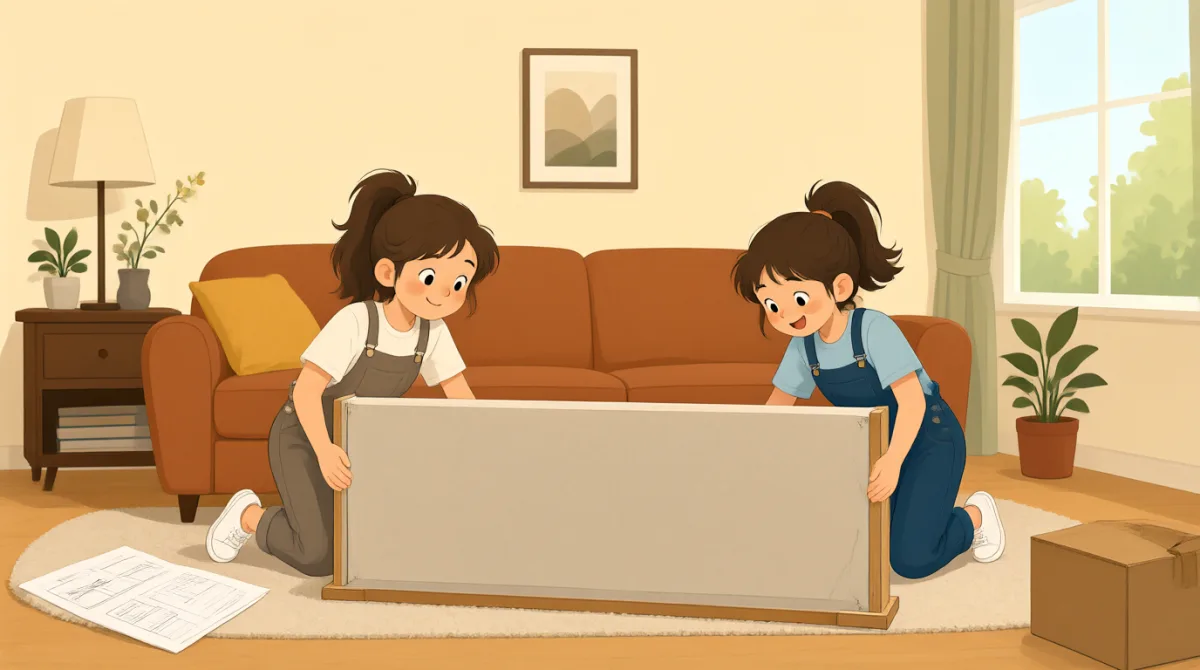

The sofa is here! Let’s open the boxes and check the instructions.
O sofá chegou! Vamos abrir as caixas e conferir as instruções.

Sure. I’ll take out the parts while you find the tools.
Claro. Vou tirar as peças enquanto você procura as ferramentas.
I found the screws and the little wrench. What should we do first?
Encontrei os parafusos e a chave pequena. O que a gente faz primeiro?
The instructions say to attach the legs to the bottom of the sofa.
As instruções dizem para prender os pés na parte de baixo do sofá.
Can you hold this side? I’ll put the screws in.
Você pode segurar este lado? Vou colocar os parafusos.
Of course. Turn the wrench slowly so the screws go in straight.
Claro. Gire a chave devagar para os parafusos entrarem retos.
All four legs are on. Let’s turn the sofa over carefully.
Os quatro pés já estão colocados. Vamos virar o sofá com cuidado.
It looks great! Now we can sit down and enjoy your new living room.
Ficou ótimo! Agora podemos sentar e aproveitar sua sala de estar nova.
Vocabulário7
- open the boxesabrir as caixas
To remove the things inside a box. Use this phrase when you unpack something you bought.
É tirar de dentro de uma caixa as coisas que estão lá. Use essa expressão quando for desempacotar algo que comprou.
- take outtirar
To remove something from a container or box. You can say, “I’ll take out the parts.”
É remover algo de um recipiente ou de uma caixa. Você pode dizer: “I’ll take out the parts.” (Vou tirar as peças.)
- toolsferramentas
Things you use to do a job, such as a wrench or a screwdriver. Use this word when talking about fixing or building something.
São objetos usados para realizar um trabalho, como uma chave inglesa ou uma chave de fenda. Use essa palavra ao falar sobre consertar ou montar algo.
- screwsparafusos
Small metal fasteners that hold pieces together. They are often used to build furniture.
São peças pequenas de metal usadas para prender partes umas às outras. Elas são muito usadas para montar móveis.
- attach the legsprender os pés
To connect the legs to another part of the furniture. You can use “attach” when explaining how to put something together.
É encaixar ou fixar os pés em outra parte do móvel. Você pode usar “attach” para explicar como montar alguma coisa.
- hold this sidesegurar este lado
To keep one side in place while someone works on it. Use this phrase when you need help handling a large or heavy object.
É manter um lado no lugar enquanto alguém trabalha nele. Use essa expressão quando precisar de ajuda para manusear um objeto grande ou pesado.
- sit downsentar
To move into a sitting position. Use this common phrase when inviting someone to take a seat.
É passar para uma posição sentada. Essa expressão comum é usada para convidar alguém a se sentar.
Frases-chave8
- 1
Let’s open the boxes and check the instructions.
Vamos abrir as caixas e conferir as instruções.
This sentence suggests two tasks using “Let’s.” Use the same pattern to suggest doing something together, such as “Let’s unpack the dishes.”
Essa frase sugere duas tarefas usando “Let’s”. Use o mesmo padrão para sugerir que vocês façam algo juntos, como “Let’s unpack the dishes.” (Vamos tirar a louça da caixa.)
- 2
I’ll take out the parts while you find the tools.
Vou tirar as peças enquanto você procura as ferramentas.
This sentence divides two jobs using “while.” Use “I’ll … while you …” to explain what two people can do at the same time.
Essa frase divide duas tarefas usando “while”. Use “I’ll … while you …” para explicar o que duas pessoas podem fazer ao mesmo tempo.
- 3
What should we do first?
O que a gente faz primeiro?
This is a useful way to ask about the first step in a task. Use it when you need instructions or are unsure where to begin.
Essa é uma forma útil de perguntar qual é o primeiro passo de uma tarefa. Use-a quando precisar de instruções ou não souber por onde começar.
- 4
The instructions say to attach the legs to the bottom of the sofa.
As instruções dizem para prender os pés na parte de baixo do sofá.
This explains what the instructions tell you to do. Use “The instructions say to …” when describing a step in a guide.
Essa frase explica o que as instruções mandam fazer. Use “The instructions say to …” para descrever uma etapa de um guia.
- 5
Can you hold this side?
Você pode segurar este lado?
This is a simple, polite way to ask someone for help. You can replace “this side” with another thing they can hold or support.
Essa é uma forma simples e educada de pedir ajuda a alguém. Você pode substituir “this side” por outra coisa que a pessoa possa segurar ou apoiar.
- 6
Turn the wrench slowly so the screws go in straight.
Gire a chave devagar para os parafusos entrarem retos.
This sentence gives an instruction and explains its purpose with “so.” Use this pattern to say how to do something and what result you want.
Essa frase dá uma instrução e explica o objetivo com “so”. Use esse padrão para dizer como fazer algo e qual resultado você quer.
- 7
Let’s turn the sofa over carefully.
Vamos virar o sofá com cuidado.
This suggests moving the sofa together and reminds everyone to be careful. Use “Let’s … carefully” for other shared tasks that need care.
Essa frase sugere que vocês movam o sofá juntos e lembra todo mundo de ter cuidado. Use “Let’s … carefully” para outras tarefas em conjunto que exigem cuidado.
- 8
Now we can sit down and enjoy your new living room.
Agora podemos sentar e aproveitar sua sala de estar nova.
This sentence shows that the job is finished and it is time to relax. Use “Now we can …” to talk about what you are able to do next.
Essa frase mostra que o trabalho terminou e que chegou a hora de relaxar. Use “Now we can …” para falar sobre o que vocês podem fazer em seguida.