Building It at Home
Montaż w domu
After the sofa arrives, Emma and Mia unpack it and follow the instructions to put it together. They finish the job and enjoy their new living room.
Gdy sofa dociera na miejsce, Emma i Mia rozpakowują ją i postępują zgodnie z instrukcją, żeby ją złożyć. Kończą pracę i cieszą się nowym salonem.
Dialog8
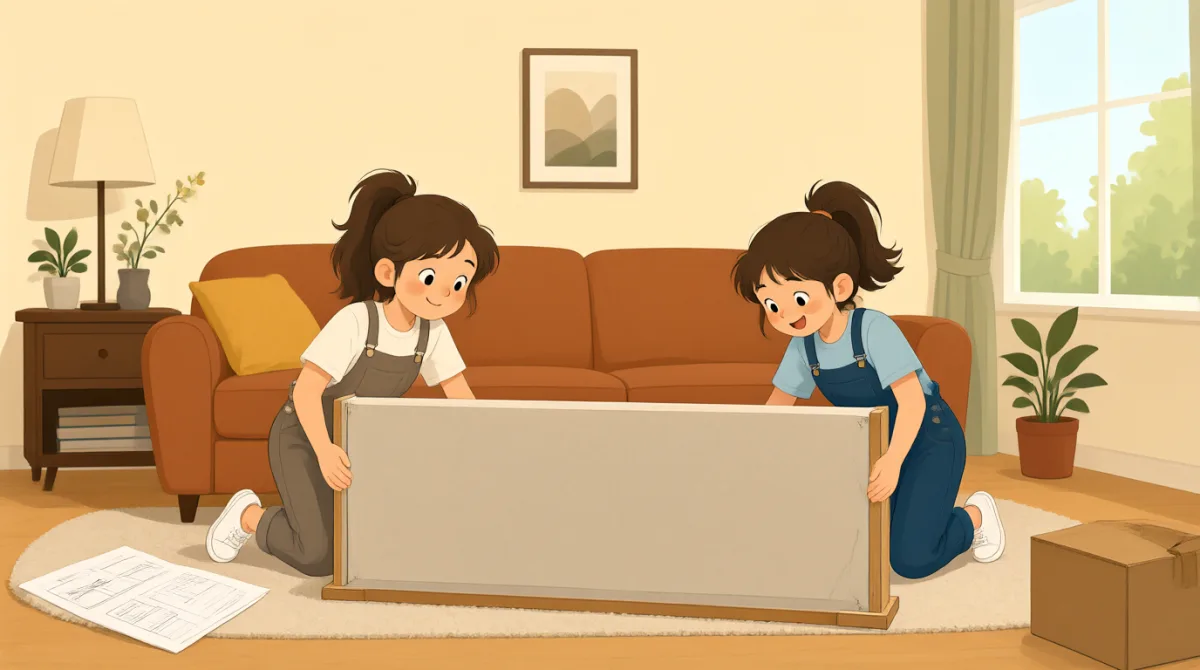

The sofa is here! Let’s open the boxes and check the instructions.
Sofa już jest! Otwórzmy pudła i sprawdźmy instrukcję.

Sure. I’ll take out the parts while you find the tools.
Jasne. Wyjmę części, a ty znajdź narzędzia.
I found the screws and the little wrench. What should we do first?
Znalazłam śruby i mały klucz. Co powinnyśmy zrobić najpierw?
The instructions say to attach the legs to the bottom of the sofa.
W instrukcji jest napisane, żeby przymocować nogi do spodu sofy.
Can you hold this side? I’ll put the screws in.
Możesz przytrzymać tę stronę? Włożę śruby.
Of course. Turn the wrench slowly so the screws go in straight.
Oczywiście. Powoli obracaj klucz, żeby śruby wchodziły prosto.
All four legs are on. Let’s turn the sofa over carefully.
Wszystkie cztery nogi są już przymocowane. Ostrożnie obróćmy sofę.
It looks great! Now we can sit down and enjoy your new living room.
Wygląda świetnie! Teraz możemy usiąść i cieszyć się twoim nowym salonem.
Słownictwo7
- open the boxesotworzyć pudła
To remove the things inside a box. Use this phrase when you unpack something you bought.
Wyjąć rzeczy znajdujące się w pudle. Tego wyrażenia używamy, gdy rozpakowujemy coś, co kupiliśmy.
- take outwyjąć
To remove something from a container or box. You can say, “I’ll take out the parts.”
Wyciągnąć coś z pojemnika lub pudła. Możesz powiedzieć: „Wyjmę części”.
- toolsnarzędzia
Things you use to do a job, such as a wrench or a screwdriver. Use this word when talking about fixing or building something.
Przedmioty, których używasz do wykonania jakiejś pracy, na przykład klucz lub śrubokręt. Tego słowa używamy, mówiąc o naprawianiu lub składaniu czegoś.
- screwsśruby
Small metal fasteners that hold pieces together. They are often used to build furniture.
Małe metalowe elementy złączne, które łączą ze sobą części. Często używa się ich do składania mebli.
- attach the legsprzymocować nogi
To connect the legs to another part of the furniture. You can use “attach” when explaining how to put something together.
Połączyć nogi z inną częścią mebla. Czasownika „attach” używamy, wyjaśniając, jak coś złożyć.
- hold this sideprzytrzymać tę stronę
To keep one side in place while someone works on it. Use this phrase when you need help handling a large or heavy object.
Przytrzymać coś z jednej strony, żeby się nie przesuwało, gdy ktoś przy tym pracuje. Tego wyrażenia używamy, gdy potrzebujemy pomocy przy przenoszeniu lub przytrzymywaniu dużego albo ciężkiego przedmiotu.
- sit downusiąść
To move into a sitting position. Use this common phrase when inviting someone to take a seat.
Przyjąć pozycję siedzącą. To powszechne wyrażenie, którym zachęcamy kogoś, żeby usiadł.
Kluczowe zdania8
- 1
Let’s open the boxes and check the instructions.
Otwórzmy pudła i sprawdźmy instrukcję.
This sentence suggests two tasks using “Let’s.” Use the same pattern to suggest doing something together, such as “Let’s unpack the dishes.”
To zdanie sugeruje wykonanie dwóch czynności za pomocą „Let’s”. Użyj tego samego wzoru, by zaproponować wspólne działanie, na przykład „Let’s unpack the dishes.”
- 2
I’ll take out the parts while you find the tools.
Wyjmę części, a ty znajdź narzędzia.
This sentence divides two jobs using “while.” Use “I’ll … while you …” to explain what two people can do at the same time.
To zdanie rozdziela dwie czynności za pomocą „while”. Użyj wzoru „I’ll … while you …”, by wyjaśnić, co dwie osoby mogą robić w tym samym czasie.
- 3
What should we do first?
Co powinnyśmy zrobić najpierw?
This is a useful way to ask about the first step in a task. Use it when you need instructions or are unsure where to begin.
To przydatny sposób, by zapytać o pierwszy krok w jakimś zadaniu. Użyj tego pytania, gdy potrzebujesz instrukcji albo nie wiesz, od czego zacząć.
- 4
The instructions say to attach the legs to the bottom of the sofa.
W instrukcji jest napisane, żeby przymocować nogi do spodu sofy.
This explains what the instructions tell you to do. Use “The instructions say to …” when describing a step in a guide.
To zdanie wyjaśnia, co każe zrobić instrukcja. Użyj „The instructions say to …”, gdy opisujesz krok podany w poradniku.
- 5
Can you hold this side?
Możesz przytrzymać tę stronę?
This is a simple, polite way to ask someone for help. You can replace “this side” with another thing they can hold or support.
To prosty, uprzejmy sposób, by poprosić kogoś o pomoc. Możesz zastąpić „this side” inną rzeczą, którą ta osoba może przytrzymać lub podeprzeć.
- 6
Turn the wrench slowly so the screws go in straight.
Powoli obracaj klucz, żeby śruby wchodziły prosto.
This sentence gives an instruction and explains its purpose with “so.” Use this pattern to say how to do something and what result you want.
To zdanie zawiera polecenie i wyjaśnia jego cel za pomocą „so”. Użyj tego wzoru, by powiedzieć, jak coś zrobić i jaki efekt chcesz osiągnąć.
- 7
Let’s turn the sofa over carefully.
Ostrożnie obróćmy sofę.
This suggests moving the sofa together and reminds everyone to be careful. Use “Let’s … carefully” for other shared tasks that need care.
To propozycja, by wspólnie przesunąć sofę, i przypomnienie, żeby zachować ostrożność. Użyj „Let’s … carefully” przy innych wspólnych zadaniach, które wymagają ostrożności.
- 8
Now we can sit down and enjoy your new living room.
Teraz możemy usiąść i cieszyć się twoim nowym salonem.
This sentence shows that the job is finished and it is time to relax. Use “Now we can …” to talk about what you are able to do next.
To zdanie pokazuje, że praca jest skończona i można odpocząć. Użyj „Now we can …”, by powiedzieć, co możecie zrobić dalej.