A Home Run!
Home run!
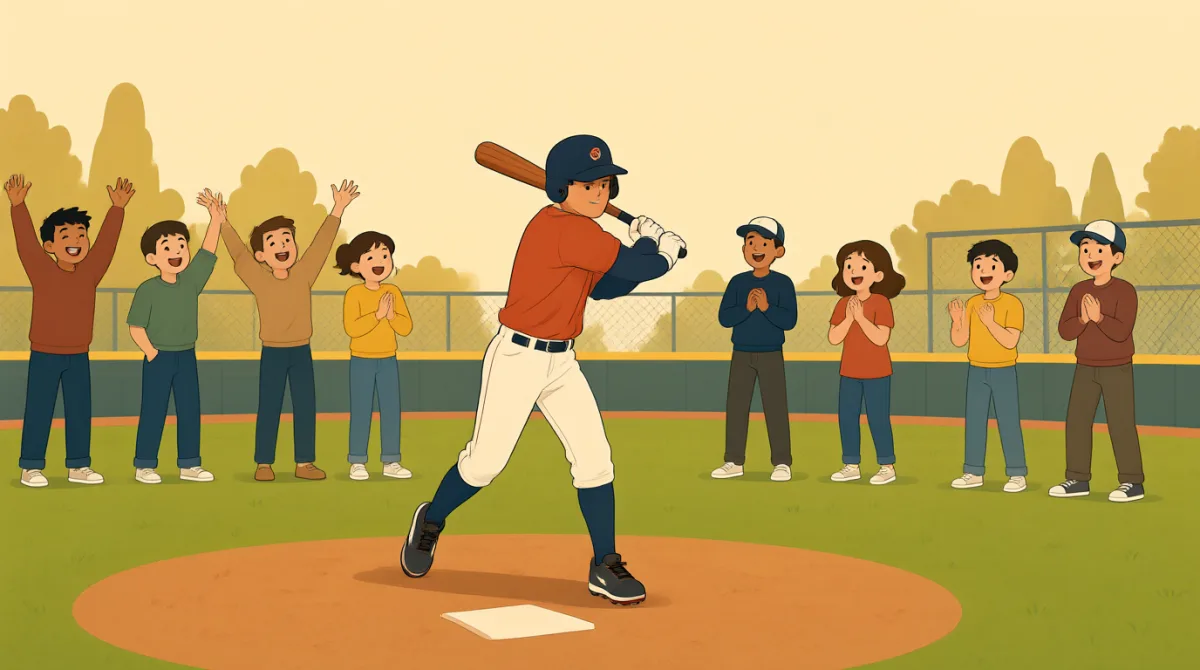
The batter hits a home run, and everyone cheers. The friends talk about the exciting play and enjoy the game.
Pałkarz wybija piłkę poza boisko, a wszyscy wiwatują. Przyjaciele rozmawiają o emocjonującej akcji i cieszą się meczem.
Dialog8

Wow, that ball is flying so high! Is it going over the wall?
Wow, ta piłka leci naprawdę wysoko! Przeleci nad murem?

It’s gone! That’s a home run! Everyone’s cheering!
Wyleciała! Home run! Wszyscy wiwatują!

Yes! The batter hit the ball out of the park. Our team gets a run.
Tak! Pałkarz wybił piłkę poza boisko. Nasza drużyna zdobywa punkt.
That was amazing! Does the batter run around all the bases now?
Ale niesamowite! Pałkarz obiega teraz wszystkie bazy?
That’s right. He runs past first, second, and third base, then comes home.
Zgadza się. Mija pierwszą, drugą i trzecią bazę, a potem wraca do domu.
He made it! What a great play. I’m glad we came today.
Udało mu się! Co za świetna akcja. Cieszę się, że dziś przyszliśmy.
Me too! The crowd is so loud. I want to watch another inning.
Ja też! Tłum jest taki głośny. Chcę obejrzeć jeszcze jedną zmianę.
Let’s enjoy the game. Maybe our team will hit another home run!
Cieszmy się meczem. Może nasza drużyna znów zaliczy home run!
Słownictwo8
- home runhome run
A home run is a hit that lets the batter run around all the bases and score. Here, the ball goes over the wall.
Home run to uderzenie, po którym pałkarz obiega wszystkie bazy i zdobywa punkt. W tym przypadku piłka przelatuje nad murem.
- cheeringwiwatowanie
Cheering means shouting to show that you are happy or excited. Fans cheer when their team makes a great play.
„Cheering” oznacza głośne okazywanie radości lub ekscytacji. Kibice wiwatują, gdy ich drużyna wykonuje świetną akcję.
- out of the parkpoza boiskiem
This phrase means hitting the ball beyond the edge of the baseball field. It can also describe doing something very successfully.
To wyrażenie oznacza wybicie piłki poza granice boiska baseballowego. Może też opisywać zrobienie czegoś z wielkim powodzeniem.
- basesbazy
Bases are the four places a player runs to score in baseball. The batter runs past each base and then comes home.
Bazy to cztery miejsca, do których zawodnik biegnie, by zdobyć punkt w baseballu. Pałkarz mija każdą bazę, a potem wraca do domu.
- made itudało się
This means that someone succeeded in reaching a place or completing something. Here, the batter reaches home plate safely.
„Made it” oznacza, że komuś udało się dotrzeć do jakiegoś miejsca albo coś ukończyć. Tutaj pałkarz bezpiecznie dociera do bazy domowej.
- crowdtłum
A crowd is a large group of people in one place. At a game, the crowd may cheer loudly.
„Crowd” to duża grupa ludzi zgromadzonych w jednym miejscu. Podczas meczu tłum może głośno wiwatować.
- inningzmiana
An inning is one part of a baseball game. You can use this word when talking about how much of the game you want to watch.
„Inning” to część meczu baseballowego. Tego słowa możesz użyć, mówiąc o tym, jak długo chcesz oglądać mecz.
- hit another home runznów zaliczyć home run
This means to hit the ball out of the park again. You can use it to talk about what you hope a baseball player will do.
To znaczy ponownie wybić piłkę poza boisko. Możesz użyć tego wyrażenia, mówiąc o tym, co masz nadzieję, że zrobi baseballista.
Kluczowe zdania8
- 1
Is it going over the wall?
Przeleci nad murem?
Use this question when you think something may pass over a barrier. You can also ask, “Is it going over the fence?”
Użyj tego pytania, gdy sądzisz, że coś może przelecieć nad przeszkodą. Możesz też zapytać: “Is it going over the fence?” (Przeleci nad płotem?).
- 2
That’s a home run!
To home run!
This is a short, excited way to say that a batter has hit a home run. You can use “That’s a [thing]!” to react to something you see.
To krótki, pełen emocji sposób, by powiedzieć, że pałkarz zaliczył home run. Możesz użyć wzoru “That’s a [thing]!” (To [coś]!), by zareagować na to, co widzisz.
- 3
Our team gets a run.
Nasza drużyna zdobywa punkt.
This sentence explains that your team scores a point in baseball. You can replace “our team” with another team or player.
To zdanie wyjaśnia, że twoja drużyna zdobywa punkt w baseballu. Zamiast “our team” możesz wstawić nazwę innej drużyny albo zawodnika.
- 4
Does the batter run around all the bases now?
Pałkarz obiega teraz wszystkie bazy?
Use this question to ask what happens next. The present simple with “does” is useful for asking about rules or usual actions.
Użyj tego pytania, by zapytać, co wydarzy się dalej. Czasu present simple z “does” używa się do pytań o zasady lub typowe czynności.
- 5
I’m glad we came today.
Cieszę się, że dziś przyszliśmy.
Use this phrase to say you feel happy about a choice or experience. You can change the ending, as in “I’m glad we came to the game.”
Użyj tego wyrażenia, by powiedzieć, że cieszysz się z podjętej decyzji albo z jakiegoś doświadczenia. Możesz zmienić zakończenie, na przykład: “I’m glad we came to the game.” (Cieszę się, że przyszliśmy na mecz.).
- 6
The crowd is so loud.
Tłum jest taki głośny.
This is a simple way to describe the sound of a large group of people. Replace “loud” with another adjective to describe the crowd.
To prosty sposób na opisanie dźwięku, jaki wydaje duża grupa ludzi. Możesz zastąpić “loud” innym przymiotnikiem, by opisać tłum.
- 7
I want to watch another inning.
Chcę obejrzeć jeszcze jedną zmianę.
Use “I want to” to say what you would like to do. You can replace “watch another inning” with another activity.
Użyj “I want to”, by powiedzieć, co chcesz zrobić. Zamiast “watch another inning” możesz podać inną czynność.
- 8
Maybe our team will hit another home run!
Może nasza drużyna znów zaliczy home run!
Use “Maybe” and “will” to talk about something that could happen in the future. You can replace “hit another home run” with another possible action.
Użyj “Maybe” i “will”, by mówić o czymś, co może się wydarzyć w przyszłości. Zamiast “hit another home run” możesz podać inną możliwą czynność.