Asking About the Rules
Pytania o zasady gry
Emma asks Grace simple questions about baseball. Grace explains strikes, outs, and innings in an easy way.
Emma zadaje Grace proste pytania o baseball. Grace w przystępny sposób wyjaśnia, czym są strike’i, auty i inningi.
Dialog9
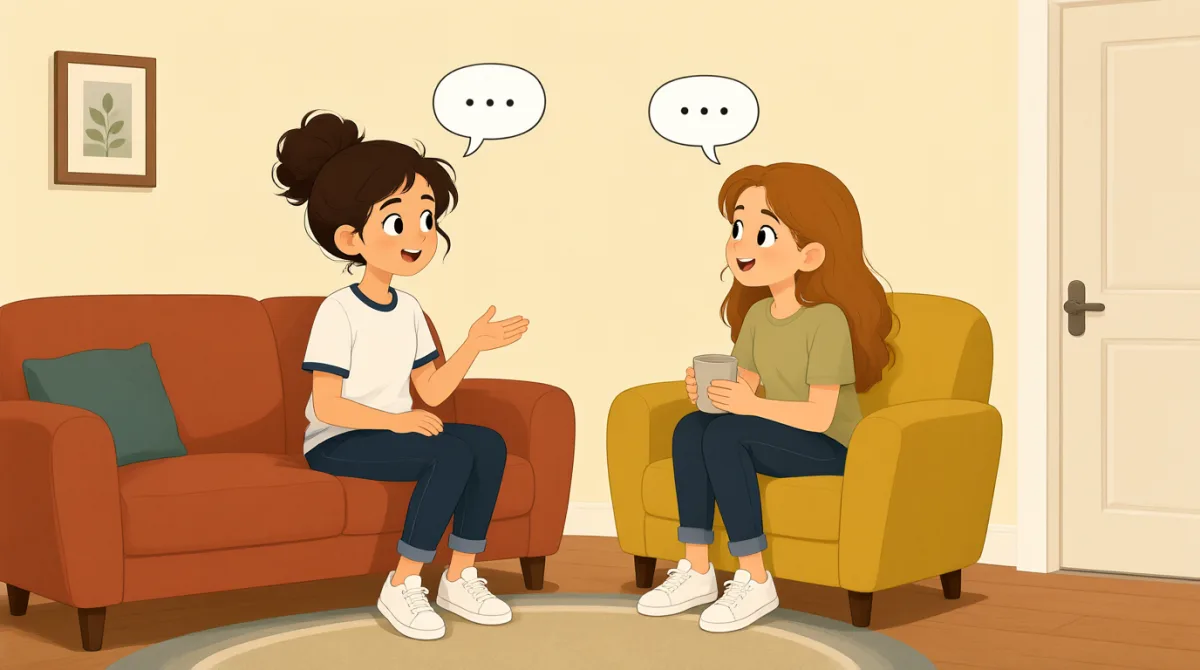

Grace, what does an inning mean?
Grace, co oznacza inning?

An inning has two halves. Each team gets a turn to bat.
Inning składa się z dwóch części. Każda drużyna ma swoją kolej na odbijanie.

And what happens when the batter gets three strikes?
A co się dzieje, gdy odbijający zaliczy trzy strike’i?
The batter is out after three strikes. Then another player comes up.
Po trzech strike’ach odbijający jest wyautowany. Potem do odbijania podchodzi kolejny zawodnik.
What is a strike? Is it when the batter misses?
Co to jest strike? Czy to wtedy, gdy odbijający nie trafi w piłkę?
Yes, a miss is a strike. A pitch through the strike zone can be one, too.
Tak, pudło to strike. Rzut, który przeleci przez strefę strike’ów, też może się liczyć jako strike.
How many outs does a team get in each half?
Ile autów ma drużyna w każdej części inningu?
Three outs. Then the teams switch, and the other team bats.
Trzy auty. Potem drużyny zamieniają się rolami i odbija druga drużyna.
Oh, I get it now. Thanks, Grace!
Aha, już rozumiem. Dzięki, Grace!
Słownictwo8
- inninginning
An inning is a part of a baseball game. Each team gets a turn to bat in each inning.
Inning to część meczu baseballowego. W każdym inningu obie drużyny kolejno odbijają.
- halfpołowa; część
An inning has two halves, one for each team to bat. Use “half” to talk about one of these parts.
Inning składa się z dwóch części — w każdej odbija inna drużyna. Słowa “half” używa się, mówiąc o jednej z tych części.
- turn to batmieć swoją kolej na odbijanie
This means it is a team's time to hit the ball. You can use “take a turn” when people do something one after another.
To znaczy, że nadeszła kolej drużyny, by odbijać piłkę. Wyrażenia “take a turn” możesz użyć, gdy ludzie robią coś po kolei.
- batterodbijający; pałkarz
The batter is the player who tries to hit the ball. This word is useful when talking about baseball.
Odbijający to zawodnik, który próbuje uderzyć piłkę. Tego słowa używa się, mówiąc o baseballu.
- strikestrike
A strike is counted when the batter misses or when a pitch goes through the strike zone. The batter is out after three strikes.
Strike zalicza się, gdy odbijający nie trafi w piłkę albo gdy rzut przeleci przez strefę strike’ów. Po trzech strike’ach odbijający jest wyautowany.
- comes uppodchodzić do odbijania
“Comes up” means it is the next player's turn to bat. It is a common way to say someone is next.
“Comes up” oznacza, że nadeszła kolej następnego zawodnika na odbijanie. To częsty sposób, by powiedzieć, że ktoś jest następny.
- outaut; wyautowany
A player is out when they can no longer bat during that turn. In this game, three outs end a team's half.
Zawodnik jest wyautowany, gdy w danej kolejce nie może już odbijać. W tej grze trzy auty kończą część inningu danej drużyny.
- switchzamieniać się; zmieniać
“Switch” means to change places or roles. Here, the teams switch so the other team can bat.
“Switch” znaczy zamienić się miejscami lub rolami. Tutaj drużyny zmieniają się, by druga mogła odbijać.
Kluczowe zdania8
- 1
Grace, what does an inning mean?
Grace, co oznacza inning?
Use “What does [word] mean?” to ask about a word you do not understand. Replace “inning” with another word.
Użyj “What does [word] mean?”, by zapytać o słowo, którego nie rozumiesz. Zastąp “inning” innym słowem.
- 2
Each team gets a turn to bat.
Każda drużyna ma swoją kolej na odbijanie.
This sentence explains that teams take turns batting. You can reuse “gets a turn to” for other activities, such as “Each person gets a turn to speak.”
To zdanie wyjaśnia, że drużyny odbijają na zmianę. Wyrażenia “gets a turn to” możesz używać także przy innych czynnościach, na przykład: “Each person gets a turn to speak.” (Każdy ma swoją kolej, by się wypowiedzieć).
- 3
The batter is out after three strikes.
Po trzech strike’ach odbijający jest wyautowany.
This sentence explains a simple baseball rule. Use “is out after” to say when someone is no longer allowed to continue.
To zdanie wyjaśnia prostą zasadę baseballu. Użyj “is out after”, by powiedzieć, kiedy ktoś nie może już kontynuować.
- 4
What is a strike?
Co to jest strike?
This is a short, natural way to ask what something means. You can replace “a strike” with another unfamiliar thing.
To krótkie, naturalne pytanie o znaczenie czegoś. Możesz zastąpić “a strike” inną nieznaną rzeczą.
- 5
Is it when the batter misses?
Czy to wtedy, gdy odbijający nie trafia w piłkę?
Use “Is it when...?” to check your understanding of a rule or idea. Replace the action with another simple explanation.
Użyj “Is it when...?”, by sprawdzić, czy dobrze rozumiesz jakąś zasadę lub pomysł. Zastąp opisaną czynność innym prostym wyjaśnieniem.
- 6
How many outs does a team get in each half?
Ile autów ma drużyna w każdej części inningu?
Use “How many...?” to ask about a number of things. You can replace “outs” with another countable item.
Użyj “How many...?”, by zapytać o liczbę rzeczy. Zamiast “outs” możesz wstawić inny rzeczownik policzalny.
- 7
Then the teams switch, and the other team bats.
Potem drużyny zamieniają się rolami i odbija druga drużyna.
This sentence describes what happens next. Use “Then...” to explain the next step in a process.
To zdanie opisuje, co dzieje się dalej. Użyj “Then...”, by wyjaśnić kolejny etap jakiegoś procesu.
- 8
Oh, I get it now.
Aha, już rozumiem.
This is a friendly way to say that you understand. You can use it after someone explains something to you.
To przyjazny sposób, by powiedzieć, że się rozumie. Możesz użyć tego zwrotu, gdy ktoś coś ci wyjaśni.